Key Takeaways
- A 49-year-old woman, Pamela Cisneros, was fatally shot by NYPD officers in Times Square after multiple Taser deployments failed to stop her during a knife attack.
- The incident has sparked a critical discussion regarding the limitations and effectiveness of Tasers as a less-lethal force option for law enforcement.
- Experts indicate that factors such as clothing, probe placement, body composition (particularly obesity), and a suspect's mental state can significantly impede a Taser's ability to induce neuromuscular incapacitation (NMI).
- Tasers operate by delivering electrical pulses to trigger involuntary muscle contractions, ideally requiring two probes to make contact at least 12 inches apart for optimal effect.
- The case underscores the complex challenges faced by police in de-escalating dangerous situations and the inherent unpredictability of real-world applications of non-lethal technologies.
A harrowing four-minute standoff in Times Square last Monday culminated in the fatal shooting of 49-year-old Pamela Cisneros by NYPD officers, after multiple Taser deployments proved ineffective in stopping her alleged knife attack. The incident, which left a 32-year-old woman dead and a 68-year-old man wounded, has reignited a critical debate about the reliability and limitations of Tasers in high-stakes situations.
New York City Police Commissioner Jessica Tisch addressed the media that evening, stating, "As multiple officers discharged Tasers, which proved to be ineffective, the subject continued to advance toward our officers with the knives." Cisneros, reportedly defiant, declared, "I’m not dropping anything I would rather kill both of you" before two officers opened fire, striking her. She was later pronounced dead at Bellevue Hospital.
The tragic event has prompted broader questions within law enforcement and medical communities regarding why Tasers sometimes fail and whether physiological factors, such as body composition, can impede their intended effect. A standard Taser, manufactured by Axon, is designed to fire two small, barbed probes connected by insulated wires. Axon's website explains that "Electrical pulses travel along those wires and into the body, triggering involuntary muscle contractions." For optimal neuromuscular incapacitation (NMI), it is crucial that "two probes make contact 12 inches (30 cm) or more apart."
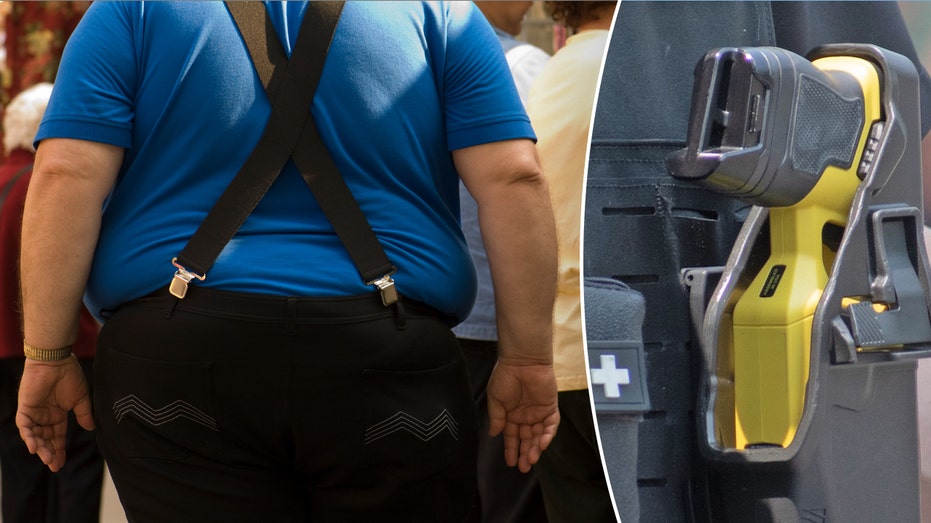
Steve Keller, a retired police sergeant from Blue Ash, Ohio, shed light on common causes of Taser failure. He identified factors such as heavy clothing, suboptimal probe placement, substance abuse by the perpetrator, and poor electrical connectivity between the probes. Keller emphasized that obesity can also play a significant role, as a substantial layer of body fat could interfere with the necessary electrical connection.
"The purpose of the Taser is neuromuscular in capacity," Keller told Fox News Digital, explaining that officers are trained to aim for large muscle masses like the back and thighs. They also learn to adjust their aim based on clothing and the distance to the subject. He further elaborated that if one probe hits the abdomen of an obese person, it could compromise the connectivity required for the Taser to work effectively. "If one probe hits the person and the other probe misses, the Taser will not work," Keller added, citing an example where one probe hitting a thigh and the other striking a thick jacket could lead to poor connectivity. While a person might still feel the electrical discharge, it may not be sufficient to achieve incapacitation.
Beyond physical factors, Keller also highlighted the potential impact of a suspect's mental state. Commissioner Tisch confirmed at the press conference that Cisneros had a documented history of mental health incidents with the NYPD, dating back to 2018 and 2019. This suggests that psychological factors, including extreme agitation or a high pain tolerance, could influence a person's response to a Taser.
Dr. Marc Siegel, a senior medical analyst for Fox News, concurred with the assessment regarding body composition. "Tasers are much more effective for muscle than fat because muscle conducts electricity much better, and the Taser delivers a high voltage," he explained. "In an obese person, it is more difficult to find an area that conducts electricity." This scientific explanation underscores the inherent challenges in applying a technology designed for specific physiological responses to a diverse population.
Why This Matters
The Times Square incident serves as a stark reminder of the complexities and limitations inherent in less-lethal force options available to law enforcement. As police departments increasingly rely on tools like Tasers to de-escalate confrontations and minimize fatalities, understanding the variables that can compromise their effectiveness—from physical attributes to mental health—is crucial for refining training protocols, improving equipment design, and ensuring public safety while protecting officers in the line of duty.