Key Takeaways
- UEFA has implemented a new regulation for the 2026-27 Champions League season.
- The rule prohibits a club from hosting the same opponent for three consecutive seasons in the competition's league phase.
- This directly affects potential repeat fixtures involving European giants Liverpool and Real Madrid, as well as Arsenal and Inter Milan.
- If drawn together, Liverpool would not be permitted to host Real Madrid at Anfield, and Inter Milan could not host Arsenal.
- The restriction aims to introduce greater variety in home-and-away arrangements under the expanded league-phase format.
European football's governing body, UEFA, has unveiled a crucial new condition for the upcoming 2026-27 Champions League season, set to significantly alter potential high-profile matchups. As 36 elite clubs prepare for Thursday’s league phase draw in Monaco, a particular restriction has emerged that could prevent some of Europe's most anticipated home fixtures from taking place.
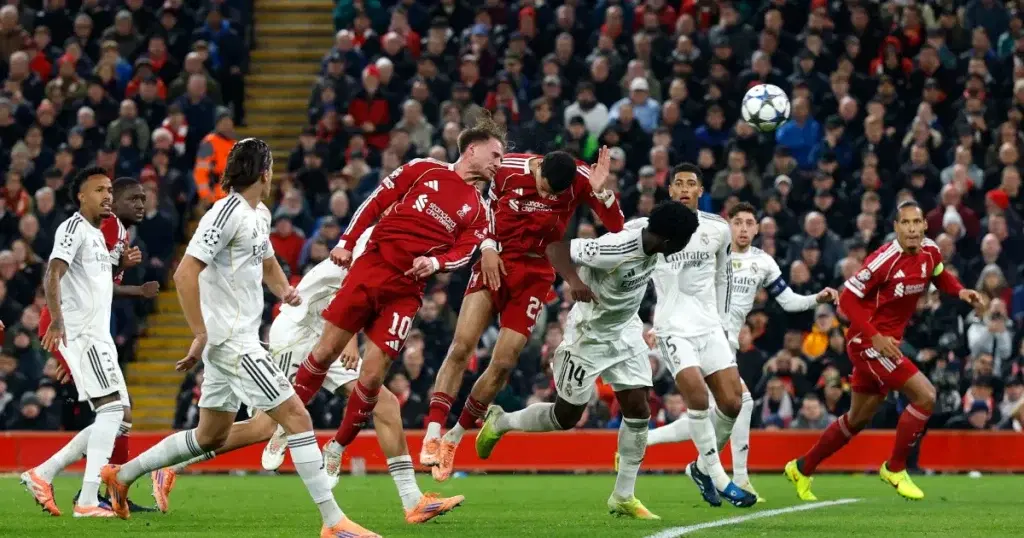
Among the clubs entering the draw, Liverpool and Real Madrid, both placed in Pot 1, face the possibility of a third successive season meeting in the Champions League. However, UEFA's latest directive means that should these two titans be paired together once more, Liverpool would be barred from hosting Real Madrid at their iconic Anfield stadium. This same restriction also applies to another potential repeat fixture involving English powerhouse Arsenal and Italian giants Inter Milan.
The new regulation, introduced following the adoption of the expanded league-phase format for the 2024-25 campaign, is designed to ensure greater variety in fixtures. Under this innovative system, each participating club plays eight matches against eight different opponents, facing two teams from each of the four seeding pots. Crucially, four of these matches are played at home, and the other four away.
The rationale behind UEFA's decision stems from recent history. Liverpool has welcomed Real Madrid to Anfield in each of the last two editions of the competition. While the Reds secured a 2-0 victory in their first encounter, they followed it up with a 1-0 win in the subsequent season. Similarly, Inter Milan and Arsenal have met twice in the league phase with Inter as the home side, with the Italian club winning 1-0 in the first fixture before Arsenal triumphed 3-1 last season.
To prevent what UEFA perceives as fixture repetition and to enhance the overall fan experience by offering more diverse home-and-away matchups, the new rule states: “The UEFA Club Competitions Committee has determined an additional condition that may be applicable to the UEFA Champions League draw for the 2026/27 season, deciding that any individual fixture between the same two teams may not be repeated in the same competition with the same home team for three consecutive seasons.”
In practical terms, this means that while Liverpool and Real Madrid can still be drawn against each other, the fixture would have to be hosted by Real Madrid. Likewise, if Inter Milan and Arsenal are paired, Inter cannot be the home team for a third consecutive season. This rule does not prevent repeat opponents entirely but rather modifies the home-and-away arrangement when the same two teams have met with the same home side in the previous two campaigns. This ensures that fans get to experience a wider array of home fixtures against different opponents, adding to the excitement and unpredictability of the competition.
Thursday’s highly anticipated draw will ultimately determine whether either of these specific fixtures is repeated and, if so, which club will gain the home advantage under the new regulations. The Champions League league phase, featuring 36 teams, will see the top eight qualify directly for the round of 16. Teams finishing ninth to 24th will proceed to the knockout play-offs, while clubs ending the league phase in 25th place or lower will be eliminated, making every match critical.
Why This Matters
This new UEFA regulation signifies a commitment to enhancing the competitive integrity and fan experience of the Champions League by ensuring greater fixture diversity. By preventing repetitive home matchups, the rule aims to keep the competition fresh and unpredictable, potentially influencing club strategies and adding another layer of intrigue to the highly anticipated draws for Europe's premier club competition.