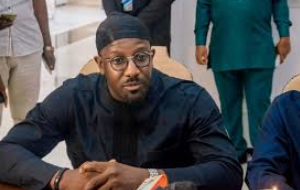
Former South-East spokesman for President Bola Tinubu’s 2023 campaign, Denge Josef Onoh, has attributed the current disagreements between FCT Minister Nyesom Wike and some governors of the All Progressives Congress (APC) to what he described as the minister’s longstanding pattern of political confrontation and mobilisation
Onoh, in a statement made available to journalists in Lagos, was reacting to Wike’s recent media comments in which the minister criticised some APC governors
He alleged that Wike’s political career had been characterised by fierce political contests and the use of political structures to confront opponents, adding that the pattern had continued into his current role as a minister in the APC-led Federal Government
Onoh traced Wike’s political career to his tenure as chairman of Obio-Akpor Local Government Area of Rivers State between 1999 and 2007
He said Wike later became Chief of Staff to then Rivers State Governor Rotimi Amaechi, where, according to him, he played a prominent role in the management of the state’s political structure
Onoh also recalled Wike’s appointment as Minister of State for Education under former President Goodluck Jonathan, describing his role during that period as part of the political confrontation between the Jonathan administration and Amaechi
According to him, Wike was subsequently involved in the political struggle that preceded the 2015 elections in Rivers State
On Wike’s performance at the 2022 Peoples Democratic Party (PDP) presidential primary, Onoh said the outcome demonstrated what he described as the limits of the minister’s political influence beyond Rivers State
He argued that despite Wike’s considerable influence within the PDP at the time, he lost the presidential primary to Atiku Abubakar
Onoh also questioned Wike’s subsequent role in the G-5 Governors’ opposition to Atiku during the 2023 presidential election
He recalled that Wike had contested the PDP presidential primary and was later reported to have been considered for the party’s vice-presidential ticket before the position went to another candidate
Onoh argued that Wike’s subsequent formation of the G-5 Governors, which opposed Atiku’s presidential campaign, was driven largely by internal party disagreements rather than an unwavering commitment to southern power rotation
He said the development benefited the Tinubu campaign by contributing to divisions within the opposition PDP
“I was one of the few PDP former members in the Tinubu presidential campaign that suggested bringing Wike into our campaign,” Onoh said, adding that events that followed had, in his view, vindicated the position he took at the time
Onoh further criticised Wike’s comments about the electoral performance of South-East governors in the 2023 presidential election
He said the region’s voting pattern was influenced by the popularity of Peter Obi, the Labour Party presidential candidate and a South-East indigene, arguing that the circumstances were different from those in other regions
On Wike’s administration of the Federal Capital Territory, Onoh said the minister should recognise that Abuja differed politically and administratively from Rivers State
He particularly referenced controversies surrounding demolition exercises and threats involving properties belonging to prominent Nigerians
Onoh argued that actions taken in the FCT attracted greater scrutiny because Abuja hosts diplomatic missions, international organisations and foreign media organisations
He warned that politically sensitive actions in the capital during an election period could attract international attention and affect perceptions of Nigeria’s democratic institutions
Turning to Wike’s current relationship with the APC, Onoh said the minister’s political activities had created friction with some APC governors
He argued that Wike’s continued influence over political structures associated with the PDP, alongside his role in the APC-led Federal Government, had placed him in what he described as a “friction zone”
Onoh alleged that some political actors at the national level had continued to tolerate Wike because of the minister’s perceived usefulness in managing opposition structures and political alignments
He further claimed that APC governors were concerned that Wike’s approach to political competition could eventually create divisions within the ruling party itself
Onoh also criticised what he referred to as Wike’s “Rainbow Coalition”, alleging that the political arrangement could be aimed at positioning the FCT minister for a future political ambition
He said President Tinubu should carefully consider the implications of any political arrangement that simultaneously supports the President while fielding candidates against APC candidates at the state level
According to Onoh, such an arrangement could create confusion within the ruling party and undermine its grassroots structures
He said the President would eventually have to address the tension between the interests of APC governors and the political activities of Wike
“No administration can successfully govern or secure a national mandate by alienating the formal party executives and governors who command the legal machinery of our ruling party,” Onoh said
He urged the President to protect the cohesion of the APC and ensure that individual political interests did not undermine the party’s institutional structures
Onoh concluded by describing Wike as a political actor whose career, in his assessment, had been shaped by tactical alliances and confrontations with political structures
He said the current disagreement between Wike and some APC governors should therefore be viewed within the broader context of the minister’s political history and his relationships with successive political administrations and parties