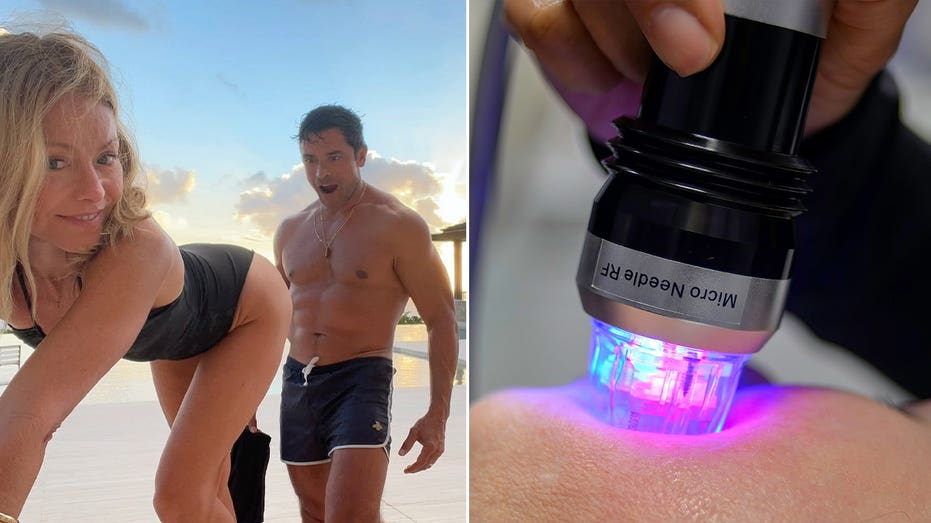
Talk show host recently revealed she receives a niche procedure to enhance the appearance of her behind.
During a recent episode of her podcast, "Let's Talk Off Camera," the 55-year-old opened up about getting microneedling done "on my a-- cheeks," after her guest, actor Lukas Gage, shared that he had also undergone the treatment.
"I’m going to tell you something … just as old as before," she said after Gage asked her if she saw an improvement. "Desperate times call for desperate measures."
Dermatologist Dr. Dara Spearman, MD, of Radiant Dermatology Associates in Indiana, described the during an interview with Fox News Digital.
"Butt microneedling is where a device with very fine, sterile needles is used to create controlled micro-injuries in the skin of the buttocks," she said.
"This process stimulates the body’s natural wound healing response, which boosts collagen and elastin production over time."
Microneedling is often used to improve like acne scarring, stretch marks or uneven tone, especially in the rear end area, according to Spearman.
The treatment can be performed in an office by a trained professional and is sometimes paired with topical serums to enhance results.
"While the concept may sound trendy, the underlying technology is the same as used on the face and body," Spearman said.
Microneedling the buttocks can lead to smoother, firmer and more even-looking skin after a .
An increase in collagen production over time can "subtly improve skin laxity," Spearman said, with results building gradually over multiple sessions.
"Consistency and realistic expectations are key," the dermatologist said.
As with any procedure that disrupts the skin barrier, there are potential risks, according to Spearman, especially if it’s performed improperly or in a non-sterile environment.
These potential include irritation, infection and prolonged redness. In some cases, post-inflammatory hyperpigmentation can occur in patients with deeper skin tones.
"There is also a risk of worsening acne or folliculitis if the area is not properly assessed beforehand," Spearman said. "Overly aggressive treatments can lead to scarring rather than improvement, which is why technique and needle depth matter significantly."
"It’s important that patients seek care from a qualified medical professional to minimize these risks."
Although this treatment is gaining viral popularity on social media, it should still be regarded as a requiring proper training and safety standards, Spearman emphasized.
"It is not a quick fix, and multiple sessions are typically needed to achieve meaningful results," the dermatologist told Fox News Digital. "Patients should also be cautious about at-home devices for this area, as improper use can increase the risk of infection or skin damage."
"A thorough consultation is essential to determine whether someone is a good candidate, especially if they have active skin conditions or a history of keloid (raised) scarring."
Fox News Digital's Lori A. Bashian contributed to this report.