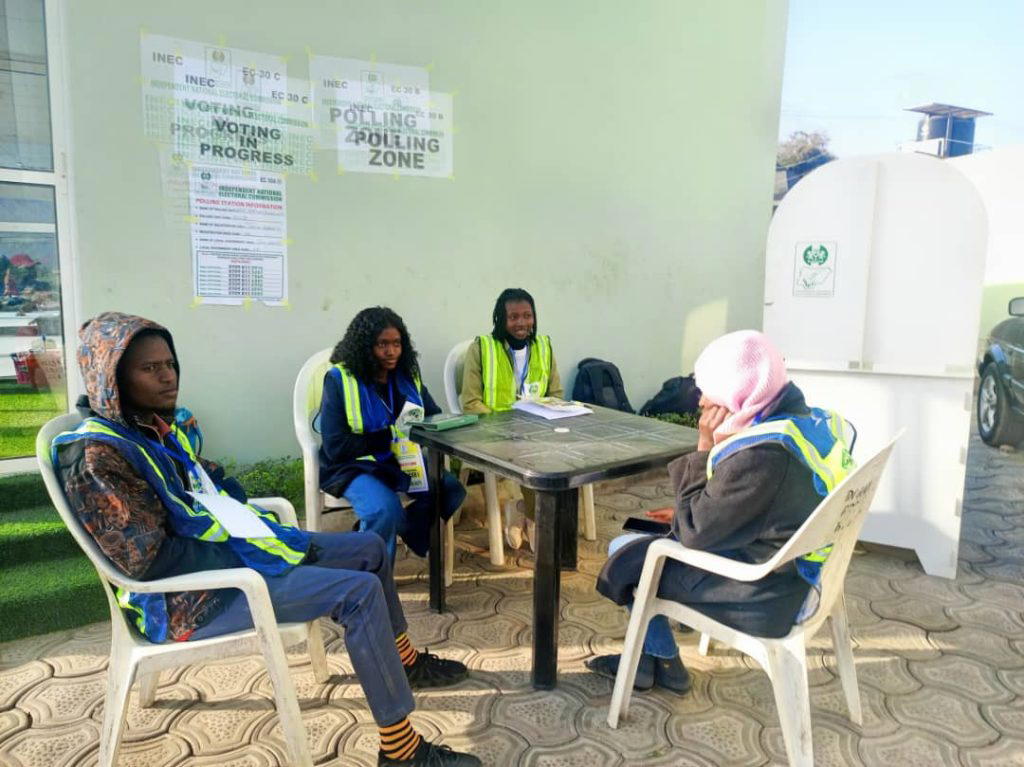
A polling unit is where voters go to cast their ballots during an election It is also where election officials verify voters’ identities, issue ballot papers, and count votes after voting ends.
For many Nigerians, understanding what happens at a polling unit can help them prepare for election day and know what to expect when they arrive to vote
Here is how the process works
On election day, registered voters go to the polling units where their names appear on the voters’ register They are expected to check their polling unit before leaving home to avoid going to the wrong location.
At the polling unit, officials organise voters and direct them to the appropriate queues Security personnel may also be present to maintain order and prevent disruptions.
Before voting, officials check the voters’ register to confirm that each person is registered at that polling unit
The voter’s identity is then verified using the Bimodal Voter Accreditation System (BVAS), which is used by the Independent National Electoral Commission (INEC) for voter accreditation
The system checks the voter’s details and may use fingerprint or facial recognition, depending on the circumstances If accreditation is unsuccessful, officials follow INEC’s prescribed procedures.
Only voters who meet the accreditation requirements are allowed to proceed to vote
After accreditation, election officials issue ballot papers for the elections taking place Depending on the election, voters may receive separate ballot papers for positions such as president, governor, senator or member of the House of Representatives.
Officials explain how to mark the ballot correctly Voters must follow the instructions to ensure their choices are properly recorded.
Voters proceed to the designated voting area, where they mark their ballot papers in secret
They select their preferred candidate or party by following the instructions printed on the ballot paper Maintaining secrecy is important because no one should be forced to reveal their vote or told whom to support.
After marking the ballot, the voter folds it as directed and places it in the appropriate ballot box
When voting ends, officials follow INEC’s procedures for closing the poll At the polling unit, ballot papers are sorted and counted in the presence of authorised party agents, observers and other permitted persons.
The votes are counted according to the candidates or parties they represent Officials also account for rejected ballots, which are ballot papers that cannot be counted as valid votes under the applicable rules.
The counting process is expected to be transparent, allowing those present to observe and raise concerns through the proper channels
After counting, the presiding officer records the results on the prescribed result sheet
The results are announced at the polling unit, and party agents and other authorised persons can observe the process Where applicable, the results are uploaded electronically through INEC’s designated result-transmission system.
The polling-unit result is then taken through the appropriate collation process, where results from different polling units are combined at higher levels
The result announced at one polling unit does not, by itself, determine the overall winner of the election
Voters who experience problems, including difficulties with accreditation, disputes over voting procedures or suspected irregularities, can raise their concerns with the presiding officer
They can also report incidents to authorised election officials or security personnel where appropriate Party agents and accredited observers may document incidents and report them through the relevant channels.
Voters should avoid violence, intimidation or actions that could disrupt the process Election complaints should be handled through the procedures established by INEC and the relevant legal authorities.
Why the polling unit matters
The polling unit is the starting point of the election results process Every valid vote recorded there contributes to the results that are collated across the country.
Understanding the process helps voters know their rights, follow the correct procedures and recognise when something may be wrong
For voters, election day is not simply about arriving at a polling unit and choosing a candidate It also involves accreditation, ballot secrecy, transparent counting and the proper recording of results. Each stage plays a role in ensuring that the votes cast are properly accounted for.