Strait of Hormuz Under Iranian Scrutiny
The Strait of Hormuz, a strategic waterway, has witnessed a significant drop in vessel traffic since the onset of the Middle East war. From March 1st to March 24th, only 149 crossings were recorded, a stark 95% decrease compared to peacetime.
Among these, Iranian ships dominate, with 94 crossings attributed to oil and gas tankers, primarily heading east out of the strait.
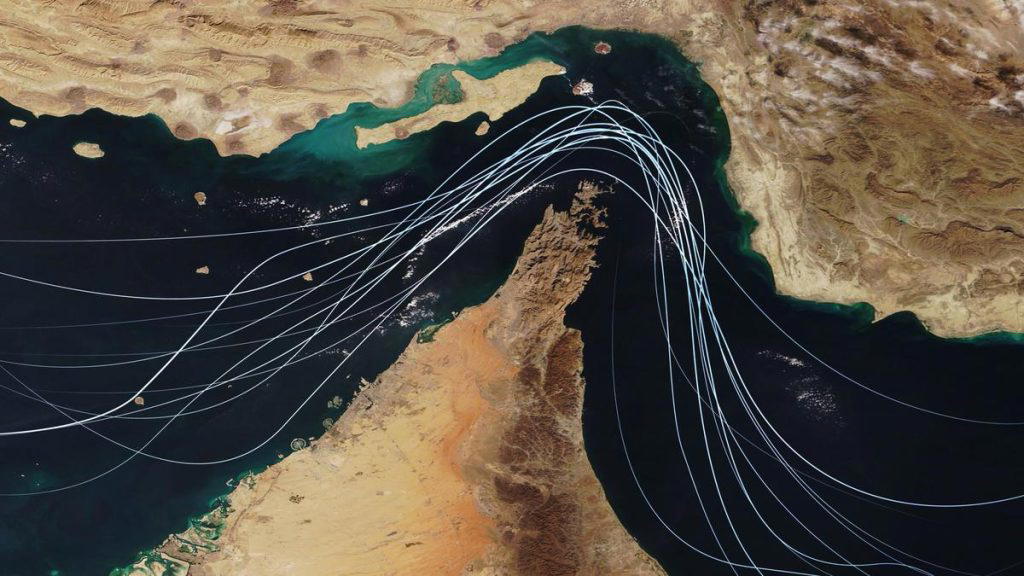
Recent developments indicate a shift in transit patterns, with vessels seemingly directed through Iranian territorial waters, a route dubbed the 'Tehran Toll Booth'.
This route has been utilized by various ships, including Greek, Indian, Pakistani, and Syrian carriers, with Iran's Revolutionary Guard Corps reportedly verifying vessel details and, in some instances, imposing transit fees.
Sanctioned Ships and Diversions
Notably, over 40% of ships traversing the strait since the war's commencement have been under US, EU, or UK sanctions. This includes 57% of oil and gas tankers.
The traffic is heavily skewed towards westbound shadow fleets, gas carriers, and tankers, according to analysts.
In a related development, Europe-bound LNG cargoes have been rerouted to Asia, influenced by supply constraints and escalating spot prices.
Chinese authorities are reportedly working on an exit strategy for their tankers stranded in the region, while a significant portion of oil passing through the strait is destined for Asia, particularly China.
The strait, a critical chokepoint, typically facilitates the transit of a fifth of the world's oil and liquefied natural gas during peacetime.