Key Takeaways
- The United States initiated a new wave of strikes on Iran, targeting its capacity to attack commercial shipping.
- Iran responded with missile and drone attacks on Bahrain and Jordan, specifically aiming at US forces and facilities.
- President Donald Trump announced the reimposition of a naval blockade on the Strait of Hormuz, proposing a 20 percent levy on all cargo.
- The renewed conflict has reportedly resulted in at least 28 fatalities in Iran, according to various reports.
- Global oil prices surged significantly amid fears of widespread regional instability and disruptions to vital shipping lanes.
- Efforts to secure a lasting peace agreement between the US and Iran are now severely jeopardized by the escalating hostilities.
A dangerous new chapter in the ongoing conflict between the United States and Iran unfolded this week, marked by a significant escalation of military actions and a dramatic declaration concerning the vital Strait of Hormuz. The United States launched a fresh wave of strikes across Iran, prompting immediate and forceful retaliation from Tehran, which targeted American interests and regional allies. This surge in hostilities has not only claimed lives but also sent shockwaves through global markets, particularly impacting oil prices.
Escalating Military Actions
On Tuesday, the US military confirmed a five-hour mission that struck various targets across Iran, including coastal cities like Bushehr and Bandar Abbas. These operations were explicitly aimed at "degrading Iran’s ability to attack commercial shipping" in the region. This renewed offensive follows a period of heightened tension, with US attacks since last week reportedly causing at least 28 fatalities in Iran, a figure compiled from Iranian media and official announcements.
Iran's response was swift and decisive. The Revolutionary Guards announced they had fired missiles and drones at Bahrain, specifically targeting a residential building housing US forces and other strategic facilities. Bahrain subsequently confirmed intercepting "several treacherous aerial attacks launched by Iran," accusing Tehran of targeting civilians after explosions and sirens were heard in its capital, Manama. Furthermore, Iran launched attacks on other US allies, with Jordan reporting it had shot down four missiles originating from Iran. The Revolutionary Guards asserted these strikes targeted US forces at an air base in Jordan, urging Jordanians to demand the removal of "occupying American bases from the region." Tehran maintains it only targets US interests in the Gulf, but its military command spokesman warned that any collaboration by Gulf countries with the United States would be deemed "an act of war."
The Hormuz Blockade and Economic Fallout
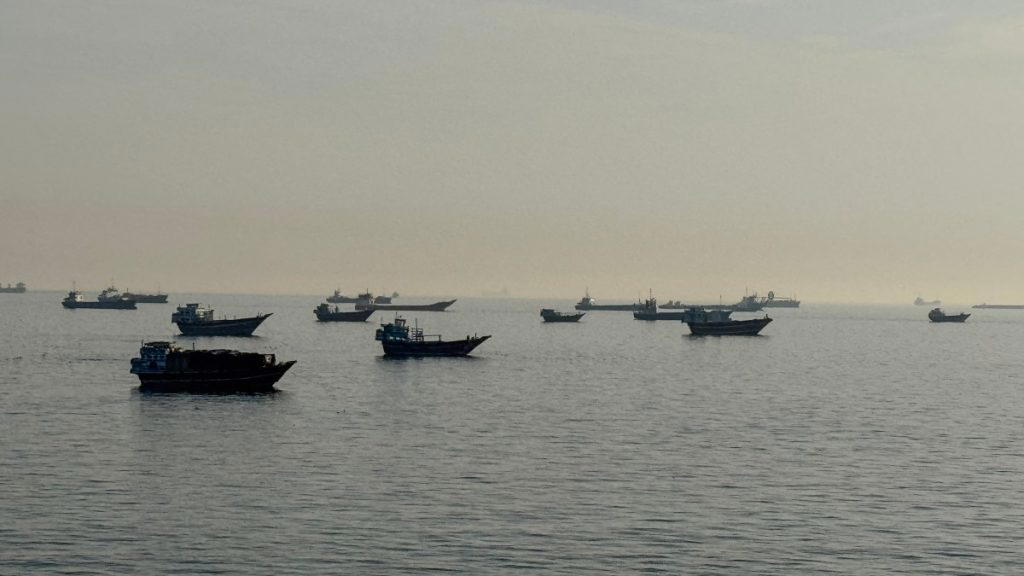
Amidst the escalating violence, President Donald Trump made a contentious declaration, vowing to reimpose a naval blockade on the Strait of Hormuz. He announced that the United States would "take over" the strait and levy a 20 percent fee on all cargo shipped through it, a move that drew immediate mockery from Iran and accusations of "piracy." US Central Command (CENTCOM) confirmed that Iran's ports on the waterway would be blockaded, effective Tuesday evening. This development marks a significant reversal, as restrictions had eased after a preliminary deal was reached in June, following Iran's initial blockade of the strait in response to US-Israel attacks in February.
The economic repercussions were immediate and severe. Oil prices surged by more than nine percent on Monday over fears of renewed conflict and continued to climb on Tuesday, adding more than one percent. The prospect of disruptions in the Strait of Hormuz, a critical chokepoint for global oil shipments, ignited widespread concern among investors and analysts. Iranian Foreign Minister Abbas Araghchi sarcastically responded to Trump's levy on X, suggesting that while compensation for safe passage was reasonable, "20% is of course too much," implying Tehran could offer a lower rate. Meanwhile, Iran's parliament has reportedly begun drafting legislation concerning "the management of the Strait of Hormuz," a move Washington vehemently opposes, citing international law that generally forbids such tolls.
Diplomatic Deadlock and Future Prospects
Despite the dramatic escalation, President Trump maintained that a deal with Tehran to end the war was still possible. However, Iran's Foreign Ministry spokesman, Esmaeil Baqaei, stated earlier that the June memorandum of understanding, which formed the basis for negotiations, was "in crisis." Baqaei indicated that Iran would disregard its obligations under the deal if Washington did the same, though he affirmed that Tehran was continuing talks with mediators from Qatar, Pakistan, and Oman to prevent further escalation. Bader Al-Saif, an associate fellow at Chatham House, commented that the escalating attacks would only delay a permanent agreement, noting, "Both sides want to end the impasse on their own terms, and they are increasingly finding it difficult to do so." The White House also confirmed that Trump formally notified Congress last week of the resumption of military conflict against Iran, granting the Pentagon an additional 60 days to operate in the region without congressional approval.
Why This Matters
The intensifying conflict in the Strait of Hormuz carries profound implications for global energy security, international shipping, and regional stability, threatening to unravel diplomatic efforts and potentially draw more actors into a volatile confrontation.