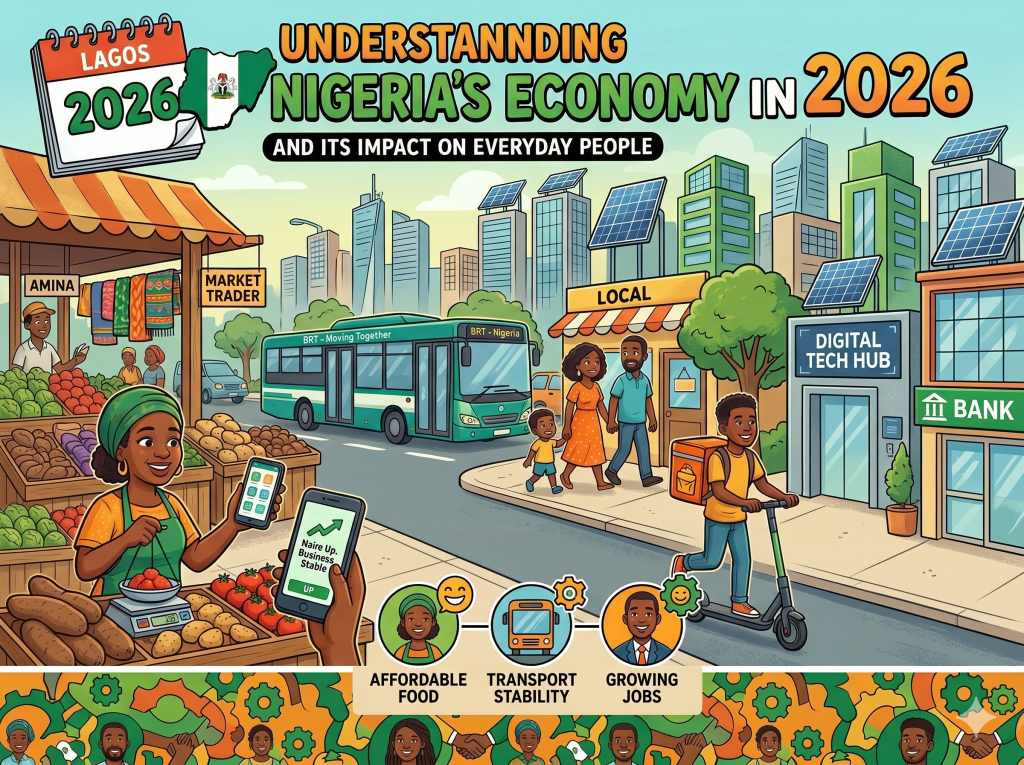
Nigeria’s economic story in 2026 is one of cautious optimism. GDP is projected to grow between 3.8 and 4.6 percent, with both the IMF and World Bank forecasting figures around 4.1 to 4.2 percent.
Inflation, which reached punishing levels in recent years, is expected to ease toward single digits. For millions of Nigerians, however, the gap between macroeconomic figures and daily financial reality remains wide.
Several industries are leading Nigeria’s economic expansion this year, attracting both local and foreign investment.
Understanding where growth is concentrated helps individuals and businesses position themselves for the opportunities ahead. Each sector below tells a different part of the same story about where Nigeria is heading in the years to come.
Nigeria’s fintech sector is projected to add approximately six billion dollars to GDP in 2026. Monthly remittance inflows have reached around 600 million dollars, supported by the Central Bank’s digital payment drive.
Digital fraud losses fell by 51 percent in 2025, which has significantly increased consumer confidence in electronic transactions across the country. Key drivers behind this growth include the following:
Agribusiness remains one of the most resilient sectors in Nigeria’s economy, driven by both domestic food demand and growing export potential across West Africa.
Government incentives and improving logistics infrastructure are attracting fresh investment into smallholder farming, food processing, and agricultural technology, making this sector increasingly attractive for entrepreneurs seeking long-term returns.
Renewable energy is gaining momentum as Nigeria addresses its chronic power deficit. Solar installations, mini-grids and off-grid solutions are expanding rapidly, particularly in underserved rural areas. The main forces accelerating this sector are worth noting:
Real estate, particularly affordable housing in Lagos, Abuja and Port Harcourt, continues to attract serious capital.
Nigeria’s urbanisation rate remains among the highest on the continent, generating sustained demand for residential and commercial property. Infrastructure improvements around major cities are opening new development corridors that were previously considered too remote for viable investment.
The five sectors generating the most momentum right now include fintech and digital payments, agribusiness, renewable energy, healthcare and real estate.
Each of these areas is drawing significant investment interest, with fintech leading by a considerable margin.
Nigeria’s fintech transformation over the past three years has been remarkable. The following table shows how key indicators have shifted:
This growth has created a broader appetite for digital services across all categories. Platforms operating across digital entertainment have followed the same trajectory. reflects this global shift toward fully digital user experiences, where instant access has become the baseline expectation.
Despite positive GDP projections, many Nigerian households are still absorbing the impact of years of high inflation and naira depreciation.
Food prices remain elevated and fuel costs continue to add pressure across the supply chain. The macroeconomic stabilisation that analysts point to has not yet translated into meaningful relief at the market level.
The disconnect between headline growth figures and lived experience is one of the defining tensions of Nigeria’s economic moment. GDP growth concentrated in fintech and oil does not automatically reduce the cost of food in Onitsha or transport fares in Ibadan.
The table below provides a summary of Nigeria’s main economic projections for 2026:
For those looking to enter or expand within the Nigerian market, the current environment offers genuine opportunity alongside real risk. The following considerations are worth keeping in mind before committing capital:
Nigeria’s fundamentals, including a population exceeding 220 million, a young demographic and growing digital adoption, remain compelling arguments for long-term investment. The question for 2026 is not whether Nigeria has potential, but how quickly the structural conditions needed to unlock that potential can be put in place.
Nigeria’s economy in 2026 presents a picture of genuine progress accompanied by persistent structural challenges.
The growth numbers are encouraging and sectoral momentum in fintech, agribusiness and energy is real. Yet the benefits of this expansion must reach ordinary households more effectively if macroeconomic gains are to translate into broadly shared prosperity.
For investors, entrepreneurs and everyday Nigerians alike, staying informed and adaptable remains the most reliable strategy in an environment that continues to evolve at pace.