Key Takeaways
- Ukraine's Prime Minister Yulia Svyrydenko has resigned as part of a government reshuffle.
- President Volodymyr Zelensky has announced plans to assign different people to manage different areas of foreign policy.
- The reshuffle comes at a pivotal moment in the more than four-year war with Russia.
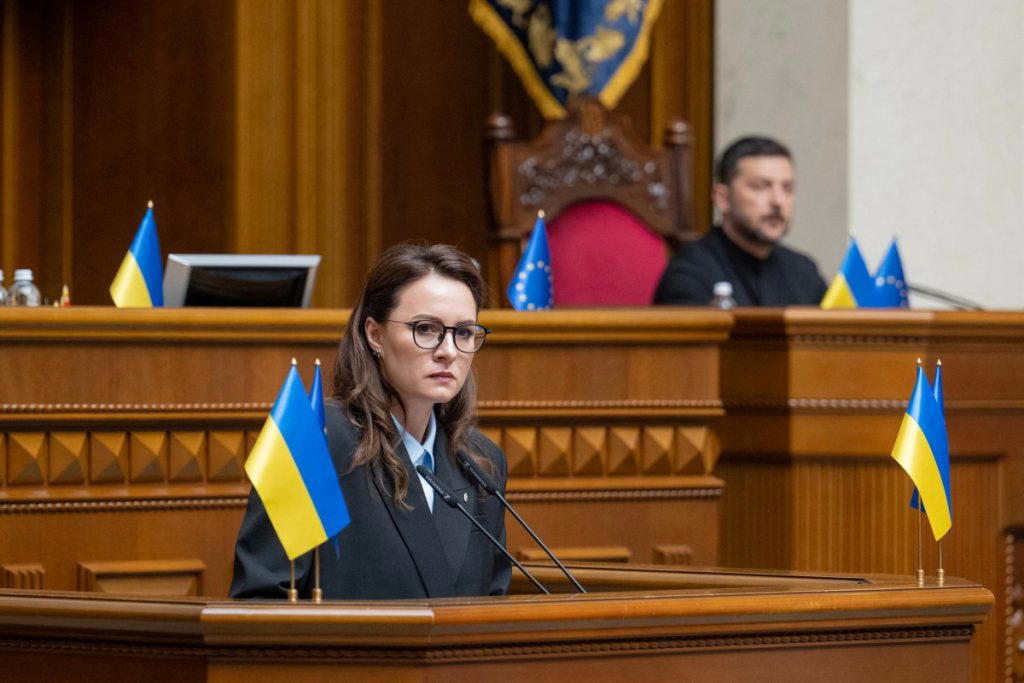
Ukraine’s Prime Minister Yulia Svyrydenko resigned on Tuesday as part of a government reshuffle ordered by President Volodymyr Zelensky, marking a significant change in the country's leadership amid the ongoing conflict with Russia. The Ukrainian leader has yet to name a replacement and has said only that Kyiv is “changing its political strategy” amid “new challenges and new tasks”.
The Ukrainian parliament formally approved Svyrydenko’s resignation in a vote on Tuesday. She was only appointed in July 2025 and was seen as having good relations with US officials, having negotiated a minerals investment deal with Washington in the aftermath of Zelensky’s Oval Office clash with President Donald Trump. Her resignation has sparked speculation about the future direction of Ukraine's foreign policy, particularly in relation to its ongoing conflict with Russia.
Government Reshuffle and Its Implications
The reshuffle comes at a pivotal moment in the more than four-year war with Russia, with Moscow escalating its deadly ballistic missile strikes on Ukraine, and Kyiv planning to domestically produce US Patriot air defence systems. Announcing the reshuffle over the weekend, Zelensky said he planned to assign different people to manage different areas of foreign policy, and that he had offered Svyrydenko a new role leading “relations with a key partner”, without elaborating.
The role of prime minister does not typically include a say on military strategy or frontline operations, where Zelensky and his military chiefs call the shots. Svyrydenko said she had delivered “concrete results” in office and posted a photo of herself making a heart symbol with her hands during an address to parliament. Ukrainian media has named Sergiy Koretsky, the CEO of Ukraine’s state energy firm Naftogaz, as the frontrunner to replace her.
Zelensky met Koretsky at the weekend — after he had announced plans to remove Svyrydenko — and hailed his “effective leadership” in an “extremely complex sector”. Energy is a key priority in Ukraine, with the grid having been battered by Russian attacks and power outages widespread throughout winter. The new prime minister will face significant challenges in addressing these issues and navigating the country's complex geopolitical landscape.
In conclusion, the resignation of Ukraine's Prime Minister Yulia Svyrydenko marks a significant turning point in the country's history, and the future direction of its government and foreign policy remains uncertain. The ongoing conflict with Russia and the need to address key domestic priorities such as energy security will be major challenges for the new prime minister to address.
Why This Matters
The government reshuffle in Ukraine has significant implications for the country's future, particularly in relation to its conflict with Russia and its relationships with international partners. As the situation continues to evolve, it is likely to have a major impact on the region and the wider world.