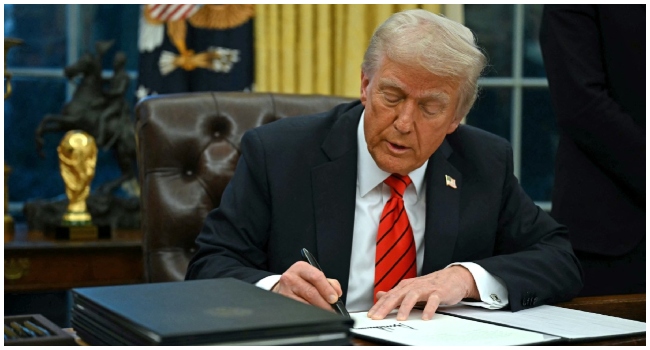
President Trump Takes Decisive Action to Reshape Collegiate Sports
As the nation's attention was fixed on the thrilling culmination of the NCAA basketball tournament, President Donald Trump signed a pivotal executive order on Friday, marking his second significant intervention into the rapidly evolving world of US collegiate athletics. This latest directive aims to impose new regulations on student-athlete eligibility and transfers, a move prompted by the dramatic shift towards Name, Image, and Likeness (NIL) compensation.
The order directly tasks the National Collegiate Athletic Association (NCAA) with establishing stringent new guidelines, with non-compliant institutions facing the severe consequence of losing federal funding. These changes are slated to take effect on August 1st.
Key Directives of the New Executive Order
- The NCAA must create rules limiting student-athletes to playing for a maximum five-year period.
- New rules must be implemented to allow student-athletes to transfer schools only once before graduation, without being forced to sit out a season.
- Governing bodies are explicitly called upon to ban any "improper" financial arrangements.
- The order also urges Congress to pass comprehensive legislation to address these pressing issues in collegiate sports.
Curbing an 'Out-of-Control Financial Arms Race'
President Trump articulated his rationale, stating that the loosening of "consistent rules or limits concerning eligibility, transfers, and pay-for-play schemes has created an out-of-control financial arms race… that is driving universities into debt." This sentiment underscores a broader concern about the financial sustainability and integrity of college sports in the NIL era.
Building on Previous Efforts and the NIL Context
This executive order follows a similar directive issued by Trump in July, which specifically targeted certain recruiting payments by third parties in high-revenue sports like football and men’s basketball. The earlier order sought to protect funding for women's and non-revenue sports, which Trump argued were being threatened by the burgeoning value of NIL contracts for star athletes.
The president previously voiced concerns that the escalating financial demands of NIL deals in high-visibility sports were placing undue burdens on colleges, potentially forcing them to cut other vital athletic programs. Many of these programs, including track and field, swimming, and gymnastics, serve as crucial developmental pipelines for US Olympic teams.
The Transformative Impact of NIL
For decades, the NCAA maintained strict prohibitions against student-athletes receiving any form of compensation for their name, image, or likeness. However, a landmark 2021 Supreme Court ruling precipitated a profound change, leading to the implementation of new rules that now permit collegiate athletes to financially benefit from their NIL, fundamentally altering the landscape of college sports.