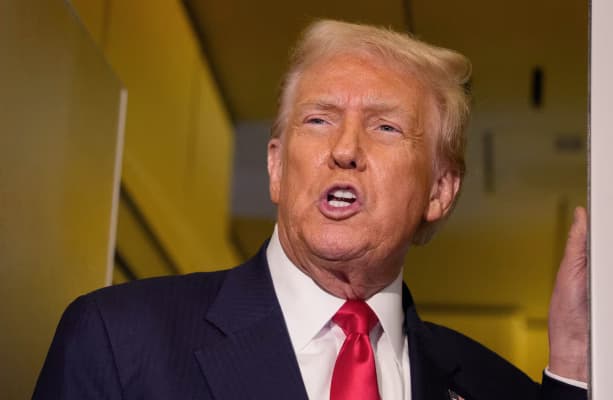
United States President Donald Trump has stated that he would prefer to seize Iran’s oil resources as tensions escalate between the US, Iran, and Israel amid ongoing military exchanges.
Iran, a member of the Organization of the Petroleum Exporting Countries, holds one of the world’s largest crude reserves—estimated at about 208 million barrels as of 2024—ranking third globally behind Venezuela and Saudi Arabia.
The country also controls the strategic Strait of Hormuz, through which roughly 20 percent of global oil supply passes.
However, the vital shipping route has been significantly restricted due to Iran’s de facto blockade since the outbreak of hostilities last month, reducing maritime traffic and heightening global energy concerns.
Both Washington and Tehran have issued warnings over control of the strait, with Trump calling for its full reopening while Iran insists it retains authority over the passage.
In an interview with the Financial Times on Sunday, Trump expressed a controversial position that appears to go beyond his previously stated war objectives.
“To be honest with you, my favourite thing is to take the oil in Iran but some stupid people back in the US say: ‘why are you doing that?’ But they’re stupid people,” Trump said.
He also suggested the possibility of targeting Kharg Island, Iran’s main oil export hub, which handles the vast majority of the country’s crude shipments.
“Maybe we take Kharg Island, maybe we don’t. We have a lot of options. It would also mean we had to be there [in Kharg Island] for a while,” he added.
Kharg Island is estimated to have a storage capacity of around 30 million barrels and is responsible for approximately 90 percent of Iran’s oil exports, according to global trade analysts.
The remarks come amid heightened geopolitical tensions that have already impacted global oil markets, with prices rising sharply as fears grow over prolonged disruption to supply routes.
Earlier developments have also drawn attention to US actions in Venezuela, where Washington announced control over the country’s oil industry following the capture of President Nicolás Maduro earlier this year.