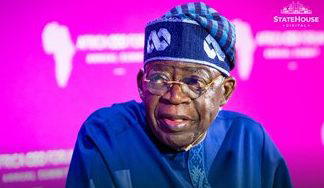
- Tinubu’s economic strategies, termed 'Tinubunomics', emphasize state-focused governance.
- A regional approach, reminiscent of the 1960s, is central to his political philosophy.
- Critics note a disparity in development projects favoring the South-west region.
- The recent push for State Police reflects his vision of regional autonomy.
Nigerian President Bola Ahmed Tinubu is increasingly recognized for his distinct economic strategies, termed 'Tinubunomics'. This term encapsulates an economic system characterized by resource extraction from citizens directed towards the state, unfortunately lacking corresponding public investment. As discussions surrounding Tinubu's governance evolve, there arise pressing questions regarding his political approach and overall impact.
While Tinubo lacks a singular term like 'Tinubunomics' to describe his political methodology, it is evident that he is implementing a form of regional federalism. This concept suggests a deliberate shift towards reinforcing the autonomy of Nigeria's regions in proportion to the federal government's authority. By observing his administration's actions rather than merely their rhetoric, it becomes apparent that Tinubu is committed to fostering a more regionalized political structure, reminiscent of Nigeria's early years post-independence.
Tinubu’s strategy is deeply embedded in the political traditions of the South-west, a region historically shaped by the ideologies of leaders like the late Chief Obafemi Awolowo. This heritage has consistently highlighted the importance of regional strength relative to a central authority. For many years, the South-west has operated almost as a unified political entity, often favoring a singular party line, regardless of the formal political divisions that have emerged over time.
The evolution of Tinubu's regional federalism draws from historical precedents; it speaks to the longstanding desire of the South-west to consolidate power within its confines. Despite numerous states being formed by military decrees between 1967 and 1996, the core belief in regional integrity remains intact. Tinubu’s political narrative embodies this legacy, illustrated through his enduring conflicts with previous administrations, notably during his tenure as Lagos Governor when he navigated a contentious relationship with former President Olusegun Obasanjo.
Furthermore, Tinubu’s tenure illustrates a commitment to regional governance, one that appears to be increasingly self-reliant. Critics have frequently pointed out the apparent uneven distribution of development projects favoring the South-west, igniting widespread concerns about perceived governmental neglect in other regions. Tinubu's policies, however, suggest a shift towards advocating more responsibility at the state and regional levels for infrastructural development.
Amid these discussions, Tinubu has championed the removal of the fuel subsidy, aiming to enhance allocations to states while proposing tax reforms intended to reshape fiscal responsibilities. His Infrastructure Support Fund (ISF) and recent legislative push for State Police signify his dedication to encouraging regional autonomy—a defining characteristic of his political stance.
The trajectory of Tinubu's approach prompts critical inquiries regarding its potential consequences for Nigeria’s broader political landscape. As the nation contemplates this regional paradigm shift, stakeholders must grapple with significant questions about the implications for political cohesion and regional dynamics moving forward.
Why This Matters
The evolution of Tinubu's regional federalism illustrates significant shifts in Nigeria's governance model, highlighting the balancing act between federal and regional authority. Understanding this dynamic is crucial for comprehending the future of Nigeria's political and economic landscape.