Key Takeaways
- President Bola Tinubu is on an extended 'working vacation' in France, while Vice President Kashim Shettima is representing Nigeria at the UN General Assembly in New York.
- The African Democratic Congress (ADC) has labeled the simultaneous absence of both leaders as a 'very dangerous precedent,' questioning the constitutional basis for governance.
- ADC's National Publicity Secretary, Bolaji Abdullahi, specifically challenged the role of the Secretary to the Government of the Federation (SGF), George Akume, in the absence of the President and Vice President.
- The Presidency maintains that President Tinubu remains in contact and directs government affairs, and that Shettima carries the President's full mandate at the UNGA.
- Opposition calls for the National Assembly to reconvene and address the constitutional implications have been met with skepticism regarding the lawmakers' willingness to act.
Nigeria is currently navigating a period of significant political scrutiny as both President Bola Tinubu and Vice President Kashim Shettima are simultaneously out of the country. This unprecedented situation has drawn sharp criticism from opposition parties, particularly the African Democratic Congress (ADC), which describes it as a 'very dangerous precedent' that undermines the nation's constitutional framework.
President Tinubu departed Nigeria on August 30 for what was initially termed a 'working vacation' in France. His stay has since been extended, with plans for his return anticipated at the weekend. Meanwhile, Vice President Shettima left Abuja on September 20 to represent the President at the 81st United Nations General Assembly (UNGA) in New York. This dual absence has created a vacuum at the apex of the nation's leadership, prompting widespread concern.
Questions Over Constitutional Succession
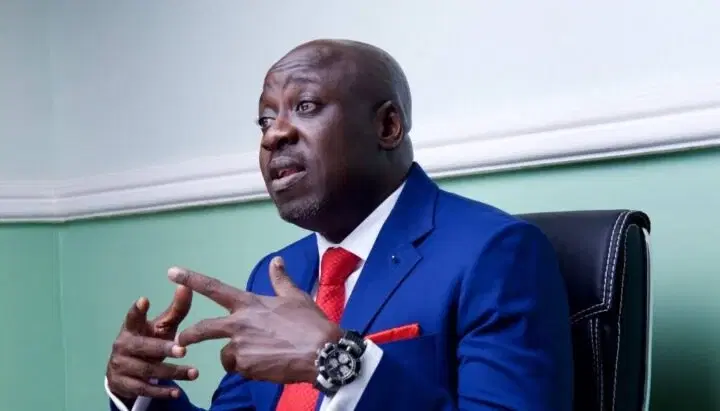
Bolaji Abdullahi, the National Publicity Secretary of the ADC, voiced strong objections during a recent television appearance. He specifically questioned the constitutional legitimacy of the Secretary to the Government of the Federation (SGF), George Akume, assuming presidential duties in the absence of both the President and Vice President. 'Is SGF Akume now the Acting President of the Federal Republic of Nigeria? Is that what they are telling us? Is it the chain of succession that is spelt out by the Nigerian Constitution?' Abdullahi queried, highlighting a perceived breach of constitutional protocol.
The Nigerian Constitution clearly outlines the line of succession, typically designating the Vice President to assume presidential powers in the President's absence. In a scenario where both are unavailable, the constitutional provisions become critical. Abdullahi emphasized that the SGF is an appointee of the President, not an elected official in the direct line of succession, thereby raising profound questions about who is legitimately exercising presidential authority. 'Is the SGF, an appointee of the president, the one who should be in charge of the country when the president and vice president are not around?' he reiterated.
Presidency's Defense and Opposition's Alarm
The Presidency has sought to allay fears, stating that President Tinubu remains in constant communication with officials in Nigeria and continues to direct government affairs remotely. It also clarified that Vice President Shettima is carrying the President's full mandate at the UNGA, and that the SGF would represent the President at certain official engagements within Nigeria. The Federal Government has defended Tinubu's decision to delegate representation to Shettima as neither unusual nor a diminution of Nigeria's diplomatic standing.
However, Abdullahi dismissed the 'working vacation' description, arguing that the Constitution does not provide for a President to effectively govern from abroad through informal arrangements. He warned that this situation 'insults the sensibility of Nigerians, they insult the Constitution,' and is setting a 'very dangerous precedent' with implications far beyond the current administration. 'Nobody is in charge of Nigeria now,' he asserted, underscoring the gravity of the situation.
Call for National Assembly Intervention
In response to these constitutional ambiguities, the ADC spokesman called for the National Assembly to reconvene from its recess to address the pressing questions arising from the President's prolonged absence. He expressed skepticism, however, that lawmakers would heed this call, alleging that they are too closely aligned with the Tinubu administration to act independently on such a sensitive matter. This perceived lack of legislative oversight further exacerbates concerns about accountability and adherence to constitutional principles.
Why This Matters
The simultaneous absence of Nigeria's President and Vice President, coupled with the delegation of duties to an appointed official, raises critical questions about constitutional adherence, governance stability, and the precedent being set for future administrations. This situation underscores the importance of clear lines of succession and robust constitutional frameworks to prevent leadership vacuums and maintain public trust in the nation's democratic institutions.