Key Takeaways
- President Bola Tinubu convened his first Federal Executive Council meeting since June 29, 2026, after a more than two-month pause in cabinet sessions.
- The council observed a minute's silence for former Finance Minister Abubakar Alhaji and former Science and Technology Minister Prof. Turner Isoun.
- Expected policy discussions focus on Nigeria's economic and development agenda, with renewed administrative momentum.
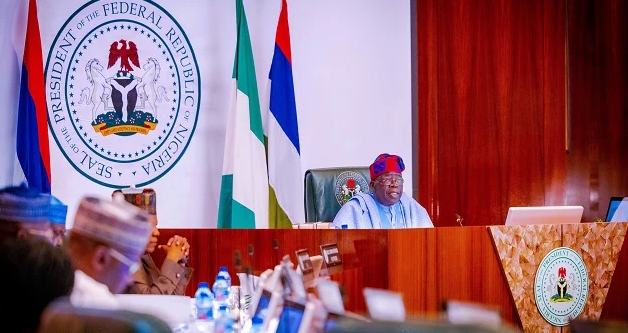
President Bola Tinubu on Wednesday presided over the first Federal Executive Council (FEC) meeting since June 29, 2026, gathering top government officials at the State House in Abuja. The session began with the national anthem shortly after the president entered the Council Chamber at approximately 2:30 pm, marking the return of regular cabinet deliberations after an extended break.
A Return After a Two-Month Break
The June 29 meeting itself had followed a pause of more than two months, meaning the FEC has sat only twice in roughly five months. The renewed meeting signals an effort to restore cadence in executive governance and address pressing national policy questions.
Key officials present included Secretary to the Government of the Federation George Akume; Head of the Civil Service of the Federation Dr. Didi Walson-Jack; National Security Adviser Nuhu Ribadu; and Chief of Staff to the President Femi Gbajabiamila. Ministers, presidential aides, and heads of government agencies also attended, reflecting a broad cabinet turnout.
Tributes to Late Public Servants
Before turning to official deliberations, the council observed a minute's silence in memory of two figures who shaped Nigeria's public service. Abubakar Alhaji, a former Minister of Finance during the administration of former military Head of State Ibrahim Babangida, died on July 30, 2026. Prof. Turner Isoun, who served as Minister of Science and Technology under former President Olusegun Obasanjo, passed away on July 15, 2026.
The tributes highlighted the administration's acknowledgment of the contributions of past officials, bridging continuity between previous governments and the current administration.
Agenda and Expectations
While the specific items on the FEC agenda were not disclosed, the meeting is expected to consider key policy and administrative matters as the administration continues to implement its economic and development agenda. Observers will pay close attention to decisions regarding fiscal policy, infrastructure, and government operations.
The previous FEC sitting was notable for the swearing-in of two new Federal Commissioners of the Revenue Mobilisation, Allocation and Fiscal Commission: Amina Gamawa, representing Bauchi State, and Abdullahi Mukhtar, representing Kaduna State. That step underscored a broader effort to fill critical government positions and reinforce institutional capacity.
Broader Context
The Federal Executive Council serves as a central decision-making forum for Nigeria's executive branch. Gaps between sessions can slow the approval process for major policies, contracts, and appointments. Regular council meetings are therefore closely watched as indicators of administrative momentum and policy direction.
With the resumption of meetings, analysts are likely to interpret the government's renewed rhythm as a signal of urgency around its reform priorities.
Why This Matters
The resumption of FEC meetings after an extended hiatus is more than a procedural event; it carries clear implications for policy execution and public accountability in Nigeria. Consistent cabinet sessions enable faster, more transparent decision-making at a time when economic pressures demand decisive executive action.