Key Takeaways
- President Tinubu urged Afreximbank to prioritize practical industrialization and value addition across Africa.
- He emphasized leveraging the continent's vast human, financial, and natural resources for economic growth.
- Tinubu highlighted Nigeria's recent economic reforms as crucial steps towards stability and investment attraction.
- Afreximbank has committed significant investments in Nigeria, including infrastructure, agriculture, and the cotton/garment industry.
- The administration's focus is on diversifying the economy and reducing dependence on crude oil revenues.
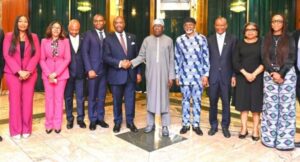
President Bola Tinubu has called on the African Export-Import Bank (Afreximbank) to intensify efforts in mobilizing Africa's vast resources for collective economic advancement. During a visit from an Afreximbank delegation, led by Dr. George Elombi, President Tinubu stressed the urgent need to move beyond theoretical discussions to practical actions that drive industrial growth, expand trade, create jobs, and add value across the continent. He emphasized that robust financial backing and reliable infrastructure are essential for Africa's self-reliant development.
Strategic Reforms and Value Addition
President Tinubu highlighted his administration's bold economic reforms, including the removal of the fuel subsidy and the unification of exchange rates, as critical steps to combat corruption and ensure economic stability. He asserted that Africa's future depends on institutions like Afreximbank collaborating effectively to build the continent. Challenging the traditional model of exporting raw materials without value addition, Tinubu cited Nigeria's solid mineral deposits, such as lithium, as prime examples where Afreximbank should provide investment guarantees to facilitate local production and value addition in manufacturing ecosystems like battery production.
Fostering Agricultural and Industrial Growth
Tinubu urged Afreximbank to synergize with institutions like Nigeria's Bank of Agriculture to boost investments in key agricultural commodities such as cocoa, palm kernel, and palm oil, ensuring value chains yield tangible economic benefits. He also introduced the Federal Ministry of Livestock Development, an initiative designed to transform farmer-herder conflicts into economic opportunities. The President underscored the significant job creation potential within the cotton, ginnery, and garment industries, advocating for practical, results-oriented developmental programs.
Afreximbank's Commitment to Nigeria
Senator John Enoh, Minister of State for Industry, elaborated on President Tinubu's Eight-Point Renewed Hope Agenda, describing it as a transformative blueprint for sustainable economic growth, industrial expansion, and shared prosperity, aimed at reducing reliance on crude oil. Dr. George Elombi, in turn, briefed President Tinubu on Afreximbank's extensive portfolio in Nigeria, confirming substantial investments across trade, agricultural processing, value chains, and healthcare. He noted the bank's efforts to reverse health tourism and its injection of US$15 billion to US$20 billion into the Nigerian economy over the past five years. Elombi also detailed strategic investments in major infrastructure projects, including the Lagos-Calabar Coastal Highway and the Kano-Maradi Railway line, alongside a US$2 billion commitment to Nigeria’s burgeoning cotton and garment industry.
Why This Matters
This engagement signifies a critical alignment between Nigeria's economic reform agenda and Afreximbank's mandate to foster intra-African trade and industrialization. It underscores a concerted effort to unlock Africa's economic potential, create jobs, and build resilient economies less dependent on external factors, ultimately paving the way for sustainable development across the continent.