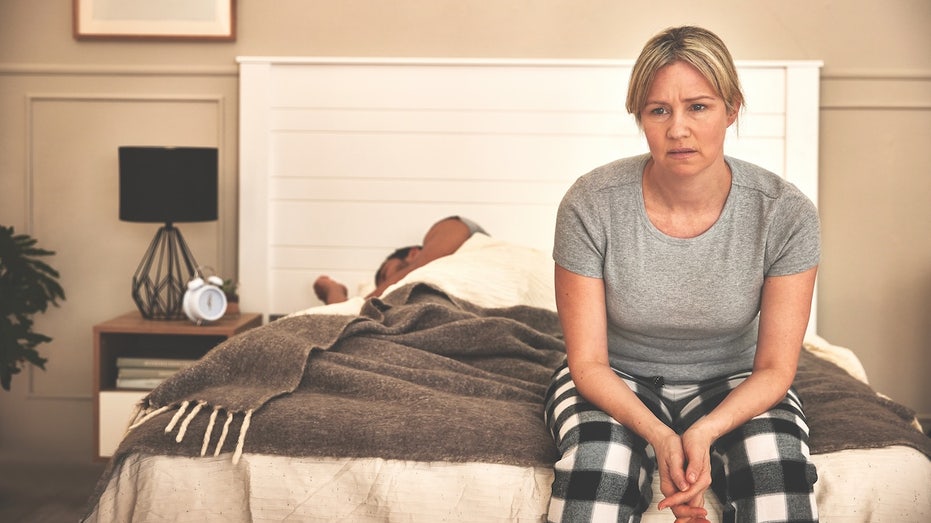
Getting a full eight hours of sleep and still ? Sleep experts say it’s not just about how much shuteye you get.
Dr. Wendy Troxel, a licensed clinical psychologist and senior behavioral scientist at RAND based in Utah, emphasized the "really important distinction" between quantity and quality of sleep.
"Many people will say, ‘Man, I'm sleeping enough, I got seven to eight hours of sleep, but I still wake up feeling groggy and not refreshed,’" she told Fox News Digital during an in-studio interview. "About one in three adults has non-restorative sleep quality."
"There are many factors that can contribute to poor sleep quality, regardless of how many hours you slept," Troxel noted.
These include — a "major contributor" to poor quality or disrupted sleep — and consuming caffeine late in the day.
Being stressed or feeling worried about something can also contribute to fragmented sleep, as can phone use at bedtime.
Troxel addressed the belief that women need more sleep than men, noting that research does support it — though only slightly, by about 10 to 15 extra minutes per night.
"What we absolutely know is that often suffers more than men's," she said. "They may be getting more non-restorative sleep quality, therefore needing slightly more sleep."
Women are also twice as likely to have insomnia compared to men, and their risk for sleep disturbances "skyrockets" during the .
For those who claim they sleep better with fewer hours of sleep — and feel sleepier when they get the recommended seven to nine hours — Troxel said this is not an indicator that they actually require less shuteye. "It's simply that their body is not used to it," she said.
Laboratory studies have shown that sleep deprivation causes impairments in judgment, according to the expert. "That means someone who thinks they're fine with only four hours of sleep per night likely isn't aware of the impact sleep deprivation has on their ."
For those getting less than the recommended amount, Troxel recommends taking small steps toward sleeping longer. That might mean adding about 15 minutes each night to see how it impacts the body, eventually getting into a .
"You will likely see benefits when you increase your sleep in small increments," she said.
Quality sleep hinges on following a and a consistent sleep-wake schedule, according to experts.
Eating a free of foods that cause upset stomach or indigestion, especially in the late evening hours, can help improve sleep quality, Troxel shared.
"You don't want to be starving at bedtime, but you also don't want to be trying to fall asleep on a full stomach while your body's still actively digesting," she said.
to promote quality sleep, just as sleep also improves exercise quality. However, it's best to avoid vigorous physical activity too close to bedtime, Troxel advised.
"Exercise is very stimulating, particularly if it's in a social environment, and that can disrupt sleep," she said. "Exercising earlier in the day is better."
That doesn’t have to mean working out first thing in the morning, Troxel noted, as not everyone’s circadian rhythm supports early wake-ups for exercise.
"Those who are natural morning people are more likely to benefit from ," she said. "If you're a night owl, don't expect to love doing a workout first thing in the morning. That might not be consistent with your circadian rhythm."
Troxel added that people should not be "sleep-shamed" for adhering to their own internal clocks.
"These cultural trends have these subtle, or not-so-subtle, ways of undermining people's sleep-wake biology, which is largely out of our control," she said.