Key Takeaways
- Senator Ibrahim Shekarau's claim of 'solid' northern support for President Tinubu's 2027 re-election is challenged by widespread humanitarian crises and insecurity.
- The 'Arewa for Asiwaju' (A4A) group, comprising former governors and political elites, is seen as representing political interests rather than the suffering populace.
- Data from the World Food Programme (WFP) and Human Rights Watch contradicts claims of northern consensus, highlighting severe food insecurity and rampant abductions.
- Critics argue that A4A's efforts aim to manufacture political consensus rather than reflect the region's dire realities.
- The group's focus on infrastructure projects is deemed a distraction from the urgent needs for food, safety, and justice.
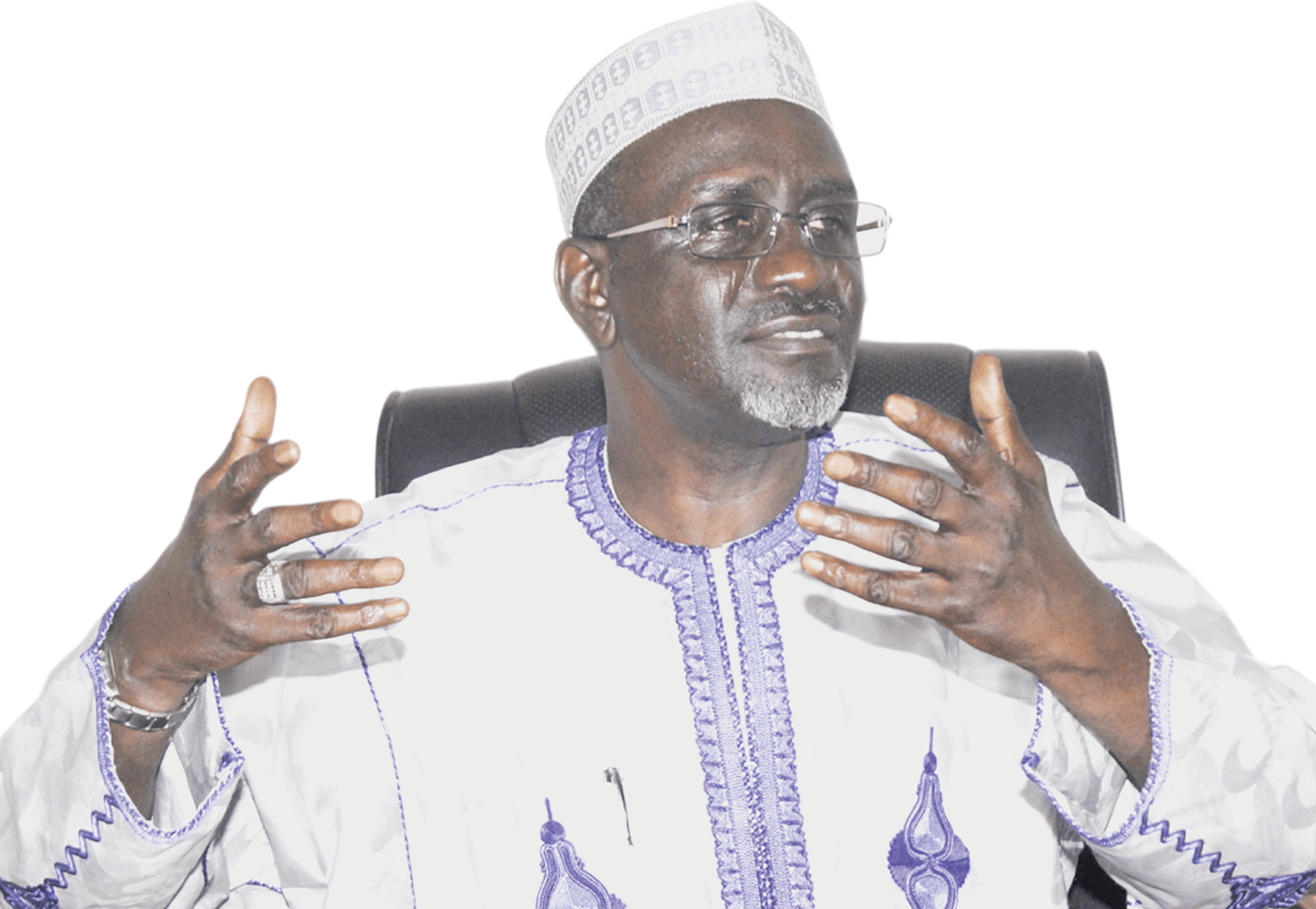
Senator Ibrahim Shekarau, a former governor of Kano State, recently declared that the entire North is 'solidly behind' President Bola Ahmed Tinubu’s re-election in 2027. This assertion was made under the banner of 'Arewa for Asiwaju' (A4A), a group comprising other former governors and political associates from the All Progressives Congress (APC). However, this declaration immediately raises a critical question: which North is Shekarau truly speaking for?
It is evident that Shekarau's pronouncement does not resonate with the daily struggles of millions across northern Nigeria. It cannot be the North of the farmer in Zamfara, who has been unable to access his farmland for consecutive planting seasons due to rampant banditry. Nor can it be the North of the mother in Borno, whose child is among the 5.5 million people in the Northeast whom the World Food Programme cannot reach with life-saving food assistance. This 'solidarity' certainly doesn't reflect the reality of the trader in Mubi, grappling with petrol prices of N1,850 per litre while customers struggle to afford basic necessities. And it unequivocally ignores the young man in Katsina or Sokoto, who witnesses his community burying victims of attacks that the federal government has failed to prevent or prosecute.
The North that Shekarau and his A4A colleagues represent appears to be the North of the APC political establishment. It is a North defined by access to political office, power networks, and the camaraderie of former governors and serving senators. This group convenes in Abuja's convention halls, holds press conferences, and attends secretariat commissioning ceremonies, often graced by high-ranking government officials. This political sphere stands in stark contrast to the grim realities faced by millions outside the perimeters of these elite gatherings.
While Shekarau and his associates possess the right to form political groups and endorse candidates, their claim to represent the collective will of a region nearing 100 million people, many of whom are battling severe hardship, is highly contentious. When Shekarau states the North is 'solidly behind' Tinubu, he is not describing an existing political reality but rather attempting to engineer one, leveraging his past authority to create an illusion of northern consensus where none genuinely exists.
Factual data strongly refutes this claim. The World Food Programme reports that 36.3 million Nigerians are acutely food insecure, with the crisis predominantly concentrated in Borno, Adamawa, Yobe, Katsina, Sokoto, and Zamfara states. In the Northeast alone, 6.2 million people face food insecurity, yet WFP can only reach 740,000, leaving a staggering 5.5 million without vital assistance. The Famine Early Warning Systems Network projects 'Crisis-level' food insecurity across much of northern Nigeria through January 2027, driven by persistent conflict, soaring fuel costs, and eroded household purchasing power.
The security situation is equally dire. Human Rights Watch’s World Report 2026 documented 2,938 abductions in the Northwest between July 2024 and June 2025, accounting for over 60 percent of all reported incidents nationwide. Zamfara alone recorded 1,203 abductions. In the Northeast, Boko Haram factions have resumed deadly attacks, claiming at least 57 lives in Borno in May and 60 more in September. The Nigerian authorities have largely failed to apprehend or prosecute those responsible. The North that Shekarau describes as 'solidly behind' this administration is, in reality, a region where communities bury their dead without justice or accountability.
The A4A group often highlights a catalogue of infrastructure projects to counter claims of neglect. Roads, bridges, and gas pipelines are indeed significant developments. However, they do not translate into food for a hungry child in Sokoto, nor do they guarantee safety for a farmer in Katsina unable to harvest his crops. They do not provide the accountability that the families of the 52 people killed in Plateau State in April 2025 still desperately await. When the basic conditions for survival are deteriorating for millions, a list of construction projects serves more as a distraction than a genuine rebuttal to the region's profound suffering.
Why This Matters
The disconnect between political elites and the suffering populace in northern Nigeria represents a critical challenge to democratic governance and national stability. When leaders prioritize political maneuvering over addressing urgent humanitarian and security crises, it erodes public trust and exacerbates the very problems they claim to represent, ultimately undermining the legitimacy of the political process and the welfare of millions.