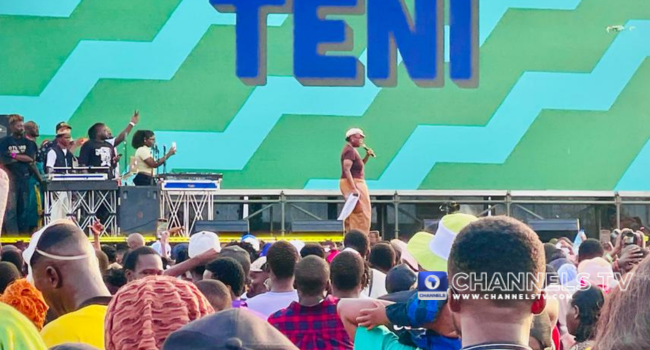
The 2026 edition of the Lagos Fanti Carnival came alive on Monday at Tafawa Balewa Square (TBS), Lagos Island, as some of Nigeria’s top music stars delivered electrifying performances that captivated revellers.
Headlining the live stage entertainment were Afrobeats sensation Teni, veteran hitmaker 9ice, Afro-house queen Niniola, and indigenous rapper Reminisce, alongside Terry Apala and other emerging acts.
The performers transformed the carnival into a vibrant musical spectacle, complementing the colourful street marches and cultural displays that defined the day-long event.
Niniola energised the crowd with a high-tempo rendition of her hit song, Maradona, keeping attendees dancing throughout her set. Reminisce followed with a powerful delivery of his street-hop anthems, drawing loud cheers from fans.
9ice brought a nostalgic touch with a commanding performance of his classic Afrobeats catalogue, while Teni stood out with her dynamic stage presence and interactive performance style.
In one of the day’s most memorable moments, she invited a fan on stage, engaging him in a playful exchange that drew laughter and excitement from the crowd.
Other performers, including Terry Apala and rising acts such as Pereira, Dimeji, Serrano, Taiye, Tete, and the duo Wanni & Handi, sustained the momentum with a blend of Apala, highlife, and contemporary fusion sounds.
The carnival also attracted high-profile dignitaries, including Babajide Sanwo-Olu, his wife Ibijoke Sanwo-Olu, and Deputy Governor Obafemi Hamzat.
Held as part of Easter Monday celebrations, the Lagos Fanti Carnival is widely regarded as one of West Africa’s most distinctive cultural festivals. This year’s theme, “A Homecoming of Heritage,” highlighted the city’s rich Afro-Brazilian roots.
The carnival traces its origins to the 19th century, when formerly enslaved Africans, known as Afro-Brazilian returnees or Aguda, resettled in Lagos after returning from Brazil.
They introduced a unique blend of cultural practices, including architecture, cuisine, music, and festivities, which have since merged with indigenous Yoruba traditions.
These influences were on full display through elaborate parades organised by seven historic Lagos Island communities, including the Brazilian Campos Carreta Carnival Association, the Isale-Eko Woro Carnival Association, and the Okoo-Faji Carnival Association, among others.
Participants adorned themselves in vibrant costumes featuring feathers, beads, and sequins, accompanied by samba-inspired rhythms, masquerades, and traditional Yoruba performances.
Organised in collaboration with the Lagos State Ministry of Tourism, Arts and Culture and the cultural group Nuru Lab, the 2026 edition built on the momentum of its 2025 revival, with expanded programming and increased participation.
Ahead of the main event, a pre-carnival summit held at Glover Memorial Hall on April 2 focused on the economic potential of cultural festivals, exploring opportunities in tourism, trade, and cultural exchange.