Key Takeaways
- Former VP Atiku Abubakar criticizes President Tinubu for consistently attributing Nigeria's economic challenges to past administrations.
- Atiku argues that continued blame-shifting three years into a government's term signals a lack of fresh ideas and solutions.
- He dismisses Tinubu's assertion of impending prosperity as disconnected from the harsh economic realities faced by most Nigerians.
- Atiku highlights the importance of visionary leadership in transforming a large population into an economic asset, drawing a contrast with China's development model.
- He calls for policies that deliver tangible improvements in citizens' lives, stressing that hope must be earned through action, not rhetoric.
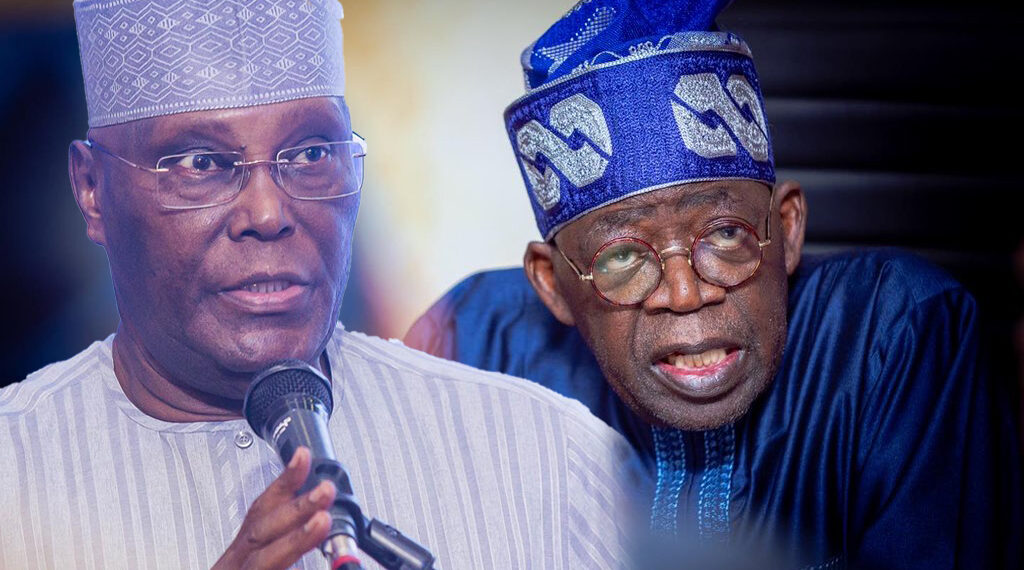
Former Vice President Atiku Abubakar has issued a pointed rebuke to President Bola Tinubu, urging him to abandon the practice of blaming previous administrations, including that of Muhammadu Buhari, for Nigeria's persistent economic difficulties. Atiku, through his Senior Special Assistant on Public Communication, Phrank Shaibu, stated on Friday that any government still pointing fingers at its predecessors more than three years into its tenure is, by its own admission, demonstrating a profound lack of innovative solutions.
The Imperative for Solutions Over Excuses
Atiku underscored that the Nigerian populace is no longer interested in historical narratives of who caused the nation's problems, but rather in who will effectively resolve them. While acknowledging that President Tinubu inherited a challenging economic landscape, the former Vice President firmly asserted that governance cannot be reduced to a continuous commentary on past events. He emphasized that the constitution empowers the President to enact change, not merely to recount history, and that great leaders are remembered for solving problems, not endlessly rehashing them.
Challenging the 'Prosperity on the Horizon' Narrative
The former Vice President's strong statement was prompted by President Tinubu's recent declaration that “prosperity is on the horizon” and that the quality of life for Nigerians is improving. Atiku vehemently dismissed this claim as a fantasy, completely detached from the lived experiences of ordinary citizens. He questioned whose horizon the President was referring to, citing the plight of market women whose capital has been eroded by inflation, civil servants whose salaries are insufficient, manufacturers grappling with exorbitant energy costs, unemployed graduates, and families forced to reduce daily meals to survive. He also accused the current administration of institutionalized fiscal recklessness and what he termed one of the greatest appropriation scandals in Nigeria's history.
Lessons from Economic Giants: The China Analogy
Atiku further critiqued President Tinubu's comparisons of Nigeria to China, suggesting a fundamental misunderstanding of that nation's economic transformation. He explained that China achieved economic superpower status not by lamenting its population size, but by visionary leadership that strategically invested in manufacturing, infrastructure, education, technology, and export-led industrialization. Atiku maintained that Nigeria's youthful population represents a significant strategic advantage, not a burden, if properly harnessed.
A Call for Tangible Policies and Real Engagement
The former Vice President also condemned as insensitive any suggestion that Nigerians should tolerate current hardships because hunger existed in earlier decades. He stressed that Nigerians elected President Tinubu to confront the hunger and suffering of today, not to eliminate the problems of the past. Atiku reiterated that genuine hope cannot be manufactured through speeches but must be earned through concrete policies that translate into tangible improvements in people's lives. He urged the President to step away from official briefings and choreographed public appearances to engage directly with the everyday realities faced by citizens, asserting that the Nigeria described by Tinubu simply does not exist outside official rhetoric. An Atiku administration, he pledged, would prioritize aggressive investment in manufacturing, modern infrastructure, quality education, skills acquisition, agriculture, and export-driven industries to unlock the nation's immense productive capacity.
Why This Matters
This exchange highlights a critical debate in Nigerian governance: whether the focus should be on historical blame or proactive solutions. It underscores the public's demand for accountability and tangible improvements in living standards, rather than rhetoric or comparisons to past hardships, shaping the discourse on effective leadership and economic recovery.