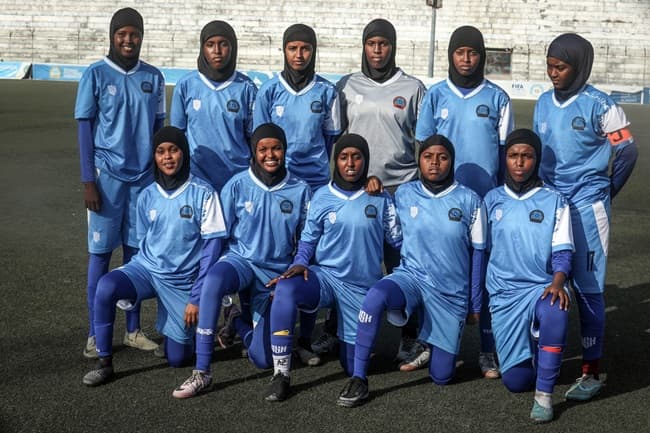
A scene once deemed unimaginable in Somalia's conservative, conflict-scarred capital is now a vibrant reality: hundreds of spectators recently cheered as two young women's football teams battled it out in a Mogadishu stadium. This burgeoning movement represents a powerful defiance of extremist ideologies and a beacon of hope for a nation reclaiming its spirit.
From the Shadows of Threat to the Roar of the Crowd
Just a few years ago, such public displays of entertainment, particularly involving women, faced severe threats from the Al-Qaeda-affiliated militant group Al-Shabaab, which deemed football 'un-Islamic.' While Al-Shabaab's influence still lingers, Mogadishu's security landscape has vastly improved, paving the way for events like this historic match.
At a recent game, the energy was palpable. Despite a largely segregated main stand, the sight of men and women sharing sections underscored a societal shift. The Ilays women’s team delivered a resounding 5-0 victory over their Nasiib opponents, yet the competitive score did little to dampen the overall celebratory mood.
“If you were in Mogadishu a couple of years ago, an occasion like this, with two girls’ football clubs playing, would not have been possible… but with time, things are improving,” remarked Ali Muhidin, one of the many thrilled spectators.
Rapid Growth and Challenging Norms
The women's football championship, launched in 2024 with a modest 80 players, has exploded in popularity. Barely two years later, it boasts 600 participants across 10 teams, drawing talent not only from Mogadishu but also other parts of the country. This exponential growth speaks volumes about the thirst for such opportunities.
Ali Abdi Mohamed, president of the Somali Football Federation, reflected on this incredible journey. “No one could have imagined that one day Somali women would play football in their country, where even men were forbidden to play by fighters who had declared football ‘un-Islamic’,” he told AFP. “But something we couldn’t even dream of has become a reality.”
While acknowledging that not all families in the largely conservative Muslim nation readily allow their daughters to play, Mohamed confirmed that the federation has encountered no serious complaints, highlighting a quiet acceptance taking root.
The 'Ocean Queens' Eye International Shores
Somalis have long been ardent followers of European football, but local teams have often been overlooked. The men's national team currently ranks 200th in FIFA, just ahead of a few microstates. The women's team, dubbed the 'Ocean Queens,' played its first friendly match in Djibouti last October and is not yet listed by the international federation.
However, this is set to change dramatically. The 'Ocean Queens' are rigorously preparing for their maiden international tournament – an under-17s event slated for May in Tanzania. This marks a monumental step for Somali women's sports on the global stage.
Midfielder Ramas Abdi Salah, 17, embodies this new generation of female athletes. Like her teammates, she observes cultural modesty, wearing thick tights, a long-sleeved shirt under her sports kit, and a black headscarf. “For women to play football is not shameful or taboo,” she asserted. “As you can see, I’m fully covered except for my face and my hands. I haven’t received any bad comments,” adding that she has her family's full approval.
A Message of Resilience and Dreams
Even after a challenging match where she conceded five goals, goalkeeper Najma Ali Ahmed remained undeterred. Her love for the game transcends individual setbacks.
“I’m sending a message to female footballers to work toward the dream of joining the national team,” Ahmed declared, her words echoing the aspirations of countless young women now finding their voice and passion on the football pitch in Somalia. This burgeoning movement is not just about scoring goals; it's about scoring a brighter future for an entire generation.