Key Takeaways
- Vice President Kashim Shettima urged Plateau residents to reject ethnic profiling and inherited bitterness.
- He stated that perpetrators of violence do not represent any tribe, religion, or community.
- Shettima emphasized that lasting peace requires the younger generation to break the cycle of revenge.
- He appealed to elders to guide youth towards forgiveness rather than fueling conflict.
- The Vice President highlighted Plateau State's critical role in Nigeria's history and security.
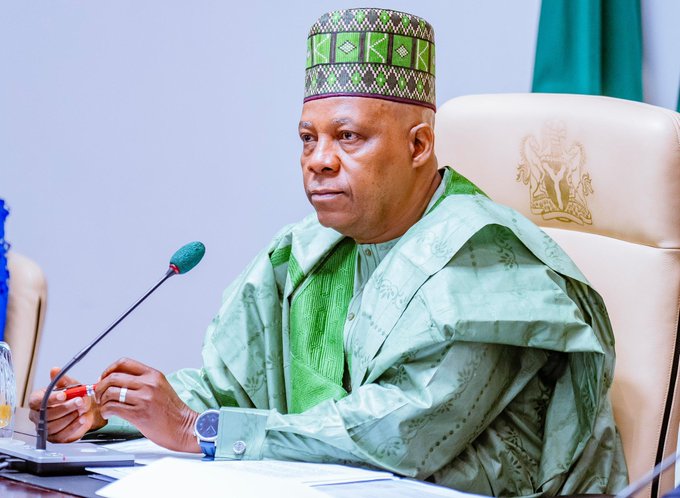
Vice President Kashim Shettima has issued a powerful appeal to the people of Plateau State, urging them to rise above ethnic profiling and inherited animosities that have long plagued the region. Speaking passionately in Jos during the 80th birthday celebration and public presentation of the autobiography of former Plateau Governor, Senator Jonah David Jang, Shettima asserted that those behind the violent attacks in the state are criminals who do not represent any specific tribe, religion, or community.
The Vice President's address underscored a critical message: genuine and lasting peace can only be achieved when the younger generation consciously decides to break free from the destructive cycle of revenge. “Criminals have no tribe or religion,” Shettima declared. “I urge the younger generation to reject inherited hatred and embrace peace and reconciliation.”
The Burden of Inherited Conflict
Shettima expressed profound concern over the profound impact of these protracted conflicts on the state's youth, particularly women and children. He noted that many young people are forced to carry burdens stemming from disputes they did not initiate, which can hinder their lives significantly. “The young men and women of Plateau have inherited baggage they did not create. They carry the grievances of a generation they never met and the quarrels of a history they never wrote,” he lamented, highlighting the intergenerational trauma inflicted by persistent violence.
He further implored the elders and leaders within the community to take on the crucial role of guiding the youth towards forgiveness and understanding, rather than inadvertently fueling the flames of violence. The Vice President stressed that instigating conflict offers no viable solution to the deep-seated issues. “Tell them what hatred costs. Show them that forgiveness is the hardest labour a strong man ever undertakes and the only virtue greater than revenge,” Shettima passionately advised.
Rejecting Collective Guilt
A central theme of Shettima's message was the imperative to avoid blaming entire ethnic or religious groups for the actions of a few criminals. He firmly stated, “Those carrying out these atrocities have no mandate from any community. They represent no religion, no ethnicity and no culture. When innocent people are condemned for the sins of criminals, we deepen our divisions and hand victory to those who profit from violence.” This statement serves as a potent reminder against the dangers of collective punishment and stereotyping, which only exacerbate societal fractures.
The Vice President painted a vivid picture of the devastation wrought by these conflicts, noting how they have transformed once fertile lands into 'places of mourning' and 'emptied markets of laughter.' He observed that the perpetrators sought to replace trust with suspicion and hope with fear. Yet, despite these profound challenges, Shettima commended the people of Plateau for their resilience, stating, “Even in these painful moments, the people of Plateau have refused to surrender their humanity.”
Shettima concluded his address by appealing to elder statesmen, specifically Senator Jonah David Jang, to mentor young people and guide them towards a path of peace and reconciliation. He lauded Plateau State as central to Nigeria’s history and security, acknowledging Jang’s decades of dedicated service to the nation.
Why This Matters
Vice President Shettima's call for peace and reconciliation in Plateau State is crucial for fostering stability in a region historically plagued by ethno-religious conflicts. His emphasis on rejecting ethnic profiling and breaking the cycle of revenge offers a vital framework for healing and sustainable development, underscoring the government's commitment to addressing the root causes of insecurity and promoting national unity.
}