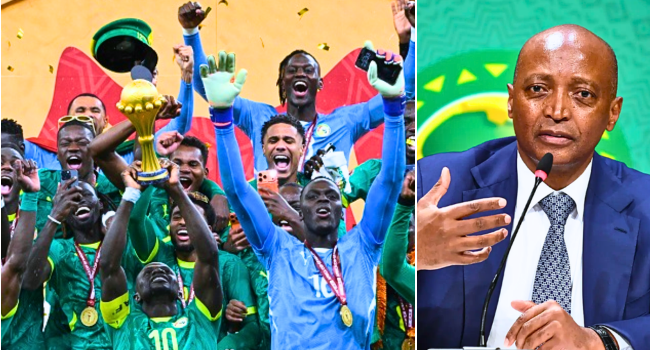
The Confederation of African Football (CAF) president, Patrice Motsepe, has underscored that Senegal has the right to challenge the contentious decision that deprived it of the 2025 Africa Cup of Nations (AFCON) title. Motsepe stressed that every country in Africa has the right to pursue appeals and advance their interests without fear of preferential treatment.
Addressing the Controversy
Motsepe addressed the controversy surrounding the AFCON 2025 final between Senegal and Morocco in a video interview published by CAF. He expressed his extreme disappointment with the incidents that occurred during the match, which undermined confidence in African football. The CAF president acknowledged that the situation is part of a long-standing credibility challenge within African football.
CAF's Reforms and Independence
Motsepe explained that CAF has adopted a new approach in appointing members of its judicial bodies to ensure independence and integrity. He emphasized that the credibility of decisions remains central to the organization's reforms and that public trust would ultimately determine the legitimacy of CAF's decisions.
Key Points and Reactions
- CAF overturned the outcome of the AFCON 2025 final, stripping Senegal of the title and awarding a 3–0 victory to Morocco.
- The decision followed findings that Senegal violated Article 82 of CAF regulations during the match, resulting in forfeiture.
- Senegal had originally won the final 1–0 on 18 January 2026, courtesy of an extra-time goal by Pape Gueye.
- The match was marred by controversy after Senegalese players walked off the pitch in protest of a penalty awarded to Morocco.
- The Senegalese Football Federation is expected to challenge the decision at the Court of Arbitration for Sport.
Motsepe stressed that not a single country in Africa will be treated in a manner that is more preferential or more advantageous than any other country on the continent. He added that CAF has commenced internal reviews following the final, emphasizing the importance of public trust in the organization's decisions.