Nigerian universities have been urged to move away from dependence on government allocations and embrace capital formation, investment and ownership through the capital market
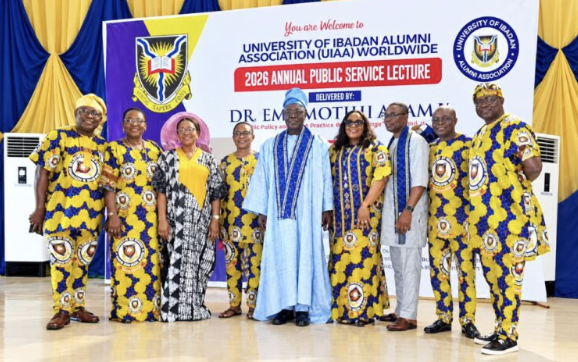
The call was made at the University of Ibadan Alumni Association Annual Public Service Lecture held on Friday in Ibadan
The lecture was themed: “First and Best But Whose Capital Built It? Rethinking How Nigeria Funds Its Own Future”
Delivering the lecture, the Director-General of the Securities and Exchange Commission (SEC), Dr Emomotimi Agama, traced the University of Ibadan foundation to an audacious capital decision
Agama recalled that in 1948, the chiefs and people of Ibadan donated 2,500 acres of land to the institution on a 999-year lease
He noted that despite producing a Nobel laureate, heads of state, central bank governors and builders of the capital market, the university had never approached the market to raise long-term funds
“Not once Not a bond. Not a fund. Not a listed vehicle.
“The premier university of Africa’s largest economy has been, financially speaking, a spectator at a market its own graduates built,” he said
Agama argued that continued dependence on government appropriations was unsustainable given the country’s current fiscal realities
He added that the university had about 41,700 students, while its halls of residence were built to accommodate fewer than 10,000, forcing thousands to live off-campus
The SEC director-general stressed that the problem was not a scarcity of capital in Nigeria but a failure to translate available capital into productive investments
He noted that pension assets stood at N3148 trillion as of July 2026, while total market capitalisation on the Nigerian Exchange (NGX) stood at N215.09 trillion.
Agama also contrasted the N465 trillion raised by banks over 24 months through recapitalisation with the N2.53 billion allocated to a university by the Tertiary Education Trust Fund (TETFund), representing a ratio of about 1,000 to one.
According to him, the figures demonstrated that long-term capital was available and seeking bankable, long-term investment opportunities
Agama proposed five financing instruments that the university could explore under the Investments and Securities Act 2025
He said the first was a properly constituted endowment fund registered with the SEC as a collective investment scheme, with an independent trustee, a licensed fund manager and a spending rule of four to five per cent
The second, he said, was the issuance of bonds and sukuk through a ring-fenced vehicle backed by a defined, revenue-generating university asset
Agama described student housing as the most urgent opportunity for the university, proposing a Real Estate Investment Trust (REIT) or concession arrangement to convert rent currently paid by students to private landlords into a revenue stream for the institution
He also proposed a university innovation fund that would take equity stakes in spin-off companies emerging from its laboratories while enabling the institution to retain ownership of its research output
The SEC director-general added that the university could explore a diaspora-targeted investment instrument using the non-resident Bank Verification Number (BVN) framework to channel part of the $218 billion in annual remittances from consumption into investment.
He, however, cautioned that accessing the capital market required financial discipline
He listed the requirements to include the annual publication of audited accounts, credit ratings by registered agencies, ring-fenced revenue streams that could withstand changes in leadership, and professional intermediation
Agama urged alumni to move from giving donations that were consumed to providing capital that could grow over time
He proposed an Alumni Capital Fund with a low minimum investment threshold to enable young graduates and Nigerians in the diaspora to participate, supported by transparent governance and annual audited accounts
In his remarks, the Acting President of the association, Prof Terrumun Gajir, said the theme was timely as the country grappled with how to mobilise capital for sustainable prosperity.
Gajir said Nigeria needed to deepen domestic investment and reduce excessive dependence on external capital
According to him, this requires mobilising pension funds, household savings and private capital for productive national development
He noted that a functional capital market would not only provide returns for investors but also support industries, infrastructure development and job creation
Gajir said the task before universities was to move from a culture of dependence to one of capital formation, investment, ownership and shared prosperity
Earlier, the Chairman of the occasion, Bayo Oyero, said the University of Ibadan should begin investing directly in financial markets beyond the activities of its alumni association
Oyero, an alumnus of the university, said the institution needed an independent endowment fund, separate from the existing Alumni Endowment Fund, which could be invested in properties and other assets to generate reasonable returns
He also called for the discussion to be extended to young Nigerians to encourage them to begin planning for their financial future early through investments in shares and stocks (NAN)