Key Takeaways
- President Tinubu's economic policies have been criticized by Catholic Bishops and Emir of Kano
- The government's response has been to reject criticism and claim economic progress
- Experts argue that the government's approach to economic policy is flawed and ignores the needs of ordinary Nigerians
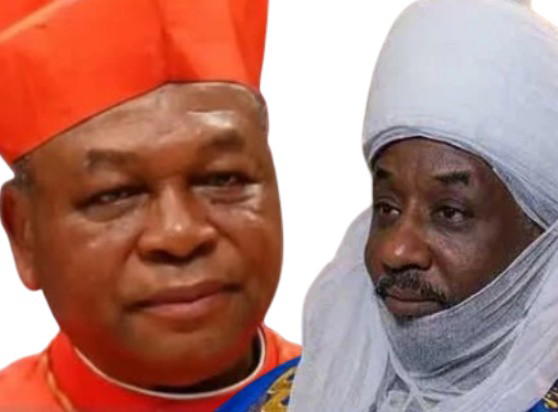
Nigeria's economic future is under intense scrutiny as President Bola Ahmed Tinubu's government faces criticism from prominent figures, including the Catholic Bishops and the Emir of Kano. In a recent meeting, the Catholic Bishops expressed concern about the worsening economic hardship and insecurity in the country, only to be rebuffed by the President, who insisted that his economic policies are working.
The Emir of Kano, Muhammadu Sanusi II, a former Governor of the Central Bank of Nigeria and a self-declared friend of President Tinubu, has also warned that any economic policy that does not improve the welfare of the people is inherently ineffective. Despite these criticisms, the government has chosen to reject external assessments and instead focus on macroeconomic indicators, such as GDP growth rate and stock market performance.
The Limits of Macroeconomic Indicators
While macroeconomic indicators are important, they do not tell the whole story of a country's economic health. Nigeria's current GDP growth rate, for example, is not exceptional and is barely within the country's historical average. Moreover, the government's reliance on these indicators ignores the actual impacts of its policies on the lives and livelihoods of Nigerians.
The government's approach to economic policy has been criticized for being too focused on stabilization policies, such as removing fuel subsidies and unifying the exchange rate, without sufficient attention to development policies, such as industrial and agricultural policy, job creation, and social protection. This approach has been described as ultra-orthodox and ideological, rather than practical.
The Need for Intellectual Humility
The government's rejection of criticism and its insistence on its own interpretation of reality have been criticized for being intellectually insulated and epistemically closed. This approach has been described as nonsense and ignores the fact that economic policies have direct impacts on the lives and livelihoods of millions of Nigerians.
Why This Matters
The Tinubu government's approach to economic policy has significant implications for Nigeria's future. If the government continues to ignore criticism and fail to adapt its policies to the needs of ordinary Nigerians, the country risks further economic hardship and instability. It is essential for the government to adopt a more inclusive and pragmatic approach to economic policy, one that takes into account the diverse perspectives and needs of all Nigerians.