Revolutionizing Firefighting with Robotics
Firefighters often face the daunting task of entering burning buildings without knowing the full extent of the danger. Now, a new robotic firefighter is set to change this reality.
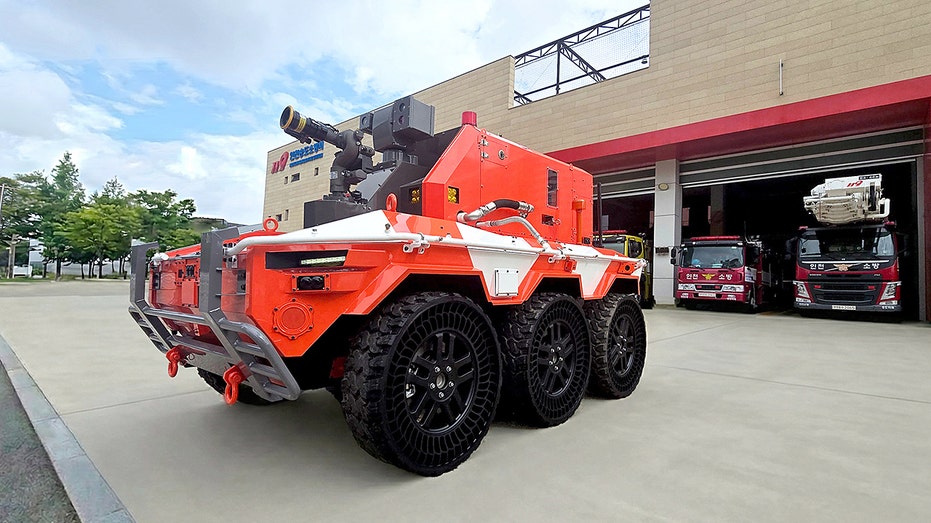
This innovative robot is designed to be a first responder, entering hazardous environments and gathering vital information. Equipped with advanced sensors and a robust design, it can navigate through smoke, detect fires, and assess the situation, all while keeping firefighters out of harm's way.
Features that Make a Difference
- The robot boasts a powerful water cannon with adjustable spray patterns, allowing it to tackle fires effectively.
- Infrared cameras enable it to see through smoke, providing real-time visuals to firefighters.
- A unique self-cooling system ensures the robot can operate in extreme temperatures, creating a protective water curtain.
- Six independently powered wheels provide exceptional maneuverability, allowing it to navigate debris and tight spaces with ease.
- Advanced driving systems and terrain scanning help it avoid obstacles and navigate challenging environments.
- A glowing hose feature assists firefighters in low-visibility conditions, ensuring a safer exit path.
A Growing Trend in Emergency Response
Robotic firefighters are part of a broader movement in emergency services. From mining trucks to landmine clearance, machines are taking on high-risk tasks. By handling the initial, most dangerous phase, these robots allow human responders to focus on rescue and strategy.
The potential for these systems to evolve is immense. Artificial intelligence could further enhance decision-making by analyzing fire patterns and heat levels.
Real-World Impact and Future Prospects
Developed in collaboration with South Korea's National Fire Agency, this robotic firefighter has already been deployed in real emergencies. The technology's effectiveness was demonstrated during a factory fire, showcasing its ability to provide critical data and reduce risks.
With a focus on firefighter safety, the goal is to minimize injuries and fatalities. As the technology advances and proves its worth, it may soon become a standard tool for fire departments worldwide, leading to faster rescues and safer operations.
While these robots may not replace human firefighters, they offer invaluable support and information, ultimately saving lives and improving emergency response.