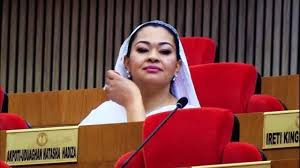
By John Alechenu, Abuja
ABUJA — Senator Natasha Akpoti-Uduaghan (PDP, Kogi Central) has called for improved remuneration, welfare and working conditions for doctors and other health workers to help address maternal mortality and retain medical professionals, particularly in rural communities
Akpoti-Uduaghan made the call on Monday at the ongoing “Unfinished” event organised by Ward-C in collaboration with the National Human Rights Commission, NHRC, in Abuja
The event focused on maternal health, women’s rights and reproductive choices
The senator said tackling maternal mortality required more than building healthcare facilities, stressing that adequate personnel and the necessary equipment and support systems must be available to make such facilities effective
She said health workers serving underserved communities needed adequate remuneration, functional equipment, essential medicines, reliable electricity, conducive working environments and opportunities for professional development
According to her, healthcare infrastructure could not function effectively without the human resources required to operate and sustain it
“Healthcare infrastructure could not function effectively without the human capital required to operate and sustain it,” she said
Akpoti-Uduaghan said improved conditions of service would help motivate health workers and encourage them to remain in rural communities where they often operate under difficult conditions
“Better conditions of service would also encourage medical professionals to remain motivated and committed to their responsibilities, particularly in rural communities where healthcare workers often operate under difficult circumstances,” she said
On maternal mortality, the senator said women in rural communities remained particularly vulnerable because many healthcare facilities lacked adequate personnel and equipment to manage complicated pregnancies and neonatal emergencies
She questioned the sustainability of equipment such as incubators in communities with unreliable electricity supply
“Is there electricity? Is there enough electricity in the rural areas to sustain the incubators wherever they are?” she asked
She called for stronger referral systems linking primary healthcare centres with general and specialist hospitals, as well as functional laboratories, blood banks, neonatal facilities, emergency transportation, electricity and water supply
Akpoti-Uduaghan also questioned the accuracy of available maternal mortality data, particularly in rural communities, where she said some deaths might not be captured
“I don’t think that data is really reflective of the situation in the rural communities It will probably double up,” she said.
She disclosed that her concern about maternal healthcare in underserved communities informed her decision to build a maternity centre
Speaking on reproductive choices, the senator said exposure to different healthcare systems had broadened her understanding of the circumstances confronting some women and girls
She called for support systems that provide information, counselling and assistance to women facing difficult pregnancy-related decisions
“If I myself can be made to tilt from being pro-life to reasonably begin to appreciate the reason for choice, then I think I would say that I would love to support this kind of conversation,” she said
She also stressed the importance of ensuring that children are born into homes where they can receive care, love and support
Akpoti-Uduaghan urged stakeholders to sustain discussions on maternal health and simultaneously invest in healthcare infrastructure and the welfare of medical professionals to improve care for women and children, particularly in underserved communities