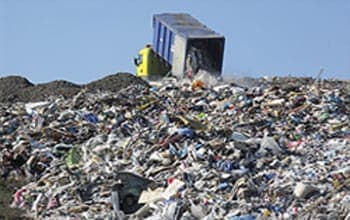
Residents of some satellite communities in the Federal Capital Territory (FCT), including Karu, Orozo, Karshi, Nyanya, Kurudu and Kpegyi, have raised concern over the growing menace of indiscriminate refuse dumps, lamenting persistent stench and rising health concerns.
The residents said the situation has worsened due to poor waste management, irregular refuse evacuation and alleged illegal dumping by waste contractors, leaving many neighbourhoods overwhelmed by heaps of decomposing waste.
In Orozo and Nyanya, residents described daily exposure to foul odour from nearby dumpsites, noting that the stench permeates homes, contaminates the environment and disrupts sleep and general well-being.
A trader in Nyanya, Mrs Grace Okorie, said living close to a dumpsite had made life unbearable for her family. According to her, “the smell is constant and worse during the heat. My children fall sick often, and we spend a lot on treatment.”
Similarly, another resident, Mrs Hadiza Mohammed, said flies from the dumpsites often contaminate food, while visitors rarely stay due to the offensive smell. “You cannot eat in peace. Even when you cover your food, flies still find their way. It is frustrating and embarrassing,” she said.
In Karu, a resident, Daniel Yakubu, said the situation had negatively affected his business, as customers avoid his workshop because of the odour. He added that some clients turn back immediately after perceiving the smell, leading to loss of income.
Another resident, Sadiq Lawal, a commercial driver, described the situation as “a daily burden,” noting that commuters often complain about the stench when passing through affected areas. “Passengers complain a lot. Some even cover their noses or ask to alight quickly. It is not good for us,” he said.
A food vendor in the area, Mrs Aisha Bello, said the environmental condition has driven customers away. “People like my food, but they complain about the surroundings. Business has dropped because nobody wants to eat where there is bad smell,” she said.
Adding to the concerns, a hairdresser in Nyanya, Miss Blessing Ojo, said the odour affects her daily work. “Sometimes customers sit down and cannot even stay for long because of the smell. It affects my income seriously,” she said.
Residents further expressed concern over the impact on children, who are often forced to play around dumpsites due to lack of recreational facilities, exposing them to injuries and infections.
Ngozi Ekwueme said her son recently sustained injuries after stepping on broken glass near a dumpsite. “These children are exposed to danger every day. We try to warn them, but there is nowhere else for them to play,” she lamented.
Also, Usman Abdullahi, a security guard in Kurudu, said stagnant water around dumpsites has worsened mosquito infestation in the area. “At night, mosquitoes are too many. We cannot sleep without using nets or chemicals,” he said.
Health experts have warned that prolonged exposure to unmanaged waste could lead to serious health challenges, including respiratory illnesses, malaria, typhoid and other infections, especially among vulnerable groups.
A public health physician, Amaka Mba, described living near dumpsites as a “silent emergency,” citing the dangers of inhaling toxic gases and exposure to disease vectors such as flies, rodents and mosquitoes.
Residents blamed the situation on limited access to waste collection services and weak enforcement against illegal dumping, alleging that some refuse handlers dump waste in the areas at night.
A community leader in Kpegyi, Samuel Onoja, said several appeals to authorities had yielded no result. “We have written letters and made complaints, but nothing has changed. It feels like we have been abandoned,” he said.
Similarly, Miss Rukayat Sani said the situation has taken an emotional toll on residents. “It is depressing to wake up every day to dirt and bad smell. Sometimes you feel helpless because nobody seems to care,” she said.
Another resident, Peter Eze, alleged that illegal dumping mostly occurs at night. “You will sleep and wake up to see fresh heaps of refuse. It keeps increasing daily,” he said.
Residents called for urgent intervention, including improved waste collection systems, stricter enforcement against illegal dumping and better coordination among government agencies to address what they described as a growing environmental and public health crisis.
Efforts to get the reaction of the Abuja Environmental Protection Board (AEPB) spokesperson, Janet Peni, on the matter proved abortive as of press time.