Pioneering Remote Surgery Achieved Across Continents
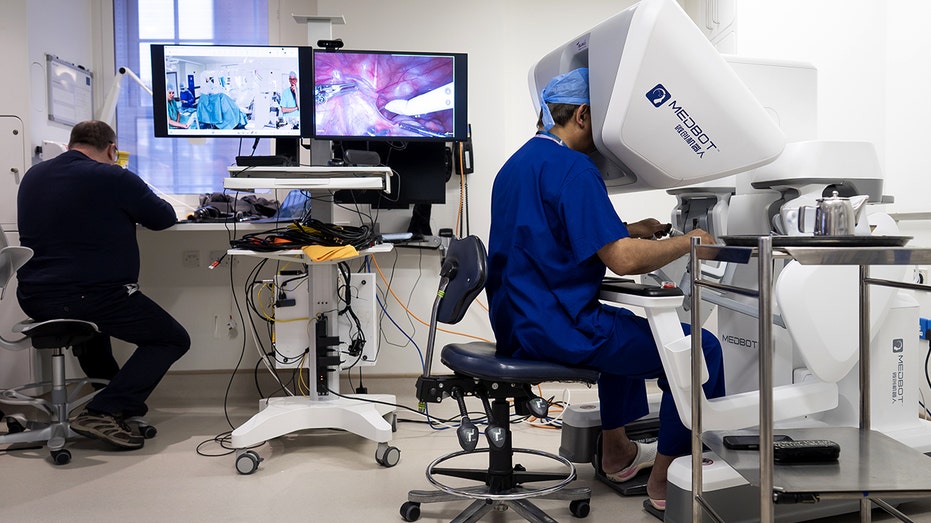
In an extraordinary advancement for cancer treatment, doctors at The London Clinic successfully utilized remote technology to perform prostate cancer surgery for a patient located nearly 1,500 miles away. This innovative approach highlights the potential of telesurgery, where the specialist operates from a different country, benefiting patients with localized care.
The Breakthrough Procedure
During the procedure, Professor Prokar Dasgupta directed a sophisticated robotic system from the London Clinic's robotic center on Harley Street while the patient received treatment at St Bernard's Hospital in Gibraltar. The operation was facilitated by the Toumai robotic surgical system, engineered by MicroPort MedBot, known for its high-precision capabilities in minimally invasive surgeries.
High-Tech Connections Made It Possible
A fiber optic network enabled seamless communication between the two hospitals, with an impressive command-response delay of merely 48 milliseconds, making the surgical interaction feel almost instantaneous. Local urological surgeons, James Allen and Paul Hughes, stood by in Gibraltar to assist if any issues arose during the procedure. Fortunately, the surgery proceeded without complications.
A Patient's Perspective
The patient, 62-year-old Paul Buxton, who has resided in Gibraltar for decades, initially faced the prospect of traveling to London for his surgery. However, he seized the opportunity to participate in a revolutionary telesurgery trial earlier this February, allowing him to avoid extensive travel and its associated costs and waiting times. Buxton reported feeling fantastic just days after the operation, enabling a smoother recovery at home.
Remote Surgery: A Decades-Long Journey
This pioneering event was a long time coming, as remote robotic surgery has been progressing for several decades, with one of the earliest demonstrations occurring during the Lindbergh Operation, where surgeons successfully operated across continents. Technological advances have since enabled various long-distance surgeries, including prostate operations in Africa and others between Rome and Beijing.
A Future with Remote Robotics
The medical community envisions a transformative shift in surgery accessibility with ongoing demonstrations, including plans to live-stream a telesurgery procedure to hundreds of surgeons at the upcoming European Association of Urology Congress. Collaborative technologies are now essential for making remote surgery a viable option.
- Surgeons depend on immediate visuals to ensure precision, necessitating sophisticated fiber optic networks to minimize latency.
- Robotic surgical systems translate the surgeon's movements into high-accuracy actions within the patient's body, enhancing outcomes for complex procedures.
- High-definition 3D cameras grant an improved view of the surgical field, often surpassing the clarity offered in traditional surgery.
Challenges Ahead
Despite breakthrough potentials, remote robotic surgery encounters significant challenges, including:
- Requirement for robust infrastructures that guarantee nearly flawless network reliability.
- High costs associated with robotic systems and specialized network setups.
- Regulatory hurdles and legal complexities due to cross-border operations.
Hospitals remain cautious, treating telesurgery as an emerging capability. Current practices necessitate well-defined backup strategies to ensure local surgical teams are ready to intervene if any technological failures occur.
Implications for Patients
The insights gleaned from this operation suggest that patients may soon have access to complex surgical procedures without the need for long-distance travel. This advancement could particularly benefit those in rural regions, enhancing access to specialized care and potentially decreasing overall wait times for necessary operations. However, patient safety and procedural reliability remain top priorities before remote surgeries become a commonplace practice.
Conclusion
As surgical technology races ahead, the cross-continental operation connecting London and Gibraltar illustrates the exciting possibilities of remote robotic surgery. While the shift toward routine practices will take time, the vision is clear: geographical barriers may become irrelevant in achieving world-class surgical care.
Would you trust a surgeon operating from afar? Share your thoughts by reaching out to us at Cyberguy.com.