Key Takeaways
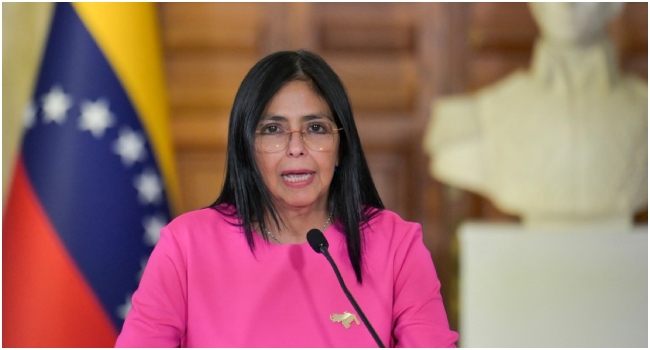
- Venezuelan interim president Delcy Rodriguez has formally requested King Charles III to release 30 tons of gold.
- The gold, held at the Bank of England, is frozen due to UK sanctions and a dispute over Venezuela's legitimate leadership.
- Venezuela intends to use these funds for critical reconstruction efforts following devastating twin earthquakes.
- The earthquakes have caused significant loss of life, widespread destruction, and left thousands homeless or missing.
- The plea highlights the complex interplay between international sanctions, humanitarian crises, and sovereign asset control.
In a direct appeal to the British monarchy, Venezuela’s interim president, Delcy Rodriguez, has formally requested King Charles III to facilitate the release of approximately 30 tons of Venezuelan gold. This substantial reserve, valued at over a billion dollars, is currently held at the Bank of England and has been frozen under UK sanctions amidst a protracted political dispute over the nation's legitimate leadership.
Venezuela's Urgent Appeal
Rodriguez articulated the urgency of her request on state television, stating, “I decided to send a letter to the King of England to have the gold held at the Bank of England released. This gold belongs to our people. We need this gold to deal with the consequences of the earthquake.” Her plea underscores a desperate need for financial resources as Venezuela confronts one of its most severe natural disasters in recent memory.
The Frozen Gold Controversy
The saga of Venezuela's gold at the Bank of England is deeply intertwined with the UK's diplomatic stance on the South American nation. For years, the British government has recognized opposition leader Juan Guaidó as Venezuela's interim president, rather than Nicolás Maduro, whose 2018 re-election was widely contested. This recognition has led to a complex legal battle over who has the authority to access Venezuela's state assets held abroad, including the significant gold reserves in London. The Bank of England, acting as a custodian, has maintained that it cannot release the gold without clear legal direction regarding the legitimate authority.
Devastation from Twin Earthquakes
The humanitarian crisis gripping Venezuela has been exacerbated by twin earthquakes that struck last month. These catastrophic tremors have claimed the lives of at least 3,800 people, flattened scores of residential buildings, and left thousands more homeless or missing. The scale of destruction has overwhelmed local resources, making international aid and access to national assets critically important for recovery and reconstruction efforts. Communities are struggling with widespread displacement, inadequate shelter, and a dire need for basic necessities.
Economic Lifeline or Political Pawn?
For Venezuela, the release of this gold represents a vital economic lifeline. The nation has been grappling with a severe economic crisis, marked by hyperinflation and widespread shortages, for years. Accessing these funds would provide a much-needed injection of capital for rebuilding infrastructure, providing humanitarian assistance, and stabilizing the economy in the wake of the earthquake disaster. However, the UK's decision remains complicated by the ongoing political deadlock and the legal precedents involved in releasing sovereign assets under such contested circumstances.
The international community watches closely as King Charles III and the UK government weigh this humanitarian appeal against the intricate legal and political considerations. The outcome will not only impact Venezuela's ability to recover from a devastating natural disaster but could also set a significant precedent for the handling of sovereign assets in politically charged environments.
Why This Matters
This situation highlights the profound ethical and legal dilemmas faced by nations holding assets of states embroiled in political disputes, especially when humanitarian crises demand immediate action. The decision regarding Venezuela's gold could significantly influence the lives of millions affected by the earthquakes and shape future international responses to similar complex scenarios.