Key Takeaways
- President Paul Biya returned to Cameroon after being away for 73 days.
- His absence has raised concerns regarding his health and the stability of his government.
- The opposition criticized the situation as creating an 'institutional vacuum' in the country.
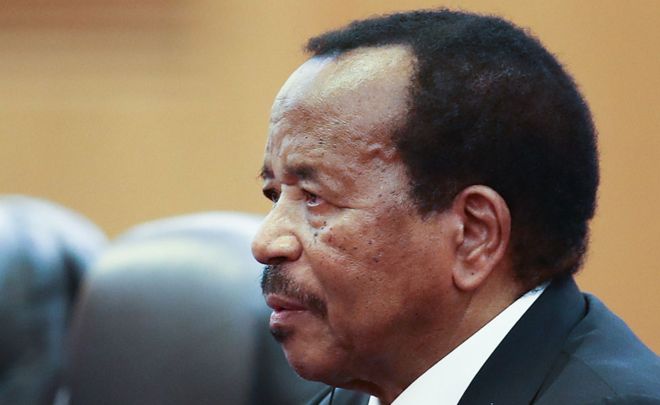
President Paul Biya made his return to Cameroon on Thursday after a lengthy 73-day trip abroad, a period that has sparked significant speculation regarding the health of the 93-year-old leader. Notably, Biya, who has been at the helm of Cameroon since 1982, landed in Yaoundé at around 1600 GMT from Geneva, where he had been staying since June 7 under the guise of a "short private stay." This extended absence has led to an increase in public interest and concern.
As Biya left the airport, he was greeted by a crowd of supporters, some wearing clothing emblazoned with his image. Their presence underscores the enduring loyalty of a faction of the population, despite the growing frustrations expressed by others regarding his protracted absences and governance issues.
Biya's health has been a topic of ongoing rumors and speculation, frequently correlated with his numerous stays in Geneva. Following some reports about potential hospitalization, Cameroon's Communication Minister Rene Emmanuel Sadi publicly denied that Biya had been admitted to a clinic in Geneva, attempting to quell fears surrounding the president's well-being.
The implications of Biya's absence have not gone unnoticed. Numerous critics from the opposition have condemned the situation as creating an "institutional vacuum," pointing out that the country has been running on "autopilot" without clear leadership as discussions surrounding a new government and vice-president have stalled for months.
This pattern of absence has become frustrating for many Cameroonians, as President Biya's long tenure at the top has seen repeated questions about governance and accountability. His recent electoral victory in 2025, which was marred by allegations of suppression of protests, only adds fuel to the fire. Authorities acknowledged multiple fatalities during those protests but have refrained from providing a clear tally, leaving many to question the state of democracy in Cameroon.
Why This Matters
President Biya's lengthy absence raises significant questions about governance in Cameroon, illustrating deep-seated issues related to leadership accountability and health concerns. As the country moves forward, the implications of his health and political decisions will undoubtedly remain in the spotlight, affecting both domestic and international perceptions of stability.