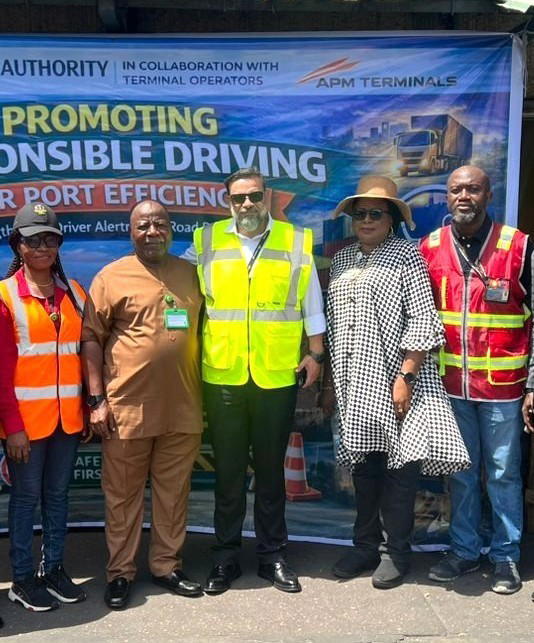
Nigeria’s largest container terminal, APM Terminals Apapa, in partnership with the Nigerian Ports Authority, has rolled out a drug and alcohol testing campaign aimed at external truck drivers operating within the port.
Speaking on the initiative, Lagos Port Manager, Adebowale Lawal Ibrahim, underscored the critical role of driver fitness in maintaining safety:“We must ensure that operators of heavy-duty trucks are fully alert and mentally fit. Port safety depends on it. Routine testing will serve as a strong deterrent and help curb substance abuse among drivers. We commend APM Terminals Apapa for spearheading this collaboration, which reinforces our shared commitment to a safe port environment.”
The campaign, conducted at the port entrance with the support of Port Police and Port Health Services, screened truck drivers using breathalyzer tests. Out of 30 drivers tested during the latest exercise, three were found to be under the influence of alcohol, reflecting an improvement compared to previous exercises.
Managing Director of APM Terminals Apapa, Kamal Alhraishat, highlighted that the initiative is part of a broader safety commitment:“We recently achieved a significant milestone of 636 days without a Lost Time Injury, and our priority is to sustain and build on this performance. Extending safety measures beyond our workforce to include external truck drivers is a necessary step.”“Driving under the influence puts the driver at direct risk, while also endangering other road users, terminal personnel, and critical port assets. A single lapse can lead to serious incidents involving trucks, container handling equipment, or cargo. This initiative is about protecting lives, safeguarding assets, and strengthening a safety-first culture across the port community.”
Describing substance abuse among some external drivers as a real concern, he noted that consistent testing, combined with awareness, will help drive behavioral change over time.
The campaign reinforces the shared commitment of APM Terminals Apapa and the Nigerian Ports Authority to proactive risk management, safer operations, and the protection of people, infrastructure, and cargo within Nigeria’s busiest port.