Key Takeaways
- Former NFF President Amaju Pinnick defends FIFA's proposal to sell a 20% stake in the World Cup and other major competitions.
- Pinnick highlights FIFA President Gianni Infantino's history of successfully increasing financial allocations to member associations.
- The initiative aims to generate substantial revenue, potentially providing up to $20 million to each national football association.
- He urges a focus on the integrity of potential investors and the transparent use of funds, rather than outright rejection.
- Pinnick draws parallels with past football innovations like VAR, which initially faced criticism but ultimately gained widespread acceptance.
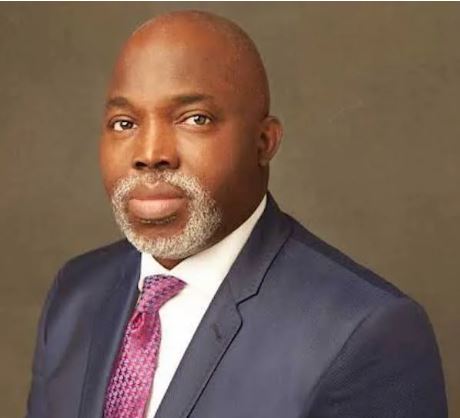
Former President of the Nigeria Football Federation (NFF), Amaju Pinnick, has emerged as a staunch defender of the Fédération Internationale de Football Association’s (FIFA) contentious proposal to divest a 20 percent stake in its flagship tournaments, including the prestigious World Cup. Speaking on Arise TV's 'The Morning Show', Pinnick, who currently serves as the deputy chairperson of the FIFA Men’s National Teams Competitions Committee, urged stakeholders to evaluate the initiative based on its inherent merits and potential benefits.
The proposal, which FIFA announced recently, has ignited a furious response from various quarters, most notably from the Union of European Football Associations (UEFA). However, Pinnick firmly believes that the planned sale is designed to inject substantial new revenue into the global football ecosystem, ultimately empowering member associations rather than undermining the sport's integrity.
Infantino's Proven Track Record of Financial Reforms
Pinnick underscored FIFA President Gianni Infantino's consistent history of introducing reforms that have demonstrably benefited member associations. He recounted a personal anecdote from Infantino's presidential campaign, where the then-candidate promised a dramatic increase in financial support for FAs. “When he was campaigning to be president of FIFA, he came to me in Rwanda,” Pinnick recalled. “He told me, ‘Now you receive $200,000. Once I get elected, you will now start receiving $1.25 million.’ I said, ‘That is a big lie. Where do you want to get the money from?’ He said, ‘We did it in UEFA. We turned UEFA around, and we can also do it in FIFA. I have seen my books and consulted.’”
True to his word, Infantino delivered on this promise, with each FA receiving approximately $6 million per cycle. This track record, Pinnick argues, should instill confidence in Infantino's current proposal.
Empowering Member Associations and Addressing Concerns
The former NFF president highlighted the significant financial injection this proposal could bring. “Gianni has said clearly, once this is done, the MAs will receive $20 million. They have also got the FIFA Fast Forward Programme. You can also access another $20 million. So if, for example, you have $40 million, trust me, you don’t need a government to run football.” This substantial funding, he suggests, could foster greater autonomy and development within national football bodies.
Addressing concerns about the integrity of the funds and potential influence from private investors, Pinnick emphasized that the focus should be on scrutinizing the consortium or companies involved. “What people should be bothered about is the integrity of the funds, the integrity of the personnel, the people, the consortium, or, if you like, the company. Are these companies quoted in stock exchanges all over the world? These are things more people should be bothered about. And the use of the funds.” He also pointed out that FIFA has robust control mechanisms in place to ensure accountability.
Pinnick dismissed fears that private investors could unduly influence FIFA decisions, drawing parallels with other innovations in football. “When VAR was introduced, there was a lot of criticism; they called it controversial. Now, VAR has come to stay.” He asserted that football is an evolving sport, and new proposals, even those initially met with skepticism, should be given fair consideration. He concluded by stating that the football community should celebrate such initiatives for their potential to drive success and progress.
Why This Matters
This debate over FIFA's commercial strategy highlights a critical juncture for global football governance and finance, potentially reshaping how major tournaments are funded and how revenue is distributed among national associations, impacting the sport's development worldwide.
}