By Luminous Jannamike
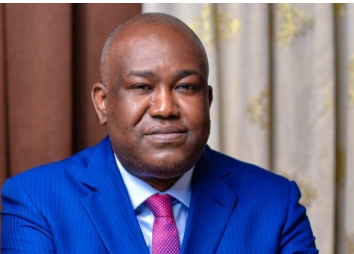
The crisis within the Peoples Democratic Party, PDP, has intensified, with presidential aspirant and founding member, Gbenga Hashim, considering the option of leaving the party. This development comes as reconciliation efforts have collapsed, and concerns about the party's future mount ahead of the 2027 elections.
The current situation reflects a party grappling to maintain its unity, with its credibility as an opposition platform steadily eroding. It also raises fresh doubts about its preparedness for the next electoral cycle.
Escalating Tensions and Party Infighting
Sources familiar with the situation have indicated that tensions have escalated in recent weeks, with consultations intensifying across party lines as key figures quietly reassess their political futures.
What began as an internal leadership dispute has evolved into a full-blown structural breakdown, with entrenched factions and competing interests rendering the party increasingly ineffective as a national opposition platform.
Concerns Over Party Alignment and Democratic Future
More concerning are growing indications that elements within the PDP may have aligned with the political establishment under President Bola Ahmed Tinubu, raising fears that the party is being systematically weakened from within.
This has fuelled speculation that the PDP risks losing its identity as an opposition force, with some even warning of a drift towards tacit support for the ruling party ahead of the 2027 elections.
Remaining within a fractured and potentially compromised structure could undermine both Gbenga Hashim's presidential ambition and his long-standing commitment to democratic plurality, according to an insider.
Possible Coalition Building and Future Implications
Sources have also indicated that Gbenga Hashim's consultations point to a broader play, either building or aligning with a coalition strong enough to reshape the political field ahead of 2027.
His ongoing consultations across party lines suggest a deliberate effort to build or align with a broader coalition capable of resisting the emergence of a one-party dominant system in Nigeria.
This moment may well represent a turning point, not just for Gbenga Hashim, but for the future of opposition politics in Nigeria.
If key actors begin to exit or disengage from the PDP, the party could face a rapid decline in relevance, paving the way for a new political alignment to emerge.
Stakes for Nigeria's Democracy
At stake is more than partisan advantage. The weakening of viable opposition structures raises fundamental questions about the health of Nigeria's democracy.
Without a strong and independent opposition, the risk of democratic erosion becomes increasingly real.
As 2027 approaches, the choices made by actors like Gbenga Hashim will help determine whether Nigeria sustains a competitive political system or slides into a de facto one-party state, according to another source familiar with the talks.