Key Takeaways
- Cameroon's President Paul Biya has been absent from the country for 48 days, sparking debate about government inaction.
- Biya's health has been the subject of speculation and rumors, with the government denying reports that he was hospitalized in Geneva.
- The opposition views Biya's absence as indicative of a 'glaring institutional vacuum' and has called for the establishment of a procedure for determining the head of state's incapacity.
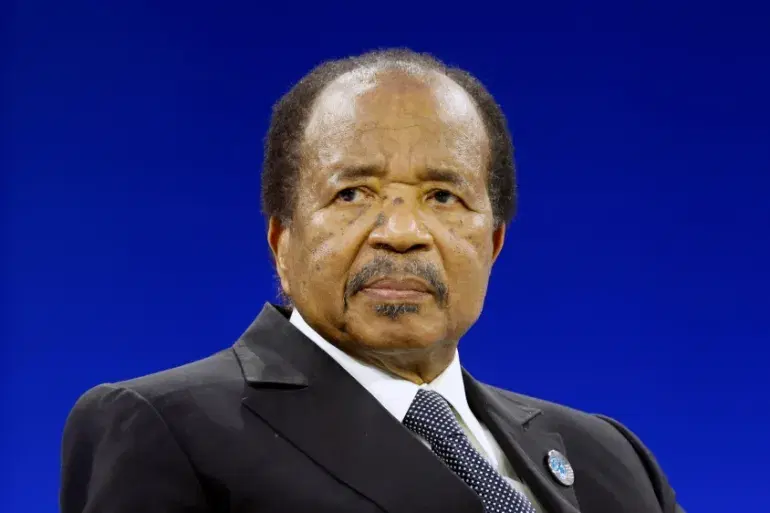
President Paul Biya's lengthy absence from Cameroon has reignited debate about government inaction and sparked speculation about his health and the country's future. As of Saturday, it will be 48 days since Biya, 93, who has been in power for more than 40 years and is the world's oldest head of state, left Cameroon.
An official statement said he departed on June 7 for a 'short, private stay in Europe' with his wife Chantal Biya. However, the president's frequent trips to Geneva over the years have faced waves of speculation and rumors regarding his health, which at times have been denied by the government.
Speculation and Rumors
Responding to articles in the press, Communication Minister Rene Emmanuel Sadi issued a statement on June 18, denying that Biya had been hospitalized in a Geneva clinic. Still, the opposition views Biya's absence as indicative of a 'glaring institutional vacuum', according to Mamadou Mota, vice-president of the Cameroon Renaissance Movement (MRC).
Earlier this month, the president of the Cameroon Democratic Union (UDC), Patricia Tomaino Ndam Njoya, called on the government to establish 'an impartial procedure for determining the temporary or permanent incapacity' of the head of state. A senior official in the ruling party and minister of higher education Jacques Fame Ndongo on Tuesday dismissed the accusations of a power vacuum.
'Wherever he is, the head of state is meticulously following the files submitted to him… by his aides,' he said. Allegations of a power vacuum in Cameroon are nothing new — the last time was in late 2024 when Biya spent around 50 days outside the country.
Government Inaction
The opposition Social Democratic Front (SDF) party on Friday said the country was 'on autopilot'. Biya's repeated absences over more than 20 years have fueled the frustrations of many Cameroonians over government inaction. 'People are worn out from waiting,' Viviane Ondoua Biwole, a professor of public management at the University of Yaounde, told AFP.
'First of all because the current government has been in place for eight years, which is a record. Next, because we are coming out of an election with very mixed results. Many people consider after an election, it is time for renewal,' she said. Biya's re-election for an eighth term in October sparked demonstrations that were violently repressed.
Why This Matters
The ongoing situation in Cameroon has significant implications for the country's stability and future, with the lack of clear succession planning and the potential for infighting among different factions within the government. As the country waits for a new government team to be formed, the uncertainty surrounding Biya's health and the government's inaction continue to fuel speculation and rumors. The situation underscores the need for a clear and transparent process for determining the head of state's incapacity and for establishing a stable and effective government.