Key Takeaways
- Ebonyi State Governor Francis Nwifuru is mediating a dispute over unpaid pensions and gratuities for more than 200 retired Ebonyi State University (EBSU) workers.
- Governor Nwifuru clarified that the state government does not directly employ university staff, making the institution primarily responsible for their retirement benefits.
- An understanding has been reached between the state administration and EBSU management to accommodate the affected retirees and find a resolution.
- The governor highlighted his administration's commitment to fiscal prudence, redirecting funds from elaborate project commissioning to infrastructure development.
- President Bola Tinubu is slated to commission key projects, including the Senate building, at the ICT University during an upcoming visit to Ebonyi State.
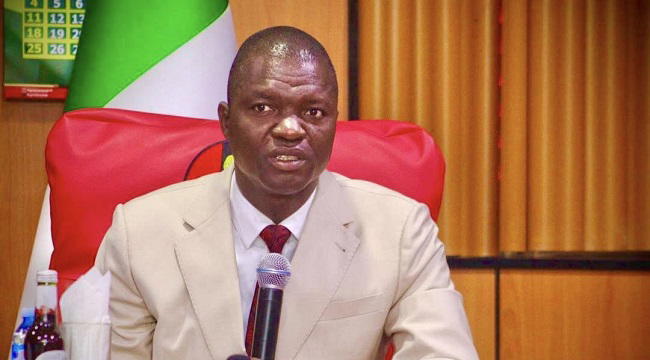
ABAKALIKI, Ebonyi State – Governor Francis Nwifuru of Ebonyi State has stepped into a protracted dispute concerning the non-payment of pensions and gratuities owed to over 200 retired workers of Ebonyi State University (EBSU). The governor's intervention follows a direct appeal from the affected retirees, who have sought his administration's assistance in securing their long-overdue retirement benefits.
Addressing the retirees, Governor Nwifuru articulated the complex legal and administrative framework governing the employment and remuneration of university staff. He explained that the responsibility for hiring and managing university personnel primarily rests with the institution's management, rather than directly with the state government. This distinction, he noted, is crucial in determining the appropriate authority for pension and gratuity payments.
“The problem now is who actually is responsible for the payment of the pensions and gratuities of these people, since the government of Ebonyi is not the one employing them. They are not the ones hiring,” Governor Nwifuru stated, underscoring the core of the issue. He further elaborated on the legal principle, asserting, “The law is very clear. You cannot fire who you did not hire. That’s the problem that they are facing.” This perspective highlights the challenge faced by state governments in assuming financial liabilities for entities with a degree of administrative autonomy.
Navigating University Autonomy and State Responsibility
The governor's remarks shed light on the intricate relationship between state governments and state-owned universities in Nigeria. While state governments often provide significant funding, universities typically operate with their own governing councils and employment structures. This autonomy, while vital for academic freedom, can create ambiguities regarding financial obligations, particularly concerning staff welfare and retirement benefits.
However, Governor Nwifuru assured the retirees that his administration is not indifferent to their plight. He disclosed that an understanding has been reached with the university management to accommodate the affected individuals and explore viable solutions. “We have gotten to a point that we agreed with the management of the university. We agreed that what we should do is accommodate these people that are already crying,” he affirmed, signaling a collaborative approach to resolving the impasse.
He further clarified that the financial responsibility for university workers' pensions often depends on the institution's operational model. “If they are being run by government, it is the responsibility of government; their staff are staff of that state government. But if they are not being run by government, then you cannot say that the government should also pay,” he explained, indicating a nuanced understanding of institutional financial structures.
Fiscal Prudence and Infrastructure Drive
Beyond the pension dispute, Governor Nwifuru also provided an update on his administration's broader development agenda, emphasizing a commitment to fiscal prudence. He noted that work is progressing steadily at the state's ICT University, despite the prevailing limited resources. In a strategic move to maximize public funds, the governor revealed that his administration has significantly reduced spending on elaborate project commissioning ceremonies and associated publicity.
“We are not spending much money in order to commission projects. We have small resources, so the money we would spend on television houses, media houses and social media for commissioning projects can be used to do one kilometre of road,” he stated, highlighting a pragmatic approach to resource allocation aimed at channeling funds directly into tangible infrastructure development.
Looking ahead, Governor Nwifuru disclosed that President Bola Tinubu is expected to visit Ebonyi State to commission several key projects at the ICT University, including the newly constructed Senate building. This presidential visit is anticipated to bring national attention to the state's developmental strides and further cement its position as a hub for technological advancement in the region.
Why This Matters
The resolution of the pension and gratuity dispute at Ebonyi State University is crucial for the welfare of hundreds of retirees and sets a precedent for how state governments and autonomous institutions manage their financial obligations. Governor Nwifuru's pragmatic approach to both the pension crisis and infrastructure development underscores a commitment to good governance and efficient resource management, which are vital for sustainable growth and public trust in the state.