Key Takeaways
- Former NAPIMS GGM, Bala Wunti, confirmed no N210 trillion is missing from NNPC Ltd.'s 2023 audited financial statements.
- The controversial figure resulted from a misinterpretation of distinct balance sheet items: sundry receivables and accrued expenses.
- NNPC's financial reporting is complex due to its triple role as a commercial entity, federal asset manager, and energy security guarantor.
- Actual statutory payments for NNPC's incorporation post-PIA amounted to N2.45 billion, not N5.8 billion, paid directly to government bodies.
- The Senate Committee's review prioritizes transparency and understanding NNPC's accounts, not validating unsubstantiated claims.
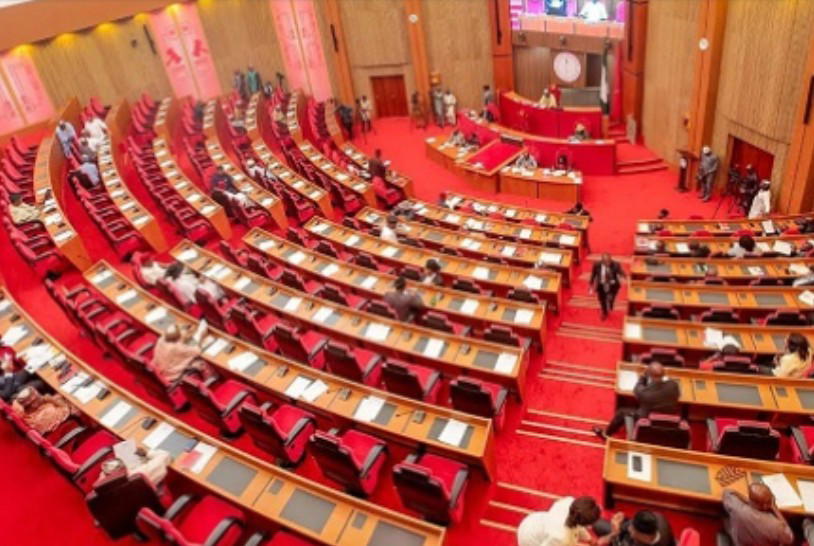
ABUJA – The Nigerian National Petroleum Company (NNPC) Limited has decisively addressed allegations of N210 trillion missing from its 2023 audited financial statements. This crucial clarification was provided by Bala Wunti, the former Group General Manager (GGM) of the National Petroleum Investment Management Services (NAPIMS), during his recent appearance before the Senator Ibrahim Dankwambo-led Senate Committee on Public Accounts.
Unraveling the N210 Trillion Misconception
Wunti, who thoroughly reviewed the accounts at the committee's request, unequivocally stated that the widely circulated N210 trillion figure did not represent missing funds. Instead, he attributed it to a significant misinterpretation of standard accounting entries. He elaborated that the sum was erroneously derived by combining two distinct balance sheet items: N107 trillion recorded as sundry receivables (funds owed to NNPC) and approximately N103 trillion in accrued expenses (liabilities owed by the company).
"Receivables are money other people owe you, while accrued expenses are money you owe other people," Wunti clarified. "Accounting standards strictly mandate these items be reported separately. They cannot simply be aggregated and then inaccurately described as missing money." He emphasized that the audited financial statements contained no evidence supporting the allegation of such a colossal sum disappearing from NNPC's books.
NNPC's Complex Financial Ecosystem
The former NAPIMS boss underscored the inherent complexity of NNPC's financial reporting, noting its divergence from a conventional commercial enterprise. NNPC operates simultaneously as a commercial entity, manages vast petroleum assets for the Nigerian federation, and fulfills strategic responsibilities vital for national energy security. This multifaceted role necessitates a unique and intricate accounting framework.
Wunti, who oversaw NAPIMS from March 2020 before becoming Chief Offshore Investment Officer of NNPC Upstream Investment Management Services until December 2024, affirmed that throughout his tenure, no instances of fraud or missing funds were reported. He also highlighted that while the Petroleum Industry Act (PIA) has streamlined many of the former NNPC's functions, the company still maintains distinct accounting records to accurately reflect its diverse activities and its management of assets held in trust for the federation.
Setting the Record Straight on Incorporation Costs
Beyond the N210 trillion claim, Wunti also addressed allegations concerning the cost of NNPC's incorporation following the PIA's implementation. He refuted reports of N5.8 billion being spent, clarifying that actual statutory payments to the Corporate Affairs Commission (CAC) and the Nigeria Revenue Service (NRS) for filing fees and stamp duties amounted to approximately N2.45 billion. The higher figure, he explained, resulted from accounting entries recorded in separate books, where one organizational arm processed the payment on behalf of government shareholders, while another recorded the same transaction for statutory reporting purposes.
"The only money paid was about N2.45 billion, and it went directly to government institutions. No third party received any payment," he reiterated, underscoring the transparency of these transactions.
Advocating for Enhanced Collaboration and Understanding
To prevent future misunderstandings and foster greater clarity, Wunti urged closer collaboration among NNPC, the Office of the Accountant-General of the Federation (OAGF), and the Office of the Auditor-General of the Federation. He stressed the imperative for a deeper collective understanding of NNPC's intricate accounting framework, alongside a broader appreciation of the Nigerian Constitution, the PIA, and other relevant statutes governing the company's extensive operations.
Senator Dankwambo, Chairman of the Committee, corroborated this, confirming that the committee found no evidence of any missing money from NNPC accounts. He emphasized that the ongoing review's primary objective is to ensure transparency and achieve a proper understanding of the company’s audited financial statements, rather than to validate unproven claims of financial irregularities. The committee will now meticulously study Wunti’s written submission alongside the 2023 audited financial statements before determining any further clarifications.
Why This Matters
The Senate's rigorous examination of NNPC Ltd.'s financial statements is crucial for upholding public trust and ensuring accountability within Nigeria's vital oil and gas sector. Clarifying these complex financial figures helps to dispel misinformation, promotes transparency, and reinforces investor confidence in the nation's largest state-owned enterprise.