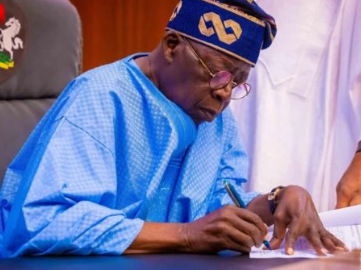
The Nigeria Labour Congress (NLC) has criticised President Bola Tinubu’s request to the National Assembly for approval to obtain fresh external loans of $205 billion and €1.45 billion, questioning the justification for continued borrowing.
NLC President, Comrade Joe Ajaero, said the basis for the proposed loans was unclear, particularly in view of the Federal Government’s claims of increased revenue following the removal of petrol subsidy
Speaking on ’s The Morning Brief on Thursday, Ajaero challenged the government to explain why it continued to seek loans from international financial institutions despite the reported increase in revenue
“If you come out to tell us that the subsidy is gone, that you are making more money and then you are giving more money to states, what is the justification for continually borrowing from the International Monetary Fund and the World Bank and other agencies when there is enough money?” he asked
The labour leader argued that continued borrowing was worsening the country’s debt burden, adding that international financial institutions lending to Nigeria were not necessarily acting in the country’s best interests
He also cited rising crude oil prices, which he attributed to tensions in the Middle East, as another reason the government should reconsider its borrowing plans
“If the 2026 budget was prepared with crude oil price benchmarked at $70 per barrel and now sells above $100 per barrel due to the US-Iran crisis, should this country still be collecting loans?” Ajaero asked
He maintained that increased oil earnings and revenue accruing to oil-producing states should prompt the government to explain why additional external borrowing remained necessary
Ajaero, however, clarified that the NLC had no authority to approve or reject government loans, noting that such decisions rested with the relevant government institutions
He urged Nigerians and relevant agencies to demand greater accountability from the Federal Government over its borrowing plans
The NLC president also pointed to the role of the National Assembly, saying lawmakers could stop the proposed borrowing by rejecting the request for approval
He called for greater scrutiny of the loans and their justification, given the implications of mounting public debt for the country’s economy