Key Takeaways
- Nigeria's crude oil output from five mature assets plummeted by 208% year-on-year in June 2026.
- Billions of US dollars invested in oil rig deployments since 2016 have not translated into increased production.
- The nation's influence within OPEC+ has waned, with Nigeria excluded from recent crucial production adjustment meetings.
- Industry experts warn that declining production is a 'bad omen' requiring urgent policy and investment interventions.
- Operators like Renaissance and Eni acknowledge natural decline in mature fields but affirm commitment to output optimization.
Nigeria's oil sector is grappling with a paradoxical challenge: despite significant investments in deploying oil rigs, crude oil production continues to decline, particularly from its mature assets. This concerning trend, highlighted by a recent report, casts a shadow over the nation's economic prospects and its standing within the global oil market.
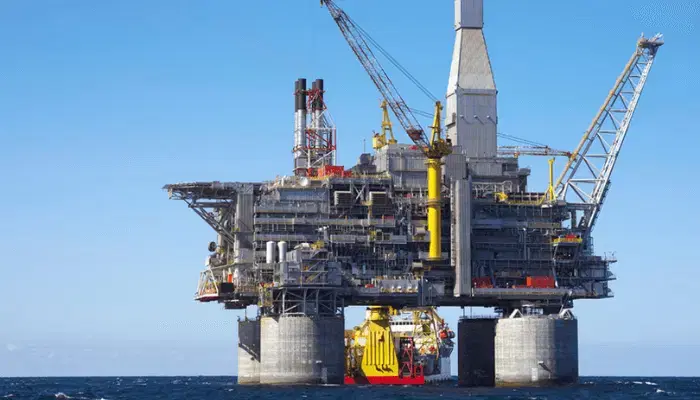
Rig count, a vital indicator of exploration and production activity, typically correlates with increased crude oil output as operators drill new wells, maintain existing infrastructure, and develop additional reserves. However, official records reveal a stagnation in Nigeria's oil output since 2016, a period that saw substantial rig deployments. Between 2016 and 2026, a staggering 2,099 rigs were utilized, representing investments running into billions of US dollars. The peak year for deployment was 2018 with 360 rigs, while 2021 saw the lowest at 87.
The financial commitment is immense; deepwater drilling alone can cost between US$400,000 and US$600,000 per day for the rig, excluding numerous other operational expenses. A single offshore exploration well can range from US$50 million to over US$150 million. Yet, despite this colossal spending, Nigeria's highest crude oil output (excluding condensate) in recent years was 1.734 million barrels per day (bpd) in 2019, a figure significantly below annual budget projections. This further declined to 1.143 million bpd in 2022.
Mature Assets Under Pressure
A critical factor contributing to this decline is the performance of Nigeria's mature oil assets. These fields, having produced for many years, are now experiencing natural declines in reservoir pressure, increased water production, and falling output. Data from the Nigerian Upstream Petroleum Regulatory Commission (NUPRC) reveals a stark reality: the average oil output from five mature producing fields plummeted by 208% year-on-year, from 13,794 bpd in June 2025 to 10,930 bpd in June 2026.
Specific examples underscore the severity: the Abo oil field, operated by Eni/Agip, saw a 392% year-on-year decline to 6,870 bpd. Pennington fell by 45% to 3,880 bpd, while Ugo Ocha (Jones Creek) declined by 166% to 26,900 bpd. Sea Eagle, operated by Renaissance Energy, dropped 83% to 14,570 bpd, and Okwori, operated by Antan Producing Limited, saw a marginal decline to 2,430 bpd.
Operators acknowledge these challenges. Renaissance Africa Energy stated that Sea Eagle's decline is consistent with its maturity and has been factored into their business plans, affirming commitment to optimizing production. Similarly, Eni noted Abo field's remarkable 23 years of consistent production and confirmed ongoing output optimization measures, including gas compressor upgrades.
Diminished OPEC+ Influence
Nigeria's struggle to maintain production has significantly weakened its influence within OPEC and the broader global oil market. Historically, Nigeria was a major force, peaking at approximately 2.5 million bpd in November 2005. Today, even with condensate, national output has not surpassed 1.7 million bpd. This diminished capacity was starkly evident when Nigeria was excluded from a recent virtual meeting of seven OPEC+ countries that convened to review market conditions and adjust production, underscoring its limited ability to leverage higher production opportunities.
Experts Call for Urgent Action
Industry experts are sounding the alarm, describing the situation as a 'bad omen' requiring urgent and comprehensive steps. An anonymous expert emphasized the need to combine exploration with aggressive field development, enhanced recovery from existing assets, improved security, infrastructure upgrades, and faster regulatory approvals. The core challenge, they argue, is converting substantial proven reserves into sustained production rather than merely discovering new hydrocarbons.
Professor Emeritus of Petroleum Economics, Wumi Iledare, highlighted that declining production directly translates into reduced government revenue, weaker external reserves, and diminished economic value. He stressed that the policy response must go beyond passive acceptance of natural decline, advocating for active optimization through faster regulatory approvals, incentives for re-entering abandoned wells, infill drilling, workovers, and the deployment of enhanced oil recovery (EOR) technologies. The Petroleum Industry Act (PIA) is designed to address these issues through fiscal terms that balance government take with the need to sustain investment in recovering remaining reserves, but its full impact is yet to be realized.
Why This Matters
Nigeria's inability to translate significant oil rig investments into increased crude oil production poses a severe threat to its economic stability, national revenue, and global energy standing. Addressing the multifaceted challenges of mature fields, underinvestment, security concerns, and regulatory bottlenecks is crucial for the nation to reverse this trend, maximize its vast hydrocarbon potential, and regain its influential position in the international oil market.