By Progress Godfrey, Abuja
The National Automotive Design and Development Council (NADDC) says it has concluded modalities for implementing the Nigeria First Policy, signed by President Bola Tinubu, requiring government ministries, departments and agencies (MDAs) to buy vehicles exclusively from licensed local assemblers or their authorised retailers
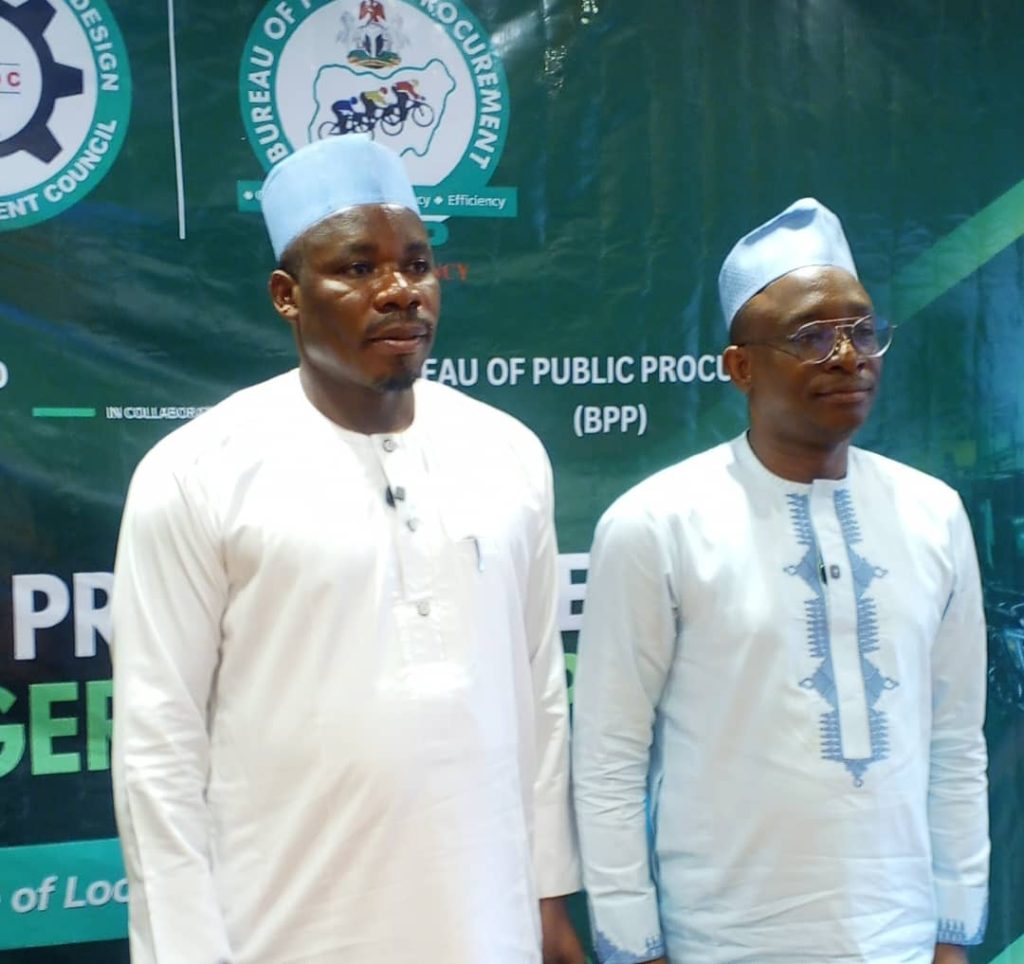
The Director-General of NADDC, Otunba Oluwemimo Joseph Osanipin, disclosed this in Abuja on Friday at a press conference with the Bureau of Public Procurement (BPP), noting that Nigeria’s dependence on foreign-assembled vehicles had strained foreign exchange reserves, exported local jobs and suppressed domestic manufacturing
Under the implementation framework, MDAs can procure foreign-assembled vehicles only if they prove that no domestic alternative exists and obtain direct presidential approval
The policy is aimed at boosting local vehicle assembly, reducing dependence on imports, conserving foreign exchange and creating jobs across Nigeria’s automotive value chain
Osanipin said the policy would use government purchasing power to stimulate domestic manufacturing and provide local assemblers with a guaranteed market
Vehicles supplied to government agencies must carry traceable vehicle identification numbers verified by NADDC Suppliers operating outside licensed local assembly arrangements risk sanctions, including blacklisting and licence revocation.
“Local plants currently possess an installed assembly capacity of 370,520 vehicles per annum,” Osanipin said, adding that guaranteed public sector demand would give manufacturers and local partners the confidence to expand production
“A single vehicle consists of approximately 3,000 components, representing opportunities in steel, plastics, leather, glass, rubber, and electronics,” he said
Osanipin said NADDC would maintain a register of compliant assemblers and support government agencies with technical guidance, verification and compliance reviews to ensure adherence to the policy
Director-General of BPP, Dr Adebowale Adedokun, said the government had moved beyond policy statements to implementation following stakeholder consultations with local vehicle assemblers
He said the consultations revealed that the assemblers’ major concern was whether Nigerians, particularly government institutions, would patronise locally assembled vehicles and provide a sustainable market for their products
Adedokun said the government’s decision to prioritise locally assembled vehicles was intended to drive industrialisation, create jobs, develop technical skills and position Nigeria as a manufacturing hub serving the Economic Community of West African States (ECOWAS) and North Africa
“By the time we procured, these are verifiable facts, it came down to 35 million,” Adedokun said, referring to a vehicle whose listed price was about N72 million before the procurement He said buying two units helped secure the lower price, demonstrating how bulk government purchases could improve pricing.
He added that the government was developing a stronger monitoring and evaluation system to ensure local assemblers provide quality vehicles, maintenance and after-sales services Assemblers that fail to meet requirements could face debarment.
The two agencies said the policy would be backed by compliance monitoring and quality standards, with the government seeking to translate public procurement into stronger domestic production, investment and employment across the automotive industry