Key Takeaways
- FIFA responded positively to Nigeria's reform proposal but withheld immediate approval for a normalisation committee.
- A FIFA delegation will travel to Nigeria before the final decision is made.
- Prospective committee members must pass integrity and eligibility screening.
- Senior Advocate of Nigeria AbdulHakeem Uthman Mustapha has emerged as the frontrunner to chair the committee.
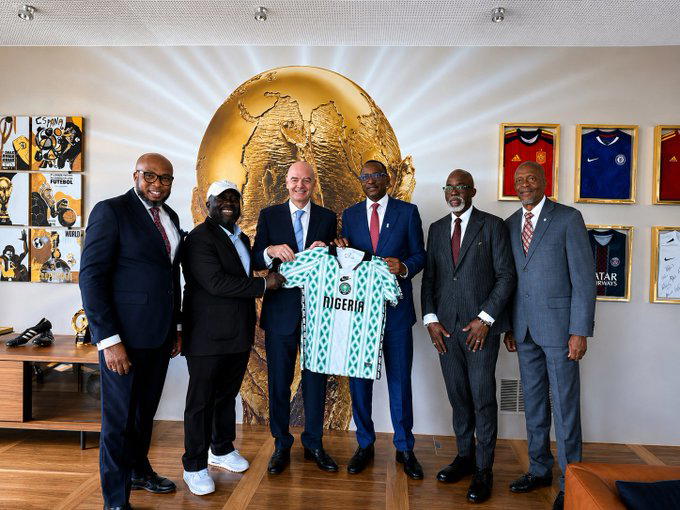
The Nigerian delegation led by Mallam Shehu Dikko, chairman of the National Sports Commission, held what was described as fruitful talks with FIFA President Gianni Infantino at FIFA's headquarters in Zurich on Tuesday. Yet despite the positive mood, FIFA did not give the proposed normalisation committee for the Nigeria Football Federation an outright approval. Instead, the world football governing body wants its own delegation to visit Nigeria before any final green light.
The move comes after the mass resignation of the Ibrahim Gusau-led NFF board, which stepped down under intense public pressure. President Bola Ahmed Tinubu then ordered a comprehensive reform of Nigerian football and described the decline of the game as a national emergency. That strong language underlined the growing sense of alarm over poor results, weak administrative structures and lost confidence in the sport's leadership.
Why a Normalisation Committee?
The National Sports Commission, which supervises NFF activities, believes a normalisation committee is the best way to manage the urgent reform process. Such a committee would be expected to steer the federation through a transitional period and organise fresh elections for a new NFF board. Similar committees have been used by FIFA across the world when member associations face governance crises.
Initial reports suggested the committee would last about three months, but insiders now say it could remain in place for six months or up to one year. The longer timeframe is seen as necessary to ensure reforms are not rushed and that the next NFF board is elected through a credible process under the oversight of the National Sports Commission.
FIFA's Role in Selecting Members
FIFA's involvement will not end with a visit to Nigeria. According to Sports Vanguard, the selection of committee members will be heavily influenced by FIFA, and every individual under consideration will be required to undergo the same integrity and eligibility tests that apply to executives of FIFA member associations. This is meant to keep individuals with questionable backgrounds out of the reform process.
AbdulHakeem Uthman Mustapha, a Senior Advocate of Nigeria, is the leading candidate to head the committee. His published profile, as reported by Sports Village Square, shows that he is a member of FIFA's Anti-Racism and Anti-Discrimination Committee. That existing relationship with FIFA's administrative system could provide Nigerian football with a bridge to the global governing body during a difficult transition.
Broader Implications for Nigerian Football
The reform effort arrives at a critical moment. Nigerian football has struggled in recent years with inconsistent performances on the continent, administrative instability and questions about accountability. These problems have weakened the sport's image and made it harder to attract serious investment and maintain competitive credibility.
Choosing the right committee members, especially the chairperson, will signal whether Nigeria is truly prepared to reset its football administration. By linking the selection process to FIFA's integrity rules, the National Sports Commission is attempting to create a visible break from past failures and give the next NFF board stronger international acceptance.
Why This Matters
The coming FIFA delegation visit and the formation of the normalisation committee will shape Nigerian football's immediate future. A credible, transparent reform process is essential to restore the country's standing in Africa and rebuild the trust that will allow the game to move forward.