Key Takeaways
- Governor Caleb Mutfwang categorically denied promising a 60:40 power-sharing ratio for cabinet positions with former Governor Simon Lalong's 'Legacy Group'.
- The denial addresses widespread political rumors following Mutfwang's recent defection to the All Progressives Congress (APC).
- Mutfwang clarified that any prior commitment involved sharing party positions, not government cabinet roles.
- He highlighted efforts to unify the APC, noting that members from the Legacy Group already hold a significant majority of current party executive and candidate positions.
- The Governor urged an end to internal factionalism, advocating for a unified 'one big family' within the APC.
Plateau State Governor, Caleb Mutfwang, has moved to quell swirling political speculation, firmly denying reports that his administration had committed to a 60:40 power-sharing arrangement for government positions with the 'Legacy Group' loyal to immediate past Governor Simon Lalong. The clarification comes amidst heightened political discussions concerning the composition of the state cabinet and alleged pre-defection negotiations.
The 'Legacy Group,' comprising staunch loyalists of former Governor Lalong, gained prominence during his tenure and became even more formidable after the All Progressives Congress (APC) lost the governorship election to Mutfwang in 2023. Following Governor Mutfwang's recent defection to the APC, rumors began circulating in various political circles suggesting that a key condition for his entry into the party was the allocation of 40% of government positions to this influential group.
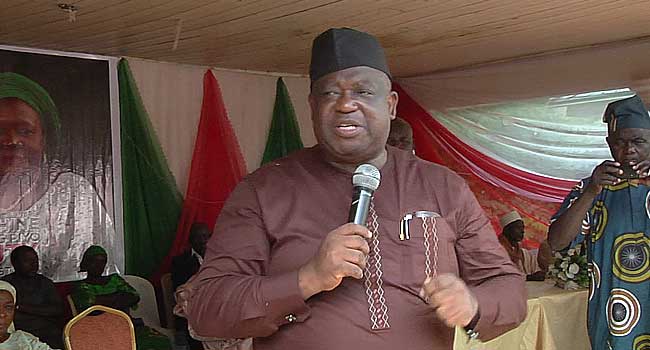
However, speaking emphatically during the swearing-in ceremony of three new commissioners on Thursday, Governor Mutfwang directly addressed these allegations. "To correct some rumors that have been going, the APC chairman is here, I never made any promise to share government positions since my journey to APC. I made a commitment to share party positions. I never had an agreement to do a 60%-40% cabinet," the Governor stated, leaving no room for ambiguity.
Mutfwang further elaborated on the current political landscape within the Plateau APC, asserting that even after his integration into the party, members who were already part of the APC – including those from the Legacy Group – significantly outnumber those who defected with him in terms of party influence and representation. He provided concrete examples to illustrate this point, highlighting the existing distribution of power within the party structure.
"It would not be out of place here that almost 80% of those who are in APC EXCO today are people we met in APC. As I am talking to you today, out of the 24 emerged as APC candidates, 16 are APC legacy members. Only 8 who crossed with me became candidates for the House of Assembly. Are we fair?" the Governor queried, underscoring his administration's commitment to fairness and inclusivity within the party.
The Governor's remarks signal a clear intent to foster unity and dismantle internal divisions within the APC in Plateau State. He stressed the importance of moving beyond factional loyalties, stating, "The time has come when we must kill the dichotomy between the government group and the Legacy Group. We are one big family. We have people who have been in APC but we bring them into government because we believe they have something to offer, not because they are APC members." This statement emphasizes a merit-based approach to appointments, prioritizing competence and contribution over political affiliation or historical grouping.
Why This Matters
Governor Mutfwang's decisive denial of a power-sharing pact is crucial for several reasons: it aims to stabilize the political environment in Plateau State, foster unity within the newly expanded APC, and reassure the public that cabinet appointments will be based on merit rather than political horse-trading. By dispelling these rumors, the administration seeks to project an image of transparent governance and a commitment to inclusive development, essential for effective leadership and public trust in a diverse political landscape.