For a decade, President Donald Trump has been the gravitational force of the American right, but at this year’s Conservative Political Action Conference a pressing question is animating conversations in the hallways: who comes next?
At what is billed as the world’s largest conservative meeting, there is no clear consensus — but an early contest is taking shape.
For the first time in years, the 79-year-old second-term president is skipping the conference — typically held in Washington, but this year staged in the Dallas suburbs — allowing other Republican stars to step out of his shadow.
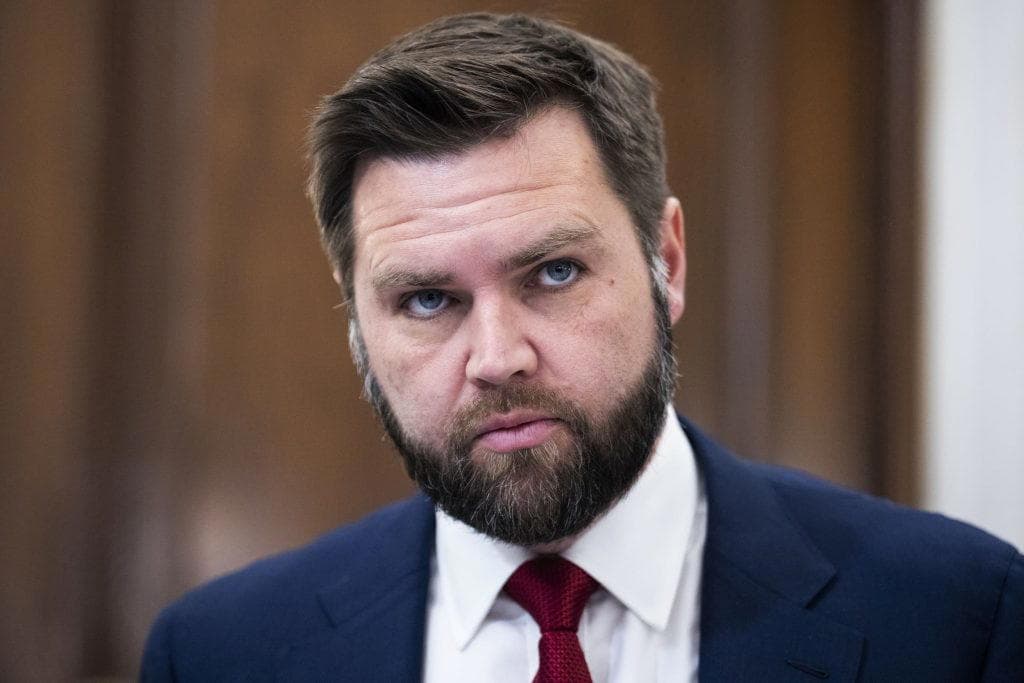
Across conversations with attendees, Vice President JD Vance and Secretary of State Marco Rubio stood out as the main contenders to lead a post-Trump Republican Party, with support split in a race that remains wide open.
Polling suggests Vance holds a comfortable national lead among Republican voters.
But on the ground in Texas, the divide appeared more even — with roughly half backing Vance and a significant share favoring Rubio or considering him at least as capable.
“I have the utmost confidence in both JD Vance and Marco Rubio to lead the country,” said Suzy Phillips, 68, a retired nurse from Dallas.
“They would be my top two.”
For many, the choice reflects a balance between continuity and experience.
Vance’s appeal lies in his alignment with Trump’s movement and personal story — growing up in poverty in an Appalachian community beset by opioid addiction.
“I loved JD Vance before he ever went into politics…I just loved his rags-to-riches story — that it was somebody who saw a better way and went the better way,” said Phillips.
Others pointed to his communication skills and ideological fluency.
“He’s very articulate, very educated,” said Laura McGarraugh, 52, an emergency room nurse from Austin.
“He has a great grasp of any kind of questions he can field. He’s a little more diplomatic than Trump. I mean, I like Trump too, but I feel like JD Vance is a little more clean-cut.”
Even Vance’s past criticism of Trump — once a potential liability — was brushed aside.
“People change. People evolve. I haven’t kept the same opinions my whole life,” McGarraugh said.
Rubio’s supporters, by contrast, emphasized experience and steadiness — particularly on the world stage.
“Marco Rubio is an outstanding statesman,” said Brian Su, 60, a consultant from Chicago.
“He has a very clear vision of dealing with international relations. So personally, I love him.”
Phillips said she would ultimately lean toward Rubio, citing “his international diplomacy” and background as the son of immigrants.
Despite the split, both candidates are judged through the same lens: their relationship to Trump and the movement he reshaped.
Neither is seen as a break from Trumpism. Instead, they are viewed as competing heirs.
That dynamic leaves little room — for now — for alternative figures to gain traction.
Levi Mikula, 35, a media assistant from Dallas, said he would prefer Florida Governor Ron DeSantis, even as he acknowledged that Rubio was more likely to prevail.
“I didn’t trust (Rubio) early on, but he’s been a lot stronger,” Mikula said. “And I think Donald Trump is the reason for it. But on foreign policy, he’s amazing right now.”
A handful of attendees floated other possibilities, including candidates in Trump’s anti-establishment mold — or even, in some cases, a return by Trump himself, despite the constitutional barrier to a third term.
That lingering focus on Trump underscores the central tension shaping the race.
Even as activists begin to weigh successors, many are not ready to move on.
“We’re hoping he will go for four more years,” Phillips said. “But we have to face the fact that we’re facing the end of the Trump era.”