By EMMANUEL OKOTIE-EBOH
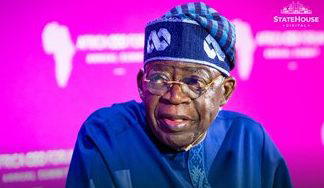
There is a recurring habit in Nigerian politics that deserves serious reflection Whenever a new president assumes office, Nigerians quickly begin to attribute almost every problem in the country to the occupant of Aso Rock. Roads, schools, hospitals, security, unemployment, electricity and even problems that constitutionally fall under state or local governments are often blamed on the Federal Government. By the time another election approaches, the same cycle begins again. Perhaps it is time for Nigerians to change the way we assess leadership. Rather than rushing to condemn or praise an administration before its work is complete, Nigerians should allow President Bola Ahmed Tinubu to complete his constitutional tenure and then judge his administration on the basis of evidence, performance and the actual condition of the country.
This does not mean that the Tinubu administration should be shielded from criticism Government must remain accountable. But accountability must also be properly distributed. The President cannot personally repair every failed road, provide every streetlight, maintain every school or hospital, supervise every local government project or solve every problem in every community across Nigeria.
Nigeria operates a federal system in which responsibilities are shared among the Federal, State and Local Governments If a local road has collapsed, Nigerians should ask which tier of government is responsible for it. If a state-owned facility has been abandoned, the state government should answer. If a local government fails in its statutory responsibilities, its leadership should equally be questioned.
The President cannot do everything
This is where our political culture requires a fundamental adjustment Governors, senators, members of the House of Representatives, state lawmakers, local government chairmen, councillors, ministers and other public officials must all be held accountable for the responsibilities entrusted to them. We cannot continue to make the Federal Government the automatic scapegoat for every pothole in every Nigerian community. There is also another familiar pattern in Nigerian politics. Politicians often make enormous promises during campaigns because they want to win elections. They promise heaven and earth, present themselves as the solution to every problem and convince voters that everything will change once they assume office. But after winning, many of those promises are forgotten, postponed or explained away. That is why Nigerians must judge politicians by their records, measurable achievements and results, rather than campaign speeches alone.
Tinubu’s Administration Should Be Judged by Results
There are examples within the Tinubu administration that deserve closer examination instead of blanket condemnation Take the Federal Capital Territory, where Minister Nyesom Wike has overseen several road and infrastructure projects. In September 2026, Wike said that 107 capital projects initiated under the Tinubu administration had been commissioned in the FCT, with 76 already completed. Whether one agrees with every policy of the FCT administration is a separate matter. The important point is that such claims can be subjected to public scrutiny. Nigerians can visit the projects, assess their quality and determine whether the government’s claims correspond with reality.
The same approach should apply to other ministries and agencies The Ministry of Aviation and Aerospace Development under Festus Keyamo has also reported initiatives aimed at strengthening aviation infrastructure, safety systems, digital infrastructure and human-capacity development, including efforts towards aircraft maintenance, repair and overhaul capacity. Again, Nigerians should examine the results and judge for themselves. The Nigerian Content Development and Monitoring Board, under its Executive Secretary, Engr. Felix Omatsola Ogbe, has similarly continued programmes aimed at developing indigenous capacity in Nigeria’s oil and gas industry. The Board has reported human-capacity development programmes designed to equip young Nigerian engineers, geoscientists and other professionals with technical skills and industry experience. TETFund is another institution that deserves attention. Its statutory responsibility is to support public tertiary institutions through interventions in infrastructure, teaching and learning, research and other areas. Its intervention programmes have continued to provide funding for universities, polytechnics and colleges of education.
These examples do not mean that every problem has been solved They demonstrate why Nigerians should examine individual ministries, agencies and governments according to their mandates and measurable outputs instead of treating the entire Federal Government as one indivisible entity.
Reform Must Be Judged Beyond Immediate Pain
President Tinubu’s economic reforms have generated intense debate, particularly the removal of petrol subsidy and changes in foreign-exchange policy Nigerians have every right to question the consequences of these decisions, demand transparency and ask how government resources are being utilised. But difficult reforms should ultimately be judged by their long-term economic and social outcomes, not only by the immediate discomfort they create. The real questions should be: Have the reforms improved government revenue? Are they attracting investment? Are they strengthening domestic production? Are they creating jobs? Are they reducing dependence on unsustainable policies? And, most importantly, are ordinary Nigerians eventually benefiting from the changes? These are the questions that should form part of the final verdict on the Tinubu administration.
Amaechi’s Warning and the Politics of Elections
Against this background, I was therefore surprised by the recent statement attributed to the Vice Presidential candidate of the African Democratic Congress, ADC, Rt Hon. Rotimi Amaechi, in which he warned that President Tinubu would not be allowed to rig the 2027 election, adding that there might not be a Nigeria if such an eventuality occurred. Such a statement raises an important question: How does a candidate demonstrate that an election was rigged before the election has even taken place? In a democracy, the responsibility of political parties and candidates should be to convince voters, mobilise supporters, present credible programmes and compete for the confidence of the electorate. Politics is, in many respects, like a football match. Every team enters the field hoping to win, but at the end of the game there must be a winner and a loser.
If a footballer wants to win, he trains, prepares and concentrates on the game If he loses, he cannot automatically conclude that the match was fixed simply because the result did not favour him.
The same principle should apply to politics Candidates should campaign vigorously. They should convince Nigerians. They should build structures across the country. They should present credible alternatives. They should mobilise voters and protect their votes through lawful electoral processes. But losing an election should not automatically become evidence that the election was rigged. Where there is credible evidence of electoral malpractice, the appropriate response is to present the evidence and seek redress through the established legal and electoral institutions.
Nigeria belongs to all of us Political competition should not become an excuse to portray the country as incapable of conducting elections or to make statements that could unnecessarily undermine public confidence in the democratic process.
Keyamo’s Poster Argument
This brings me to another development that is worth considering The Minister of Aviation and Aerospace Development, Festus Keyamo, recently reacted on his official X account to a video showing a man allegedly tearing down campaign posters bearing President Tinubu’s image. Keyamo described the individual as a thug allegedly working for the opposition and argued that such an act should concern people of goodwill. Whether the man belongs to any particular political organisation is something that should be properly established. But the broader political point made by Keyamo deserves consideration. If a candidate is genuinely unpopular, why should opponents resort to destroying campaign posters rather than waiting for the election and allowing voters to decide? In a democracy, posters do not determine election results. Voters do. If Nigerians reject Tinubu in 2027, they have the constitutional right to vote for another candidate. If they support him, that decision should equally be respected. The ballot box should be stronger than intimidation, threats, propaganda or destruction of campaign materials.
What Yari’s Statement Really Means
There is also another political statement that deserves attention The Director-General of the APC Presidential Campaign Council, Senator Abdul’Aziz Abubakar Yari, reportedly appealed to northerners to allow President Tinubu to complete an eight-year tenure, describing this as consistent with the principle of rotational presidency. Yari’s position is politically significant because it comes from a senior figure associated with the APC presidential campaign structure. The argument is essentially that if Nigerians have accepted the principle of rotation between different regions, then political actors should respect the understanding and allow the southern presidency under Tinubu to complete its constitutional tenure before the North seeks to reclaim the presidency. Whether Nigerians ultimately accept that argument is another matter. The presidency is constitutionally won through elections, not automatic entitlement. No region has a permanent ownership of Aso Rock, and no candidate should be denied the opportunity to contest merely because of geographical origin. But the argument for political stability and respect for established political understandings cannot simply be dismissed.
What should determine the 2027 election is ultimately the Nigerian voter
If Tinubu performs well, Nigerians have the right to reward him with another term If they believe he has failed, they equally have the right to vote him out.
Nigerians Must Judge Every Level of Government
My central argument is therefore simple: Tinubu should be held accountable, but he should not be held responsible for everything A senator should be questioned about what he is doing for his senatorial district. Members of the House of Representatives should account for their legislative and constituency responsibilities. State lawmakers should answer to their constituents. Governors should explain how state resources are being deployed. Local government chairmen and councillors should be questioned about development at the grassroots. Traditional rulers also have an important role to play in mobilising their communities and engaging governments constructively. Nigerians must therefore move away from the mentality that everything begins and ends at the Presidential Villa. We should ask one simple question whenever we encounter a public problem: Who is constitutionally responsible for this particular problem?
If the answer is the Federal Government, demand an answer from Abuja
If it is the state government, demand an answer from the governor If it is a local government responsibility, hold the council leadership accountable. That is what democracy is supposed to mean.
My Personal Connection to the National Conversation
My own connection to this national conversation is also deeply personal
My late father, Chief Festus Samuel Okotie-Eboh, served as Nigeria’s first Federal Minister of Finance from 1957 until his death in 1966 The Nigerian National Library’s archive preserves, among other records, his 1960 Federal Budget speech delivered in his capacity as Minister of Finance. His generation inherited a young country and faced enormous challenges. Today’s Nigeria is considerably more complex, with a much larger population, a more sophisticated economy and far greater demands on government. But one principle remains constant: governance is a collective responsibility. Presidents matter, Governors matter, Ministers matter. Legislators matter. Local government officials matter, Institutions matter, Citizens matter.
No president can build a prosperous Nigeria alone
President Tinubu must therefore be held accountable for the decisions and responsibilities that belong to his administration But governors, legislators, local government officials and other leaders must equally carry their share of the burden. And Nigerians must also play their part by demanding accountability at every level.
Let Tinubu complete his tenure Let his policies mature. Let the data accumulate. Let Nigerians examine employment, inflation, investment, infrastructure, security, education, healthcare, revenue, productivity and living standards. At the end of the day, it should not be propaganda, social-media noise or partisan emotion that determines the verdict. It should be the evidence.
If Tinubu succeeds, Nigerians should acknowledge it If he fails, Nigerians should say so. If his reforms produce prosperity, the people will see it. If they do not, the people will also feel it. But the final judgment should come from the Nigerian people through the ballot box and from history through the record of his administration.
The 2027 election should therefore not be reduced to threats, intimidation, premature allegations of rigging or the destruction of campaign posters
It should be a contest of ideas, records, competence, character, vision and the ability to convince Nigerians President Tinubu cannot transform Nigeria alone. Neither can any opposition candidate. The responsibility for building Nigeria belongs to all of us.
We should also note that the Honourable Minister for Federal Capital Territory, Nyesom Wike, has not been indifferent to President Bola Ahmed Tinubu’s re-election through the formation of the coalition, and I expected the APC Governors to key into it and do the same thing Wike is doing, since everyone is working towards the re-election of Tinubu And when the time comes, Nigerians should judge President Bola Ahmed Tinubu not by the noise surrounding his presidency, but by what his administration actually delivered. Let the record speak. Let Nigerians decide.
*Okotie-Eboh wrote in from Warri, Delta State