In a significant stride towards safeguarding public health, the Lagos State Government has officially embraced the National Policy on Cosmetics Safety and Health, alongside its detailed implementation plan. This landmark initiative aims to drastically strengthen the regulation of cosmetic products and procedures across the state, ensuring consumer protection.
The policy's formal presentation occurred during the Lagos State Engagement on the National Policy on Cosmetics Safety and Health exit meeting, held at the Lagos State Ministry of Health. This event concluded a pivotal four-day stakeholder engagement that commenced on Tuesday, March 10, bringing together diverse experts and industry players.
Urgent Action Driven by Recent Tragedies
Speaking passionately at the meeting, Mrs. Kemi Ogunyemi, Special Adviser to the Governor on Health, underscored the critical timeliness of the engagement. She cited a recent, tragic cosmetic surgery-related death in Lagos, currently under intense investigation by the Health Facilities Monitoring and Accreditation Agency (HEFAMAA).
- Direct Impact: “This engagement could not have come at a better time. Only this week, we had an unfortunate incident where a well-known lady died in Lagos following cosmetic surgery,” Mrs. Ogunyemi revealed.
- Ongoing Investigation: She confirmed that relevant authorities are thoroughly investigating the circumstances, including the drugs used and their sources.
- Patient Safety First: Emphasizing the government’s unwavering commitment, Mrs. Ogunyemi stated, “When even one person dies, it means something has gone wrong, and we certainly do not want such incidents to happen again.” Patient safety remains the paramount priority for the Lagos State Government.
Mrs. Ogunyemi further assured stakeholders that the government is dedicated to ensuring the policy's effective implementation across the entire cosmetics value chain, encompassing manufacturers, suppliers, training institutions, and health facilities. She affirmed Lagos’s commitment to leading the nation in policy execution.
Federal Government's Vision for Cosmetic Safety
Paul Okhakhu, Director of Cosmetics Safety in the Food and Drug Services Department of the Federal Ministry of Health and Social Welfare, elaborated on the policy's genesis. He explained that it was developed in response to a surge in adverse health effects linked to unsafe cosmetic products.
- Addressing a Crisis: “We have been seeing cases of people experiencing adverse events as a result of the use of adulterated, wrongly formulated, or substandard cosmetic products, and because of this, the government decided to take the matter seriously,” Okhakhu stated.
- National Guidance: The policy, validated in Lagos and later launched at the 66th National Council on Health in Calabar, Cross River State, is designed to guide regulatory actions and support the development of state-specific plans to tackle cosmetic safety challenges.
- Lagos as a Pilot: Okhakhu highlighted that the Federal Government is developing a national dashboard to track implementation progress across states, with Lagos chosen for early engagement due to its strategic role as Nigeria’s commercial hub. “If we are able to get it right in Lagos, we believe we can get it right in other states,” he added.
Lagos State's Commitment to Implementation
Olawale Poluyi, Director of Pharmaceutical Services in the Lagos State Ministry of Health, hailed the engagement as a crucial milestone in the policy's implementation journey within the state. “Every journey begins with a step, and today marks an important step in the implementation of this policy,” Poluyi remarked.
He reassured the visiting team that the Lagos State Ministry of Health is fully committed to translating the resolutions reached during the engagement into concrete, actionable steps.
Comprehensive Stakeholder Engagement
The four-day engagement convened 49 participants representing a broad spectrum of federal and state government agencies, regulatory bodies, academia, industry associations, cosmetology practitioners, civil society organizations, and the media. Their collective goal was to assess Lagos’s cosmetic safety landscape and collaboratively develop a robust state cosmetics safety action plan aimed squarely at protecting public health.
Billions in Banned Products Uncovered: NAFDAC's Recent Raid
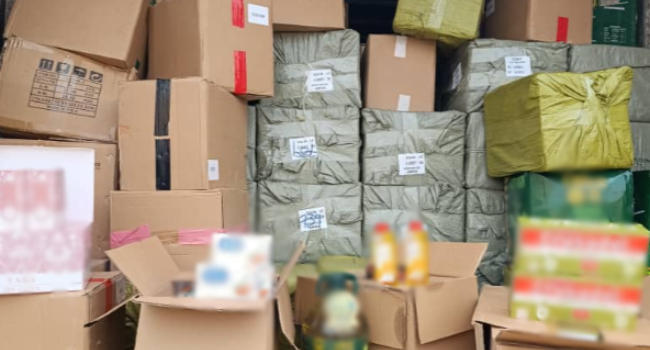
This intensified focus on cosmetic safety comes just weeks after the National Agency for Food and Drug Administration and Control (NAFDAC) delivered a stunning blow to illegal cosmetic traders. The agency uncovered a massive warehouse in Lagos stocked with banned, substandard, and unregistered cosmetic products.
- Massive Seizure: NAFDAC disclosed via its X (formerly Twitter) page that products valued at over ₦3 billion were discovered at the APT Trade Fair Complex.
- Concealed Operations: The illicit facility was ingeniously concealed within an uncompleted building.
- Banned and Fake Items: Among the recovered items were:
- 728 cartons of Crusader soap
- 718 cartons of E45 soap
- Extract Gold whitening soaps (all products banned by the Federal Government)
- Assorted perfumes
- Body oils
- Cooking oils (placed on hold for further regulatory assessment)
The NAFDAC raid underscores the urgent and pervasive challenges of illicit cosmetic trade, further emphasizing the critical importance of the new National Policy on Cosmetics Safety and Health and Lagos State’s proactive implementation efforts.