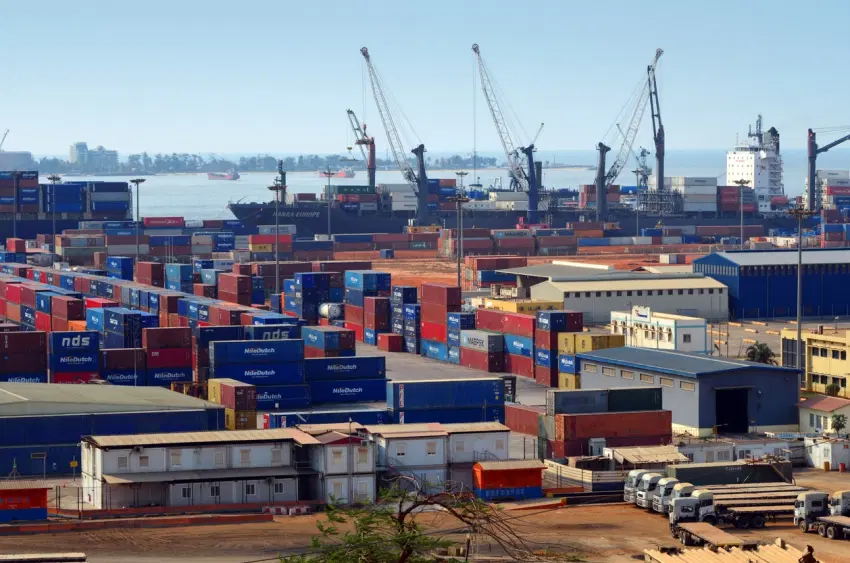
Lagos ports handled an estimated N3507 trillion, or about 84.6 per cent, of Nigeria’s N41.44 trillion total merchandise trade in the second quarter of 2026, Q2’26, underscoring the overwhelming dominance of the nation’s commercial capital as the country’s principal trade gateway.
The latest Foreign Trade in Goods Statistics released by the National Bureau of Statistics, NBS, showed that Nigeria’s total merchandise trade comprised N2702 trillion exports and N14.42 trillion imports during the quarter.
Apapa Port, Lekki Deep Sea Port and Tin Can Island accounted for the bulk of the trade, with their combined export and import flows estimated at N3490 trillion.
Apapa Port alone handled N2553 trillion in aggregate exports and imports, comprising N19.07 trillion exports and N6.46 trillion imports.
Lekki Deep Sea Port recorded another N664 trillion, comprising N5.03 trillion exports and N1.61 trillion imports, while Tin Can Island accounted for N2.90 trillion, made up of N726.92 billion exports and N2.17 trillion imports.
The concentration was even more pronounced on the export side, where Apapa and Lekki Deep Sea Port jointly accounted for 8919 per cent of exports recorded among the leading customs ports and posts.
Apapa remained Nigeria’s dominant export gateway, handling N1907 trillion, representing 70.57 per cent of total exports, while Lekki followed with N5.03 trillion, or 18.62 per cent.
On the import side, Apapa also retained the lead, handling N646 trillion, equivalent to 44.76 per cent of total imports. Tin Can Island followed with N2.17 trillion, or 15.07 per cent, while Lekki Deep Sea Port accounted for N1.61 trillion, representing 11.15 per cent.
The figures highlight the strategic concentration of Nigeria’s external trade around Lagos, with its ports accounting for the overwhelming share of the country’s merchandise trade during the quarter
Trading activities handled by other Nigerian ports are Port Harcourt Area-1 with N117 trillion exports and N229.77 billion imports, totalling about N1.4 trillion, while Onne facility accounted for N802.72 billion exports and N1.20 trillion, totalling about N2 trillion.