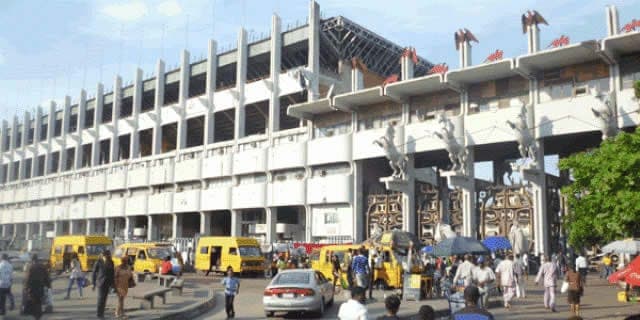
By any serious measure, Nigeria’s economic renaissance must rest not only on policy reform but also on the revitalisation of institutions designed to connect her productive energies with global markets. One such institution is the Lagos International Trade Fair Complex — a national asset conceived in the optimism of the oil boom era, and today poised for renewal.
The Lagos International Trade Fair Complex (LITFC) is now being recalibrated as a high-octane engine for global commerce under the strategic foresight of the current management led by the Executive Director of the Complex Management Board, Barr. Vera Safiya Ndanusa. It is transitioning from a historic landmark into a 21st-century Commercial Nerve-Center, designed to harmonize Nigeria’s productive energies with the demands of a volatile global market.
The 2026 Lagos International Trade Fair, a consummate partnership between the Lagos International Trade Fair Complex Management and industry stakeholders, promises to be more than a calendar event — it signals a defining moment in Nigeria’s unfolding economic transformation. Early indicators suggest meticulously curated exposition projected to attract hundreds of exhibitors and international buyers across agribusiness, manufacturing, technology, finance, fashion, health and pharmaceuticals. Properly harnessed, the Fair offers Nigeria a strategic platform to reaffirm its stature as a serious commercial force within Africa’s rapidly evolving economic architecture.
Barr. Vera Safiya Ndanusa characterizes the current administration’s ‘Renewed Hope’ agenda as a mandate for radical pro-business pragmatism. Her leadership goes beyond mere alignment with federal policy; she is the lead translator of that vision into transactional reality. For her, the Trade Fair Complex is the physical laboratory where macroeconomic reforms (from FX unification to tax overhauls) are tested and proven through the success of the entrepreneurs and global investors who walk its halls.
Barr. Ndanusa recently described the administration of President Bola Ahmed Tinubu as the most business-friendly government since the return to democratic rule in 1999. While that statement is highly debatable, it underscores a deeper point: structural reforms must translate into tangible opportunities for entrepreneurs, manufacturers, exporters and investors. That translation happens on platforms like the Lagos Trade Fair Complex.
Over the past year, the Federal Government has embarked on sweeping macroeconomic reforms — unifying foreign exchange rates, overhauling the tax system, tightening fiscal coordination, and dismantling distortions such as fuel subsidies. These steps, though painful in the short term, aim to stabilise the macro-economy and create a more predictable environment for investment.
Equally significant are reforms under the Presidential Enabling Business Environment Council (PEBEC), which seek to cut bureaucratic red tape, shorten business registration timelines, and simplify regulatory processes. Modernisation initiatives such as the proposed National Single Window for imports and exports signal a commitment to making Nigerian goods and services more competitive globally.
Policy, however, must not remain abstract. It must be seen, accessed, and utilised by those at the grassroots of commerce. That is where the Trade Fair Complex comes in.
Re-Imagining the Nigerian International Trade Fair Complex
The ambition of the new Management Board of the Lagos International Trade Fair Complex seems directed at repositioning the Complex from a passive exhibition space to an active deal-making hub. If this ambition is concretized it holds that every handshake at the fair would carry a measurable pathway to action. Consequently, the upcoming Nigeria International Trade Fair is being reimagined as more than a showcase of products. It is being structured as a marketplace for structured matchmaking — curated business-to-business sessions, investor interfaces, and post-fair follow-ups that track memoranda of understanding, contracts signed, and partnerships launched.
For years, trade fair activities at the Complex slowed, and eventually went into abeyance. The revival of activities after more than a decade signals, not merely a reopening of gates, but a reopening of possibilities.
A particularly welcome focus is on small and medium enterprises. In a country powered by entrepreneurial energy, SMEs must move from the margins to the centre of economic planning. Planned clinics, grant-awareness programmes, and exposure to enterprise support schemes could help bridge the information gap that often prevents small businesses from scaling.
In doing so, the Complex would serve as a bridge connecting grassroots innovators with domestic and international capital.
Nigeria’s strategic location and market size give it a natural advantage. With a population exceeding 200 million and access to the wider ECOWAS economic space, the country is uniquely positioned to serve as a gateway to regional trade.
Frameworks such as the African Continental Free Trade Area (AfCFTA) provide a continental platform for expanding intra-African commerce. A revitalised Trade Fair Complex can function as a staging ground for Nigerian manufacturers seeking regional markets and for foreign investors seeking entry into West Africa’s vast consumer base.
Going Beyond Nostalgia to Branding for National Image
Recognizing that infrastructure without influence is a hollow asset, Barr. Ndanusa’s strategic alliance with credible organisation marks a sophisticated shift toward building Reputation Capital. This partnership acknowledges that Nigeria’s economic potential must be matched by a formidable national brand. By integrating professional reputation management into the core operations of the Lagos International Trade Fair Complex, the Executive Director/CEO is de-risking the environment for international partners, ensuring that the Complex projects an image of transparency, efficiency, and global standard excellence.
When Barr. Ndanusa sought partnership with credible organisations, it was a recognition that infrastructure alone does not build influence. Narrative does. Reputation does.
Nigeria’s economic potential, which is embedded in its youthful demography, creative drive, and scale is undeniable. Yet, perception often does not reflect reality. Rebuilding the Trade Fair Complex into a formidable brand is therefore not merely a commercial imperative but a reputational one.
Lagos, like New York in the United States or Johannesburg in South Africa, remains the commercial heartbeat of Nigeria. That it is not the administrative capital does not diminish its economic centrality. A thriving Lagos International Trade Fair Complex reinforces that identity and amplifies Nigeria’s voice in global commerce.
For a Complex born in an era when Nigeria aspired to lead industrial growth in West Africa, its revival should not be an exercise in nostalgia but a forward-looking strategy aligned with contemporary economic reforms.
If macroeconomic stability is consolidated, if business environment reforms endure, and if trade fairs are transformed into measurable investment platforms, then the Lagos International Trade Fair Complex can once again become what it was intended to be: a national investment promotional hub.
Nigeria’s path to continental economic relevance will not be paved by policy pronouncements alone. It will be built in places where producers meet buyers, innovators meet investors, and ideas become enterprises.
The gates are open again. The task now is to ensure that what passes through them moves the nation forward.
Ogadigo sent this piece from Abuja