Key Takeaways
- Former President Goodluck Jonathan condemned the mass convergence of political heavyweights at off-cycle elections, labeling it 'unwholesome'.
- He recalled past instances where he ordered officials to leave states during elections to prevent intimidation.
- The recent Osun governorship election saw an unprecedented mobilisation of national political figures by the APC.
- Despite the show of force, the opposition candidate, Ademola Adeleke, secured a decisive victory.
- Jonathan highlighted concerns about the misuse of public funds and the potential for voter intimidation.
- He urged societal guardians, including legislators, civil society, and the media, to speak out against such practices.
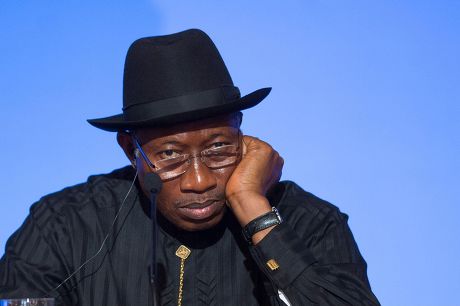
Former President Goodluck Jonathan has issued a potent warning to Nigeria's political class, cautioning against the growing trend of high-profile political figures descending en masse on states holding off-cycle governorship elections. His admonition, delivered in the wake of the recent Osun State gubernatorial contest, serves as a critical reminder that Nigeria's nascent democracy cannot afford to transform these crucial electoral processes into elaborate 'jamborees' for external political forces.
The spectacle in Osun was undeniable and drew widespread attention. The All Progressives Congress (APC) had assembled an formidable 276-member campaign council, featuring prominent national figures such as Imo Governor Hope Uzodimma as chairman, alongside Yobe Governor Mai Mala Buni, Senate President Godswill Akpabio, and House Speaker Tajudeen Abbas as co-chairmen. An extensive retinue of governors, ministers, National Assembly members, party chieftains, aides, and security personnel were mobilised for an election that, constitutionally, should have been solely about the choice of Osun's electorate. This overwhelming concentration of power created an unsettling display of political muscle, raising questions about its true intent.
Jonathan, himself a veteran politician who served as Governor of Bayelsa State before ascending to the presidency, described this practice as 'unwholesome.' He articulated that the convergence of serving governors, senior political office holders, and party leaders, often accompanied by large entourages and heavy security details from outside the host state, presents a significant issue demanding immediate attention. Recalling his tenure as president, he recounted how he had to intervene during the 2013 Anambra and 2014 Ekiti elections, issuing direct orders for political leaders and senior government officials to vacate those states. He sternly warned that this emerging pattern of 'political tourism' could severely threaten the delicate fabric of Nigeria's democracy.
The former president's warning is particularly compelling. One must question the genuine purpose behind importing such an extensive 'army' of political dignitaries into a single state for an election. If their presence was merely for legitimate campaigning, why the extraordinary concentration of governors, federal lawmakers, their numerous aides, and extensive security details? When political power arrives in such intimidating numbers, the electorate can reasonably ponder whether the objective is genuine persuasion or if the display is intended to frighten, overwhelm, or subtly coerce voters.
The eventual outcome of the Osun election only amplified the embarrassment of this grand spectacle. Despite the APC's formidable mobilisation and show of force, Governor Ademola Adeleke, contesting on the Accord Party platform, secured a decisive victory with 511,067 votes against APC candidate Bola Oyebamiji's 444,815, a significant margin of 66,252 votes. Adeleke triumphed in 19 of the 30 local government areas. Social media was awash with videos purportedly showing the departing political visitors with what many described as 'tails between their legs,' highlighting the futility of their overwhelming presence.
Beyond the political optics, there is a serious financial implication. The cost associated with transporting, feeding, accommodating, and securing such a massive crowd of political figures raises profound questions about the responsible use of public resources and political expenditure. Governors, who are constitutionally mandated to focus on the pressing issues within their own states—such as improving schools, hospitals, roads, creating jobs, and ensuring security—are seen engaging in political gallivanting. This often occurs while critical campaign promises in their home states remain unfulfilled. The deeper issue here is accountability. Many state governors now operate with State Houses of Assembly that appear more loyal to the executive than to the citizens they are meant to represent, further eroding checks and balances.
The Imperative for Accountability
Jonathan's intervention is invaluable, stemming from a respected statesman who has held both state and national offices at the highest levels. However, the responsibility to safeguard Nigeria's democracy extends beyond individual warnings. Society's guardians—including legislators, robust civil society organisations, an independent media, religious leaders, and the judiciary—must amplify their voices and take decisive action. Governors, in particular, must be reminded to focus on their primary mandate: governing their states effectively, fulfilling their electoral promises, and spending public money responsibly, rather than engaging in costly political 'parties' and potentially intimidating voters in other jurisdictions. Nigeria deserves governors who govern, not political tourists travelling at public expense.
Why This Matters
The practice of 'political tourism' during off-cycle elections undermines the integrity of the electoral process, diverts crucial public resources, and erodes public trust in democratic institutions. Jonathan's warning underscores the urgent need for greater accountability, transparency, and a renewed commitment from political leaders to uphold the principles of fair and free elections, ensuring that the will of the people, not a show of force, determines electoral outcomes.
}