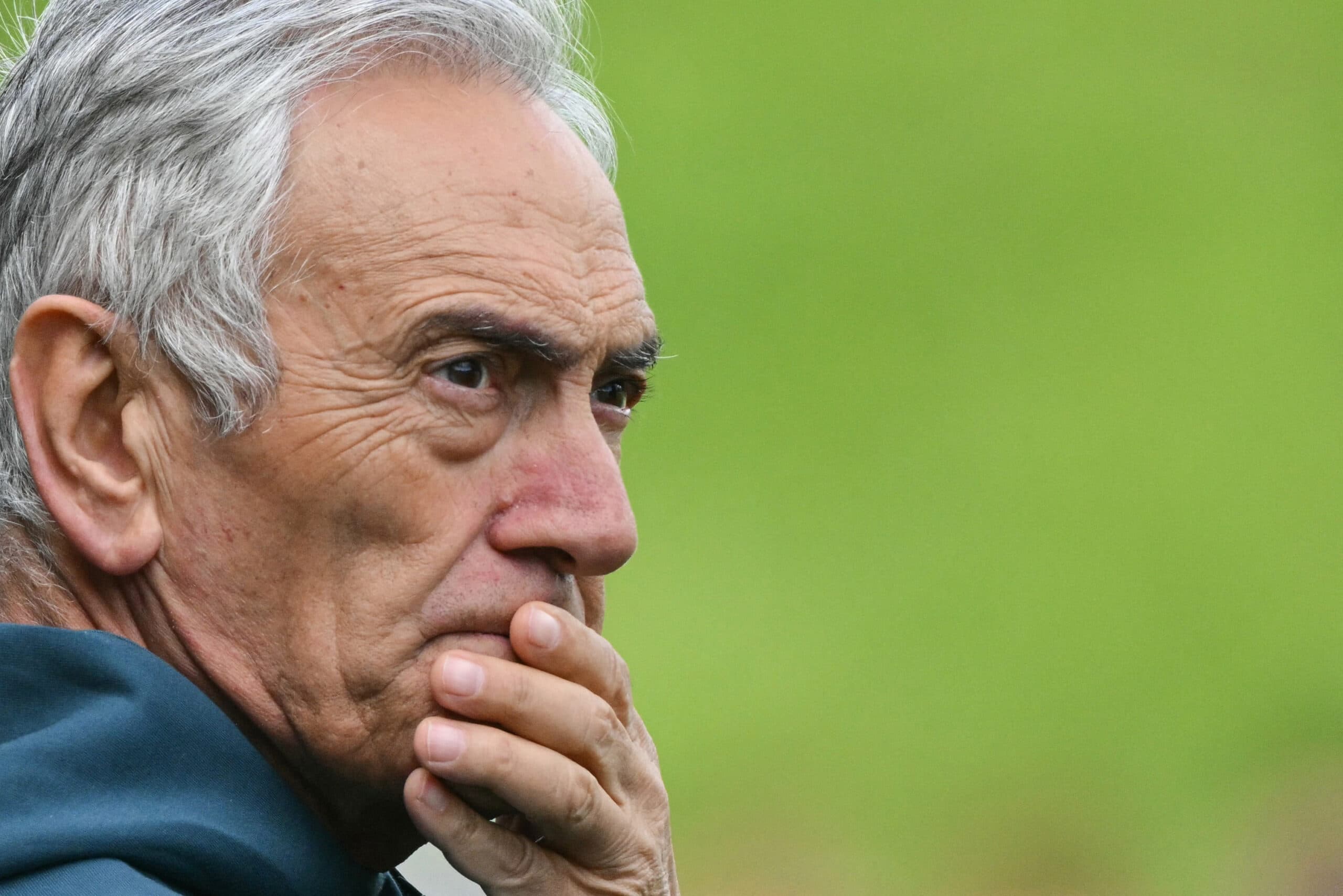
Italy's Football Calamity: Minister Calls for Top Head to Roll After Third World Cup Miss
Italian Sport Minister Andrea Abodi has issued a stark ultimatum to the head of the nation's football federation (FIGC), Gabriele Gravina, demanding his resignation following the national team's unprecedented failure to qualify for a third consecutive FIFA World Cup.
The 'Azzurri', still reeling from their previous misses, were once again knocked out in the play-offs, this time in a heart-wrenching penalty shoot-out against Bosnia and Herzegovina on Tuesday. This defeat means Italy will be absent from the upcoming summer finals in the United States, Canada, and Mexico, plunging the football-mad nation into a fresh wave of despair and recrimination.
Despite the mounting pressure, Gravina has publicly stated his refusal to step down. However, his fate now hangs in the balance, with a critical FIGC board meeting scheduled for next week to determine his future.
Rebuilding from the Ground Up: The Minister's Mandate
Minister Abodi minced no words in his assessment of the situation:
“It’s clear that Italian football needs to be rebuilt from the ground up and that starts with changes at the top of the FIGC,” Abodi declared in an official statement.
Gravina has presided over the FIGC since late 2018, having been elected as the permanent successor to Carlo Tavecchio, who himself resigned in the aftermath of Italy's first World Cup play-off disaster against Sweden a year prior. The continuous cycle of failure at the highest level has ignited fan fury, evidenced by a dramatic protest where disgruntled supporters reportedly hurled eggs at the governing body's headquarters in Rome.
A Bitter Public Spat: Government vs. Federation
Abodi's demand comes amidst escalating tensions between the Italian government and Gravina. Following Italy's devastating defeat, Gravina lashed out at what he perceived as a significant lack of state support for football, directly challenging politicians who, he claimed, were only pushing for resignations without offering constructive solutions.
Gravina candidly admitted that Italian football “is in a profound crisis.” He elaborated:
“It is a crisis that requires serious reflection and not only by the FIGC but also from politicians who have only pushed for resignations.”
Controversial Comments and a Resounding Rebuttal
In a move that further inflamed the situation, Gravina drew sharp criticism for seemingly disparaging other Italian sports, controversially labeling them as “amateur” and “state sports.” This comment appeared to reference the significant number of Italian athletes, particularly Olympians, who are formally employed by various branches of Italy’s armed forces and police forces, providing them with stable careers and training opportunities.
Italy, under the hard-right government of Giorgia Meloni since 2022, has indeed seen remarkable success in diverse sporting arenas:
- A record 30 medals, including 10 golds, at the recent Milan-Cortina Winter Olympics.
- An impressive haul of 40 medals at the 2024 Summer Games in Paris.
- Boasting world-class athletes like tennis sensation Jannik Sinner, a four-time Grand Slam winner.
Minister Abodi swiftly condemned Gravina’s remarks, stating:
“I believe it is a mistake to deny responsibility for the third missed World Cup qualification and accuse the institutions of a presumed failure while downplaying the importance and professionalism of other sports.”
The sentiment was echoed by athletes themselves. Speed skater Francesca Lollobrigida, a double Olympic gold medalist this past winter, sarcastically responded on Instagram with a simple, yet powerful, “I’m an amateur.”
What Lies Ahead for Italian Football?
As the fallout continues, a FIGC source confirmed that Gravina is scheduled to hold a crucial meeting on Thursday afternoon with the heads of Italy’s three professional football divisions, as well as representatives from both the players' and referees’ associations. The outcome of these discussions, coupled with next week’s board meeting, will undoubtedly shape the immediate future of Italian football as it grapples with its deepest crisis in decades.