Key Takeaways
- FIFA President Gianni Infantino has guaranteed Iran's spot in the 2026 World Cup despite regional conflict.
- The tournament, co-hosted by the U.S., Canada, and Mexico, will feature 48 teams for the first time.
- Infantino maintains that sports must remain independent of political disputes to foster global unity.
A Commitment to Global Participation
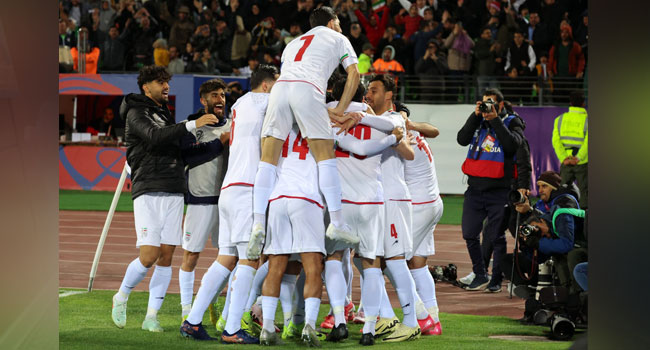
In a definitive statement delivered at a recent CNBC economic conference, FIFA President Gianni Infantino reaffirmed that Iran will participate in the 2026 World Cup. Despite the volatile geopolitical climate in the Middle East, Infantino expressed confidence that the Iranian national team will take the field, emphasizing that the players have earned their place through the qualification process.
Navigating Geopolitical Hurdles
The path to the 2026 tournament has been fraught with uncertainty. Following the outbreak of conflict in late February, Iran had initially threatened to boycott the competition and requested that FIFA relocate their Group G matches from the United States to Mexico. FIFA ultimately rejected this request, maintaining that the tournament schedule would proceed as planned. While a fragile truce was established in early April, ongoing tensions—including the closure of the Strait of Hormuz and subsequent maritime blockades—have kept the international community on edge.
Infantino, however, remains steadfast in his vision for the tournament. He noted that the Iranian team represents its people and that the athletes are eager to compete on the world stage. By keeping the matches in the United States, FIFA is signaling its commitment to the original host structure, which includes games in Los Angeles and Seattle, with a team base located in Tucson, Arizona.
Sports Beyond Politics
Addressing the intersection of international relations and athletics, Infantino reiterated his long-standing philosophy that sports should remain insulated from political agendas. He argued that if other institutions fail to build bridges between nations, FIFA must take on that responsibility. This stance echoes previous sentiments shared by the FIFA head, who has consistently advocated for the World Cup as a platform for unity rather than division.
As the June 11 kickoff date approaches, the focus shifts toward the logistics of the first-ever 48-team World Cup. While the shadow of regional instability looms, FIFA’s leadership is clearly prioritizing the continuity of the sport. The organization hopes that by the time the tournament commences, the current situation will have evolved into a more peaceful state, allowing the focus to return entirely to the beautiful game.
Why This Matters
Infantino’s firm stance highlights FIFA’s role as a global diplomatic entity that prioritizes athletic competition over the shifting tides of international conflict. This decision sets a significant precedent for how major sporting bodies will manage host-nation relations in an increasingly polarized world.