Key Takeaways
- Bishop Wale Oke stresses INEC's need for impartiality ahead of 2027 elections.
- He condemns religious extremism and calls for government action.
- Oke clarifies the role of church titles as organizational necessities.
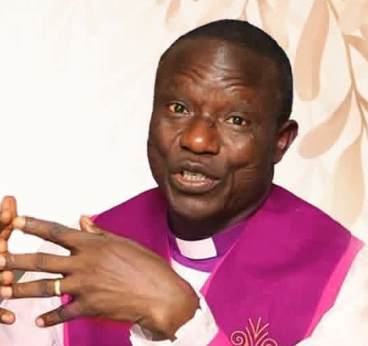
In a powerful statement, Bishop Wale Oke, the National President of the Pentecostal Fellowship of Nigeria (PFN), cautioned that the integrity of Nigeria is at stake if the Independent National Electoral Commission (INEC) does not maintain its impartiality ahead of the much-anticipated 2027 general elections.
During a press briefing at the 38th annual convention of Agape Christian Ministries in Akure, Ondo State, Bishop Oke highlighted the pivotal role of INEC in ensuring a fair election process free from political affiliations. He urged the commission to act as a neutral regulator, asserting that it is essential for preserving Nigeria's democratic framework.
“INEC is a government functionary. It is not part of any political party. INEC is to regulate all political parties and to conduct elections, not to take sides with any,” he stated emphatically.
Bishop Oke further emphasized that for Nigerians to fully exercise their civil rights, INEC must avoid partisan politics. He warned that the future of Nigeria’s democracy hangs precariously in the balance.
As the country gears up for the 2027 elections, he advised political leaders to steer clear of ethnic and religious biases. Instead, he urged them to prioritize candidates based on their qualifications and capabilities.
“Politicians should not play the ethnic card in choosing who leads us. They should not play the religious card,” he asserted, suggesting a balanced representation in leadership positions.
Highlighting the secular nature of Nigeria, he remarked that representation should not be skewed entirely towards one religion. He advocated for a political balance where if the presidential candidate is a Muslim, then having a Christian as a vice-presidential candidate, and vice versa, ensures equitable representation.
Addressing the growing issue of insecurity, Bishop Oke condemned the violence perpetrated in the name of faith. He described the radicals intent on converting Nigeria into a caliphate as a substantial threat, calling for urgent governmental intervention.
“There are radicals who are bent on turning Nigeria into a caliphate state. The constitution guarantees freedom of religion and freedom of worship,” he stated, denouncing violent practices that contravene both ethical and legal standards. He affirmed that criminality should not be tolerated under the guise of religion, advising communities to weed out extremists.
Expanding on recent comments regarding church titles, Bishop Oke clarified that while titles such as 'Senior Pastor' or 'Archbishop' may not be explicitly mentioned in religious texts, they serve essential organizational functions. He explained, “The bishop is in the Bible. The evangelist is in the Bible. The archbishop is a senior bishop.”
With an emphasis on the necessity for structure as religious organizations grow, he stated that such titles are a product of divine wisdom intended for administrative convenience.
Why This Matters
Bishop Oke's remarks shed light on the intertwining of faith and governance in Nigeria, advocating for equitable representation and a call against extremism. His emphasis on impartiality within electoral processes highlight a critical component for sustaining democracy in a nation facing multifaceted challenges.